Project Management

People Bigger Than Cars?

From the People, Planet, Profits & Projects Blog
by ,

About this Blog

RSS

View Posts By:

Richard Maltzman
Dave Shirley

Recent Posts

Saving the Sahel (Part 1)

You Can't Get They-ah From Hee-yah

Floating an idea into reality: the other side of the AI Project Paradox

The Environment of the Built Environment: an AI Paradox

Is plastic on your mind?

Categories

6th, 6th Edfition, 6th Edition PMBOK, 7th Edition, 7th Edition PMBOK, 8th Edition PMBOK, 8th Edition PMBOK Guide, Activism, actuarial, actuary, adapt, addition by subtraction, Africa, africa, agriculture, airforce, ajaita, Alaska, amazon, analogous, analytics, ancient, and more power, antarctica, anti-science, apple, apps, architecture, arctic, arrakis, Artificial Intelligence, asch paradigm, Assistant, asthma, astronomy, automobile, automotive, autonomous cars, b, bankhar, Banksy Crypto, basalt, baseball, bats, batter, beauty products, benefit, benefits, Benefits Realization, beyond epica, biases, bicycle, big data, big dfata, big dig, bike, biodiversity, biomedicine, birdhouse, blockchain, blood, blue blood, blue trees, bluefin, bluefin tuna, book review, boston, boston university, Boyce, Brazil, brazil, Breakdown Structures, BS, building, buildings, built environment, built environment, bumblebee, cake, capacitor, car, Carbon, carbon, carbon capture, carbon negative, carbon neutral, carbon pool, carbon sequestration, carbonate, careers, CEO, ChatGPT, chatGPT, chatgpt, chatgpt, chess, China, china, chopsticks, citrus, cli-fi, climate, climate change, climate resilience, climeworks, Clumsy, CO2, co2, CO2 Utilization, coalition, cobalt, coffee pods, cognition, cognitive, Collabortion, colombia, concrete, Conflict, construction 5.0, cool projects xyloscope, cooling, coral, corn, cost of good quality, cost of poor quality, cost of quality, crazy, criticism of project management, cryptocurrency, CSR, csr, data, data analytics, data privacy, datacenter, dataset, death spiral, Decision Making, decomposition, Defense and Climate, definition of a project, deforestation, dependencies, dependency, desert, DIKW, dikw, dimopoulos, disposal, dna, DOD, dogs, dolphins, dream, drilling, drink, dune, dune, dutch, early start, earth, eatlocal, eco-tourism, ecological, economic, economics, EKC, electric grid, electricity, electronics, elysis, embodied carbon, emerging technologies, empower, Energy, energy efficiency, environmental degradation, escalate, escalation, ESG, extreme weather, fallacy, FARC, farming, finance, fish, fish brains, fishing, fix, fixing the earth, flint water, Flint Water Supply, flood, flooding, Food supply chain, food waste, forest, forest for the trees, forestation, forrestgump, frank herbert, Fruitcake, fungus, fusion, Galvao, garage, gas, gasoline, geese, gender equality, gender partnerships, generational differences, Generative AI, gladwell, gold, Goodness, google, Government, GPT, great pacific garbage patch, green, green building, green buildings, green energy, green iguana, green project, green project management, greening, guest post, gyre, harkonnen, Harvesting Benefits, hawasina, hedgehogs, heursitics, historical data, hlb, holitsic, holland, horseshoe crab, human-caused climate change, hydrogen, hydrology, ice, iceland, ignition, iguana, imagery, impact, india, inequality, information, initiatives, injection, insurance, intelligence, interacting risk, internal combustion engine, invasive species, investment, isomer, issue escalation, issues, ITER, jobs, Jupiter, justification, kids, kill point, knowledge, koch brothers, Kuznets, laboratory, LAL, landscape mode, lapampa, launch, LCA, Leadership, Leadership, life cycle analyses, life cycle analysis, lifecycle, Linkedin, liquid, lizard, local, long term, long-term, long-term thinking, look up, loud, maintenance, maker, makermovement, malcolm gladwell, management, marathon, marine biology, market, mars, Martin Luther King, mean, megawatt, MeHg, melting, mercury, metal, Microgrid, microplastics, migration, military, millennial, mindset, minerals, mission, mitigate, MLK, mongolia, museum, museum of london, nature, nematodes, net gain, Net Project Success Score, net zero, netherlands, network, New book, New Jersey, New Practitioners, new york, NFT, nitrogen, noise, noreaster, norway, nova, NPSS, NREL, ocean, ocean cleanup, ocean life, oil rig, oil rigs, oklahoma, oman, only murders in the building, opportunity, overall risk, oxygen, packaging, pareto, PBS, permafrost, persistence, peru, Pharmaceutical, planet, planet.com, planning, plant, plasma, plastic, playground, pm, pm education, pmbok, pmbok guide, pmnetwork, PMXPO-2018, podcast, pollutants, pollution, poop, poor, portfolio, power, power skills, privacy, privacy concerns, professors, program, Program Management, project, project leader, project leadership, project management, project management 3.0, project on fire, project progress, Project Success, project success, projecticity, projectleadership, projectmanagement, projects, psychology, pulse of the profession, purple bacteria, purpose, quiet, rainforest, rationale, reef, refugees, renewable, renewables, Repair, repair, repeatable process, repeatable processes, repurpose, research, resource breakdown strucuture, Resource Management, reversing climate change, revisionist history, rich, rigs2reefs, ripe, risk, risk avoidance, Risk Management, risk mitigation, risk response, risk responses, river, robots, rocks, rules of thumb, rural, rural India, russia, Sarcasm/Irony, satellite, saudi, schedule, sci-fi, Science, science, science-fiction, scientific american, screaming monkeys, sea, sea life, Sea-Level Rise, sea-level rise, seagreens, seawall, seawater, seawater temperature, seaweed. beat;es. farming, secondary risk, selena gomez, sequestration, shipping, skyscraper, SLR, smart cities, smart city, smelting, social, social pressure, soil, solar, solar panels, solar perovkites, solar saheli, sonic, sponge cities, SRI, stage-gate, stagegate, stakeholder, stakeholder management, steward, stewardship, storage, strategy, stupid, success, suffer, sulphur, sunk cost, supercapacitor, supply chain, survey, Sustainability, sustainability, Sustainable Investing, Sustainable Tourism, sybiosis, symbiosis, system 03, TBL, temperature, terraform, terraforming, test, threat, threats, totem, touchscreen, tour, tower, Trains, transparency, transportation, trash, tree, tree species, trees, trillion, triple bottom line, triple constraint, truth to power, UMass, us army corps of engineers, USDA, vacuum, value, venus, vision, voice, voltage optimization, vw scandal, washing machine, waste, wastewater, water, we mean business, whales, Whirlpool, wind, wisdom, women, Women in Project Management, wood wide web, woonerf, Work Breakdown Structures (WBS), world breakdown structure, worms, xian, xylotron, Yale

Date

linkedin twitter facebook Request to reuse this  

Categories: woonerf


No, this is not a science fiction thriller about 20-foot humanoids, although...that would be a good follow-up!

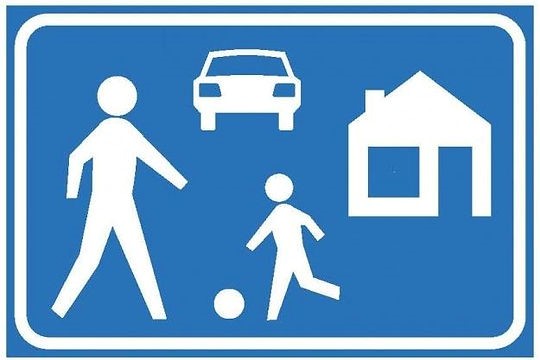
If you look at the featured picture for this post, it's a street sign for the topic of the post. And in that street sign, people (even kids!) are bigger than cars.  The reason for this will become evident if you just read on.

I’ve been doing a lot of thinking lately about The Built Environment and what that means for people in general, but also very special people – project leaders.

So let me start with the term, “Built Environment”(there will be more terms as well here, some in other languages, so fasten your linguistic seat belts).

What is The Built Environment?  Some may say it’s just another word for ‘construction’ or for buildings.  That’s a partially correct answer but it is nowhere near fully correct.

Here, from the US Environmental Protection Agency (EPA), is the definition:

(The Built Environment encompasses) the buildings we live in, the distribution systems that provide us with water and electricity, and the roads, bridges, and transportation systems we use to get from place to place. It can generally be described as the man-made or modified structures that provide people with living, working, and recreational spaces.

So, not just buildings, it’s anything that we humans make or modify to make our lives comfortable, productive, and fun.

I’ll be posting about this topic a lot in the next few months – its an area of focus that project managers will need to learn about because of the amount of money business and governments are applying to infrastructure projects.  And PMI knows this, having recently introduced the PMI-CP® certification.

My first post in this vein is a concept that has begun to catch hold worldwide, although it started about 70 years ago in Delft, The Netherlands.  I told you – you’d learn new terms in this post, and here is one I am not only going to define, I am going to get you to pronounce it properly!  Respect language!

The term is Woonerf.  It is a mashup of two Dutch words, woon and nerf (literally ‘living’ and ‘grain’) Together, however, the word woonerf becomes “living yard”, and practically, it describes a ‘shared space’.

Let’s get the pronunciation right, though.

  • The “woon” part does NOT rhyme with “tune”.  Woon is pronounced something like “phone”, with a slightly voiced ‘f’, almost a v. 
  • The “nerf” part does not rhyme with “surf”.  It’s close to “neer-uff”.
  • Say “phone-neer-uff” and you’re reasonably close

Listen to it pronounced in Dutch here: https://www.howtopronounce.com/dutch/woonerf

A woonerf is a place where cars, trucks, bikes, kids, dogs, people share a space and in which the motorized vehicles do NOT have the right of way, and in which there is less demarcation between the road and a ‘sidewalk’, and in which the roadway is often either narrow, populated with barriers (not speed bumps, but pieces of art, for example) that prevent fast driving.

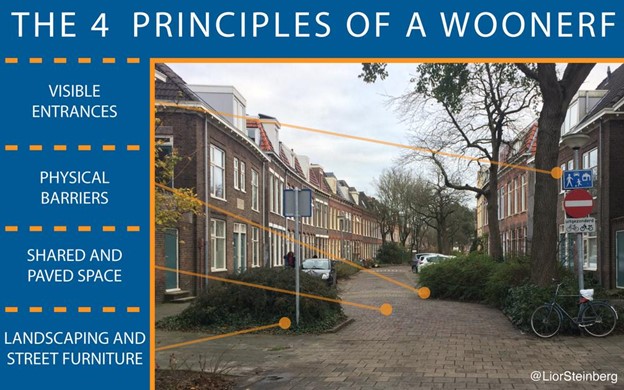
The four principles of a woonerf (see pic below) are:

  • Visible Entrances
  • Physical Barriers
  • Shared and paved space
  • Landscaping and “street furniture” (often sculptures, plants, benches, artwork)

From a project management perspective, there is a very interesting angle – one that involves culture and communications and stakeholder engagement.  A very good example is this one, which compares the introduction of a woonerf in two different Canadian cities.

It’s a short video.  But watch it -very interesting to note the project management lessons learned here. 

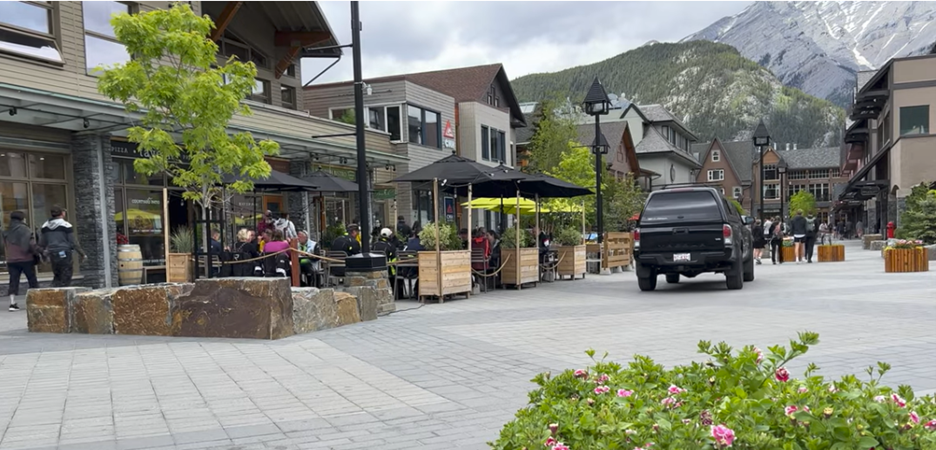
Below is a photo of the successful woonerf in Banff.

I find it amazing how one word – in this case, woonerf – in effect, killed a project because it carried the ‘baggage’ of a Euro-centric culture that ‘won’t work here’, according to some key stakeholders. 

But the second part of the video shows how the woonerf concept did work in Banff.  And it’s catching on all over the world in the past decade.  This article from Bloomberg talks about six examples, from the USA, New Zealand, Germany, England, Sweden, and, of course, The Netherlands.  And that’s from 2015.  Since then, it’s become much more popular, with woonerf projects taking place everywhere.

Here’s a recent example of a woonerf in Singapore:


And I close with a great summary of how a woonerf works in The Netherlands.

Stay tuned to this blog for more upskilling in linguistics and the Built Environment!  We’ll be covering software platforms that facilitate planning and executing building projects with sustainability in mind.


Posted by Richard Maltzman on: June 14, 2023 08:44 PM | Permalink

Comments (0)

Please login or join to subscribe to this item


Please Login/Register to leave a comment.

ADVERTISEMENTS

"One of the symptoms of an approaching nervous breakdown is the belief that one's work is terribly important. "

- Bertrand Russell

ADVERTISEMENT

Sponsors