In this post, I discuss two very different risk responses to a devastating threat that has an oh-so-friendly name.
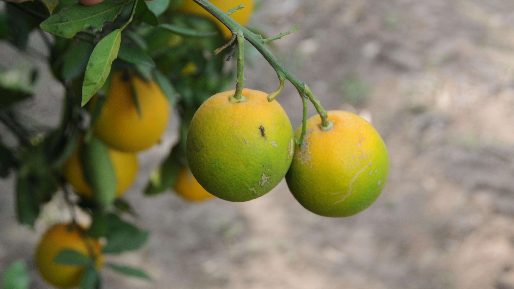
The threat is “Greening”, and if you have anything to do with the farming of citrus, you are very familiar with this threat. From this US Department of Agriculture site: “ Citrus greening, also called Huanglongbing (HLB), is a bacterial infection of citrus plants, caused by the bacterial pathogen, Candidatus Liberibacter asiaticus (CLas). It is one of the most serious citrus diseases in the world. Once infected, most trees die within a few years. There is no cure.” The effects of this threat are stunning. Since 2005, HLB, first detected in the USA in Florida, has spread throughout that state, killing countless trees and devastating orchards, reducing citrus production by 75%, and more than doubling production costs. Unfortunately, it was not contained, and the disease has now progressed westward to Louisiana, Texas, and even California.
Here’s a video describing the insect vector for the bacterial infection (the Asian citrus psyllid):
One risk response: Avoid
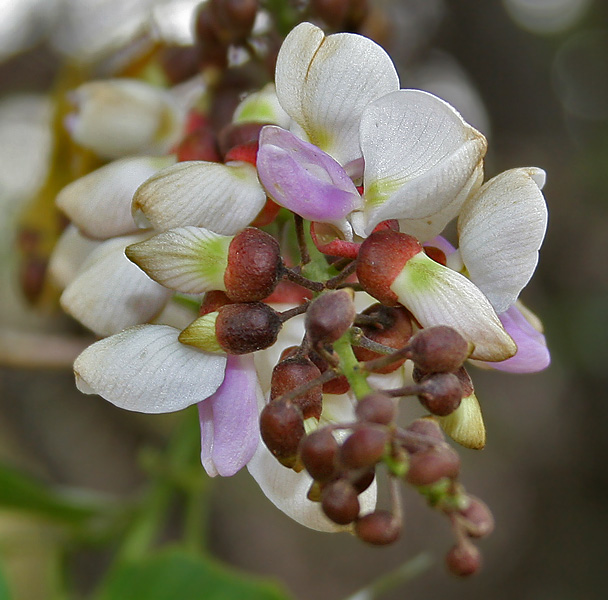
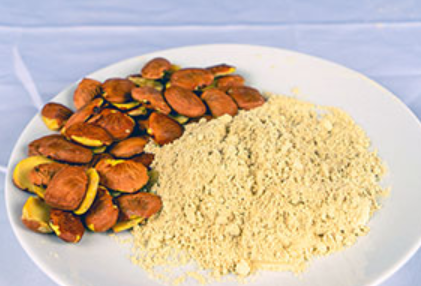
The Avoid threat response means NOT doing whatever it was that admitted the threat into the picture. So in this case, that means not planting citrus. Instead, farmers have used their fields to plant the Pongamia tree, an ancient Indian tree (Hindi name ???? karanj). This is a fascinating tree with uses as far-flung as using its twigs as a toothbrush to curing scorpion bites. But in this case, the tree provides a boost to the farmers affected by Greening by giving them a profitable crop that is healthy, durable and – ironically helps with the other sort of “greening” – because its pressed berries/seeds produce an oil that can be used (for example) as jet fuel, with the remaining product can be used as flour and other plant-based proteins. Vendors also sell the oil as cures for… well, you name it.
Below are images of the tree, its flowers, berries, and examples of products made from it:
This video from the Associated Press sums up the Avoid response:
The other risk response: Mitigate
Remember (my students will tell you that this is a grade-crushing pet peeve of mine) that Mitigate is not a synonym for Response. Many textbooks and papers on project management talk about risk response as mitigation. Sure, mitigation is a common response – it involves reducing the likelihood and/or probability of a threat; but it is NOT by any means the only way to respond to risk. You just saw, above how Avoid is another risk response strategy, as is Transfer, and Escalate, for example.
So, in this case the mitigation is to reduce the probability of the infection and the impact if infected. To that end, (from this USDA site) “researchers at the ARS Crop Improvement and Genetics Research (CIGR) unit in Albany, CA, have discovered a way to augment the tree’s natural immune response to pathogens so that it recognizes HLB. According to James Thomson, a geneticist at CIGR, transgenic plants that produce receptor proteins that can recognize pathogens are able to activate a plant’s own immune response when exposed to Clas. Previously, the best ways to deal with HLB were to remove affected trees from orchards and kill the ACPs that were spreading HLB. Those efforts ranged from spraying pesticides to cloaking trees in tents. Transgenic trees with a boosted immune system that responds to Clas could potentially help citrus growers fight citrus greening.”
Takeaways for project managers:
There are many forms of risk response: learn about them more here in this ProjectManagement.com post
Greening is usually good – but in this case, it’s terrible!
There is a lot of room for project leadership in detection and resolution of agricultural diseases, now especially with the application of technologies like gene therapy and the application of Artificial Intelligence





 Community Champion


