Faith in the Eighth, Part 2
From the People, Planet, Profits & Projects Blog
by Richard Maltzman,
Dave Shirley

View Posts By:
Richard Maltzman
Dave Shirley
Recent Posts
What is AI doing to the sustainability of our profession???
Stepwells – Insight from a Particularly Valid Angle
Climb-it Change: Pre-Interview Connector
Climb-it Change: New Relevance for the Stepwells of India
A PATH to more equitable health - via AI project leadership
Categories
6th,
6th Edfition,
6th Edition PMBOK,
7th Edition,
7th Edition PMBOK,
8th Edition PMBOK,
8th Edition PMBOK Guide,
Activism,
actuarial,
actuary,
adapt,
addition by subtraction,
Africa,
africa,
agriculture,
airforce,
ajaita,
Alaska,
amazon,
analogous,
analytics,
ancient,
and more power,
antarctica,
anti-science,
apple,
apps,
architecture,
arctic,
arrakis,
Artificial Intelligence,
asch paradigm,
Assistant,
asthma,
astronomy,
automobile,
automotive,
autonomous cars,
b,
bankhar,
Banksy Crypto,
basalt,
baseball,
bats,
batter,
beauty products,
benefit,
benefits,
Benefits Realization,
beyond epica,
biases,
bicycle,
big data,
big dfata,
big dig,
bike,
biodiversity,
biomedicine,
birdhouse,
blockchain,
blood,
blue blood,
blue trees,
bluefin,
bluefin tuna,
book review,
boston,
boston university,
Boyce,
Brazil,
brazil,
Breakdown Structures,
BS,
building,
buildings,
built environment,
built environment,
bumblebee,
cake,
capacitor,
car,
Carbon,
carbon,
carbon capture,
carbon negative,
carbon neutral,
carbon pool,
carbon sequestration,
carbonate,
careers,
CEO,
ChatGPT,
chatGPT,
chatgpt,
chatgpt,
chess,
China,
china,
chopsticks,
citrus,
cli-fi,
climate,
climate change,
climate resilience,
climeworks,
Clumsy,
CO2,
co2,
CO2 Utilization,
coalition,
cobalt,
coffee pods,
cognition,
cognitive,
Collabortion,
colombia,
concrete,
Conflict,
construction 5.0,
cool projects xyloscope,
cooling,
coral,
corn,
cost of good quality,
cost of poor quality,
cost of quality,
crazy,
criticism of project management,
cryptocurrency,
CSR,
csr,
data,
data analytics,
data privacy,
datacenter,
dataset,
death spiral,
Decision Making,
decomposition,
Defense and Climate,
definition of a project,
deforestation,
dependencies,
dependency,
desert,
DIKW,
dikw,
dimopoulos,
disposal,
dna,
DOD,
dogs,
dolphins,
dream,
drilling,
drink,
dune,
dune,
dutch,
early start,
earth,
eatlocal,
eco-tourism,
ecological,
economic,
economics,
EKC,
electric grid,
electricity,
electronics,
elysis,
embodied carbon,
emerging technologies,
empower,
Energy,
energy efficiency,
environmental degradation,
escalate,
escalation,
ESG,
extreme weather,
fallacy,
FARC,
farming,
finance,
fish,
fish brains,
fishing,
fix,
fixing the earth,
flint water,
Flint Water Supply,
flood,
flooding,
Food supply chain,
food waste,
forest,
forest for the trees,
forestation,
forrestgump,
frank herbert,
Fruitcake,
fungus,
fusion,
Galvao,
garage,
gas,
gasoline,
geese,
gender equality,
gender partnerships,
generational differences,
Generative AI,
gladwell,
gold,
Goodness,
google,
Government,
GPT,
great pacific garbage patch,
green,
green building,
green buildings,
green energy,
green iguana,
green project,
green project management,
greening,
guest post,
gyre,
harkonnen,
Harvesting Benefits,
hawasina,
hedgehogs,
heursitics,
historical data,
hlb,
holitsic,
holland,
horseshoe crab,
human-caused climate change,
hydrogen,
hydrology,
ice,
iceland,
ignition,
iguana,
imagery,
impact,
india,
inequality,
information,
initiatives,
injection,
insurance,
intelligence,
interacting risk,
internal combustion engine,
invasive species,
investment,
isomer,
issue escalation,
issues,
ITER,
jobs,
Jupiter,
justification,
kids,
kill point,
knowledge,
koch brothers,
Kuznets,
laboratory,
LAL,
landscape mode,
lapampa,
launch,
LCA,
Leadership,
Leadership,
life cycle analyses,
life cycle analysis,
lifecycle,
Linkedin,
liquid,
lizard,
local,
long term,
long-term,
long-term thinking,
look up,
loud,
maintenance,
maker,
makermovement,
malcolm gladwell,
management,
marathon,
marine biology,
market,
mars,
Martin Luther King,
mean,
megawatt,
MeHg,
melting,
mercury,
metal,
Microgrid,
microplastics,
migration,
military,
millennial,
mindset,
minerals,
mission,
mitigate,
MLK,
mongolia,
museum,
museum of london,
nature,
nematodes,
net gain,
Net Project Success Score,
net zero,
netherlands,
network,
New book,
New Jersey,
New Practitioners,
new york,
NFT,
nitrogen,
noise,
noreaster,
norway,
nova,
NPSS,
NREL,
ocean,
ocean cleanup,
ocean life,
oil rig,
oil rigs,
oklahoma,
oman,
only murders in the building,
opportunity,
overall risk,
oxygen,
packaging,
pareto,
PBS,
permafrost,
persistence,
peru,
Pharmaceutical,
planet,
planet.com,
planning,
plant,
plasma,
plastic,
playground,
pm,
pm education,
pmbok,
pmbok guide,
pmnetwork,
PMXPO-2018,
podcast,
pollutants,
pollution,
poop,
poor,
portfolio,
power,
power skills,
privacy,
privacy concerns,
professors,
program,
Program Management,
project,
project leader,
project leadership,
project management,
project management 3.0,
project on fire,
project progress,
Project Success,
project success,
projecticity,
projectleadership,
projectmanagement,
projects,
psychology,
pulse of the profession,
purple bacteria,
purpose,
quiet,
rainforest,
rationale,
reef,
refugees,
renewable,
renewables,
Repair,
repair,
repeatable process,
repeatable processes,
repurpose,
research,
resource breakdown strucuture,
Resource Management,
reversing climate change,
revisionist history,
rich,
rigs2reefs,
ripe,
risk,
risk avoidance,
Risk Management,
risk mitigation,
risk response,
risk responses,
river,
robots,
rocks,
rules of thumb,
rural,
rural India,
russia,
Sarcasm/Irony,
satellite,
saudi,
schedule,
sci-fi,
Science,
science,
science-fiction,
scientific american,
screaming monkeys,
sea,
sea life,
Sea-Level Rise,
sea-level rise,
seagreens,
seawall,
seawater,
seawater temperature,
seaweed. beat;es. farming,
secondary risk,
selena gomez,
sequestration,
shipping,
skyscraper,
SLR,
smart cities,
smart city,
smelting,
social,
social pressure,
soil,
solar,
solar panels,
solar perovkites,
solar saheli,
sonic,
sponge cities,
SRI,
stage-gate,
stagegate,
stakeholder,
stakeholder management,
steward,
stewardship,
storage,
strategy,
stupid,
success,
suffer,
sulphur,
sunk cost,
supercapacitor,
supply chain,
survey,
Sustainability,
sustainability,
Sustainable Investing,
Sustainable Tourism,
sybiosis,
symbiosis,
system 03,
TBL,
temperature,
terraform,
terraforming,
test,
threat,
threats,
totem,
touchscreen,
tour,
tower,
Trains,
transparency,
transportation,
trash,
tree,
tree species,
trees,
trillion,
triple bottom line,
triple constraint,
truth to power,
UMass,
us army corps of engineers,
USDA,
vacuum,
value,
venus,
vision,
voice,
voltage optimization,
vw scandal,
washing machine,
waste,
wastewater,
water,
we mean business,
whales,
Whirlpool,
wind,
wisdom,
women,
Women in Project Management,
wood wide web,
woonerf,
Work Breakdown Structures (WBS),
world breakdown structure,
worms,
xian,
xylotron,
Yale
Date
In Part 1 of this post, I hopefully conveyed the idea (and hopefully you agree!) that the 8th Edition PMBOK® Guide represents a breakthrough in project management maturity – so much so that it literally redefined the “
P” and the “
PM” in
PMBOK. I even assert that the “
M” should maybe be advanced to “
L” for Leadership. Who knows, maybe the 9
th Edition could be the PLBOK® Guide?
NOTE: I had thought this would be a 2-part post. Nope. It’s going to be 3 parts. Turns out there’s more to say about this – and more to learn about this – than I originally thought!This post focuses on what that
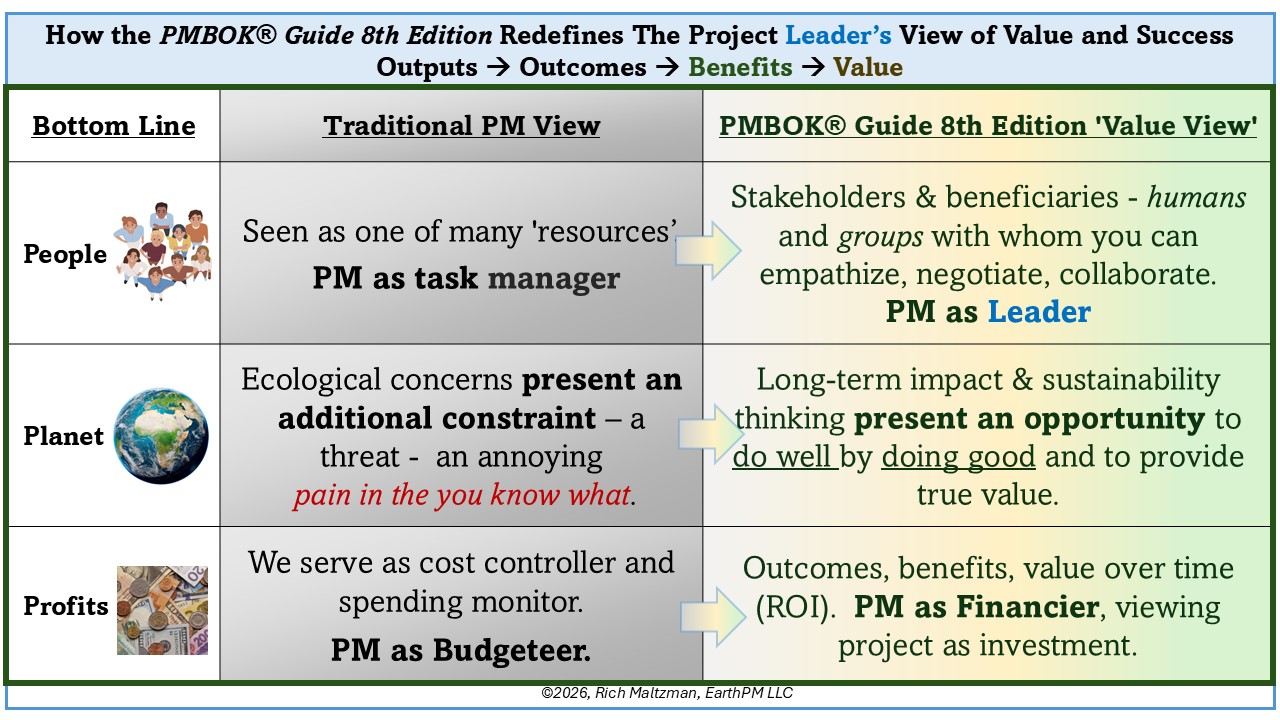
advancement looks like when viewed through the lens of that figure.
The header of the figure (repeated here for your convenience) indicates that of course projects produce
outputs – interim deliverables – along the way. These deliverables (think “frame of house completed”) don’t necessarily produce value to the end-user.
First, here's the infographic I created, for your convenience.
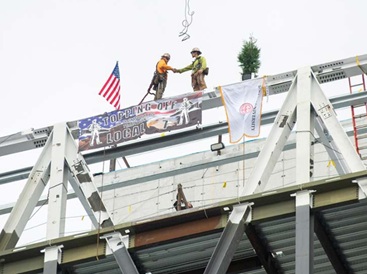
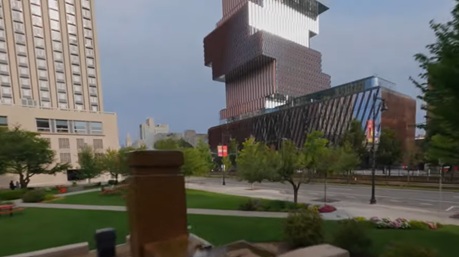
I need to take a brief tangent and a story to illustrate some of this – these outputs can and should be used by thoughtful project leaders as a way to motivate teams and to celebrate success along the way. I recall the so-called “Jenga” building construction project at Boston University. This is formally called the Duan Family Center for Computing and Data Sciences. I happened to be teaching a course in Project Leadership in the building across the street while teaching a segment on motivation. Literally in the midst of that conversation on project motivation with the students, a huge "top-off" celebration took place at the base of the building – music, food, with probably over 350 construction workers, managers, officials – marking the completion of the steelwork for the building (see below image). In other words, they were celebrating a milestone – an interim deliverable. I would argue that there is value there – perhaps not easily measured, but real value in terms of human team-building and motivation, which shows itself in the remaining work, aimed at the outcome – the availability of an amazing building. So amazing, that I urge you to take 5 minutes and click here to take a tour RIGHT NOW from your seats, from the eyes of a pretty fast-moving drone. Hold on to your seats and... GO (but then come back).
So that’s the beginning of the O – O – B – V progression – Outputs, Outcomes, Benefits, and Value.
Value - this is value as seen by the users and sponsors (in the case of the Jenga building: Faculty, Staff, Students, local residents and businesses, alumni and more) is achieved only after the outcome – the ‘product of the project’ is delivered. That outcome produces benefits (in the case of the Jenga building, classroom and conference space, a showcase of sustainable construction, and so on) which – collected over time, creates value.
Perhaps the most important phrase in the paragraph above is 'collected over time'. And this is fundamental to understanding the infographic featured in this series. Value (from the user, or from the project investment perspective) cannot be measured at the point of delivery of the outcome. It can only be measured after benefits start to accrue – and that means collecting benefits over time. And that leads to an important tangent about benefits and disbenefits.
As humans, we tend to have optimism bias. It varies by culture, but generally all of us have this. This may lead to us thinking only of the positive benefits. Most projects also generate disbenefits. So in the case of the Jenga building, perhaps someone in an apartment building nearby used to have a view of the Boston skyline and the new building blocks their view and makes their property less saleable. This is subtle, but very important. When you manage (or rather lead) a project, are you thinking about what the product of the project does (both good and bad) in the longer term?If it is a single-serve coffeemaker, for example – what happens to the pods when they are discarded? If it’s a building, how is it heated and cooled?If it’s a service, how does it affect others besides those using the service? Good questions to ask, yes, even for a project leader – nobody else may be considering these things, and it may come down to you. Perhaps even if you are not the main decision-maker you can influence those who do make decisions about the project’s outcome in the steady state. Think about it.
Wait, don't go - did you take the drone tour? Go for it! Click the picture and hold on to your seats!
In Part 3, I will proceed through the main part of the table, covering People, Planet, and Profit and how the 8th Edition PMBOK® Guide brings us from M up to L (manager to leader).
Posted
by
Richard Maltzman
on: January 30, 2026 02:18 PM |
Permalink
Comments (1)
Please login or join to subscribe to this item

Kwiyuh Michael Wepngong
 Community Champion
Financial Management Specialist | US Peace Corps
Yaounde, Centre, Cameroon
Please Login/Register to leave a comment.
|
"How far that little candle throws his beams! So shines a good deed in a weary world."
- William Shakespeare
|




