












Guessing is not a strategy: How to build decision velocity with AI and real-time data
June 10, 2026 | Live Webinar

You Can't Get They-ah From Hee-yah
Floating an idea into reality: the other side of the AI Project Paradox
The Environment of the Built Environment: an AI Paradox
6th, 6th Edfition, 6th Edition PMBOK, 7th Edition, 7th Edition PMBOK, 8th Edition PMBOK, 8th Edition PMBOK Guide, Activism, actuarial, actuary, adapt, addition by subtraction, Africa, africa, agriculture, airforce, ajaita, Alaska, amazon, analogous, analytics, ancient, and more power, antarctica, anti-science, apple, apps, architecture, arctic, arrakis, Artificial Intelligence, asch paradigm, Assistant, asthma, astronomy, automobile, automotive, autonomous cars, b, bankhar, Banksy Crypto, basalt, baseball, bats, batter, beauty products, benefit, benefits, Benefits Realization, beyond epica, biases, bicycle, big data, big dfata, big dig, bike, biodiversity, biomedicine, birdhouse, blockchain, blood, blue blood, blue trees, bluefin, bluefin tuna, book review, boston, boston university, Boyce, Brazil, brazil, Breakdown Structures, BS, building, buildings, built environment, built environment, bumblebee, cake, capacitor, car, Carbon, carbon, carbon capture, carbon negative, carbon neutral, carbon pool, carbon sequestration, carbonate, careers, CEO, ChatGPT, chatGPT, chatgpt, chatgpt, chess, China, china, chopsticks, citrus, cli-fi, climate, climate change, climate resilience, climeworks, Clumsy, CO2, co2, CO2 Utilization, coalition, cobalt, coffee pods, cognition, cognitive, Collabortion, colombia, concrete, Conflict, construction 5.0, cool projects xyloscope, cooling, coral, corn, cost of good quality, cost of poor quality, cost of quality, crazy, criticism of project management, cryptocurrency, CSR, csr, data, data analytics, data privacy, datacenter, dataset, death spiral, Decision Making, decomposition, Defense and Climate, definition of a project, deforestation, dependencies, dependency, desert, DIKW, dikw, dimopoulos, disposal, dna, DOD, dogs, dolphins, dream, drilling, drink, dune, dune, dutch, early start, earth, eatlocal, eco-tourism, ecological, economic, economics, EKC, electric grid, electricity, electronics, elysis, embodied carbon, emerging technologies, empower, Energy, energy efficiency, environmental degradation, escalate, escalation, ESG, extreme weather, fallacy, FARC, farming, finance, fish, fish brains, fishing, fix, fixing the earth, flint water, Flint Water Supply, flood, flooding, Food supply chain, food waste, forest, forest for the trees, forestation, forrestgump, frank herbert, Fruitcake, fungus, fusion, Galvao, garage, gas, gasoline, geese, gender equality, gender partnerships, generational differences, Generative AI, gladwell, gold, Goodness, google, Government, GPT, great pacific garbage patch, green, green building, green buildings, green energy, green iguana, green project, green project management, greening, guest post, gyre, harkonnen, Harvesting Benefits, hawasina, hedgehogs, heursitics, historical data, hlb, holitsic, holland, horseshoe crab, human-caused climate change, hydrogen, hydrology, ice, iceland, ignition, iguana, imagery, impact, india, inequality, information, initiatives, injection, insurance, intelligence, interacting risk, internal combustion engine, invasive species, investment, isomer, issue escalation, issues, ITER, jobs, Jupiter, justification, kids, kill point, knowledge, koch brothers, Kuznets, laboratory, LAL, landscape mode, lapampa, launch, LCA, Leadership, Leadership, life cycle analyses, life cycle analysis, lifecycle, Linkedin, liquid, lizard, local, long term, long-term, long-term thinking, look up, loud, maintenance, maker, makermovement, malcolm gladwell, management, marathon, marine biology, market, mars, Martin Luther King, mean, megawatt, MeHg, melting, mercury, metal, Microgrid, microplastics, migration, military, millennial, mindset, minerals, mission, mitigate, MLK, mongolia, museum, museum of london, nature, nematodes, net gain, Net Project Success Score, net zero, netherlands, network, New book, New Jersey, New Practitioners, new york, NFT, nitrogen, noise, noreaster, norway, nova, NPSS, NREL, ocean, ocean cleanup, ocean life, oil rig, oil rigs, oklahoma, oman, only murders in the building, opportunity, overall risk, oxygen, packaging, pareto, PBS, permafrost, persistence, peru, Pharmaceutical, planet, planet.com, planning, plant, plasma, plastic, playground, pm, pm education, pmbok, pmbok guide, pmnetwork, PMXPO-2018, podcast, pollutants, pollution, poop, poor, portfolio, power, power skills, privacy, privacy concerns, professors, program, Program Management, project, project leader, project leadership, project management, project management 3.0, project on fire, project progress, Project Success, project success, projecticity, projectleadership, projectmanagement, projects, psychology, pulse of the profession, purple bacteria, purpose, quiet, rainforest, rationale, reef, refugees, renewable, renewables, Repair, repair, repeatable process, repeatable processes, repurpose, research, resource breakdown strucuture, Resource Management, reversing climate change, revisionist history, rich, rigs2reefs, ripe, risk, risk avoidance, Risk Management, risk mitigation, risk response, risk responses, river, robots, rocks, rules of thumb, rural, rural India, russia, Sarcasm/Irony, satellite, saudi, schedule, sci-fi, Science, science, science-fiction, scientific american, screaming monkeys, sea, sea life, Sea-Level Rise, sea-level rise, seagreens, seawall, seawater, seawater temperature, seaweed. beat;es. farming, secondary risk, selena gomez, sequestration, shipping, skyscraper, SLR, smart cities, smart city, smelting, social, social pressure, soil, solar, solar panels, solar perovkites, solar saheli, sonic, sponge cities, SRI, stage-gate, stagegate, stakeholder, stakeholder management, steward, stewardship, storage, strategy, stupid, success, suffer, sulphur, sunk cost, supercapacitor, supply chain, survey, Sustainability, sustainability, Sustainable Investing, Sustainable Tourism, sybiosis, symbiosis, system 03, TBL, temperature, terraform, terraforming, test, threat, threats, totem, touchscreen, tour, tower, Trains, transparency, transportation, trash, tree, tree species, trees, trillion, triple bottom line, triple constraint, truth to power, UMass, us army corps of engineers, USDA, vacuum, value, venus, vision, voice, voltage optimization, vw scandal, washing machine, waste, wastewater, water, we mean business, whales, Whirlpool, wind, wisdom, women, Women in Project Management, wood wide web, woonerf, Work Breakdown Structures (WBS), world breakdown structure, worms, xian, xylotron, Yale


|
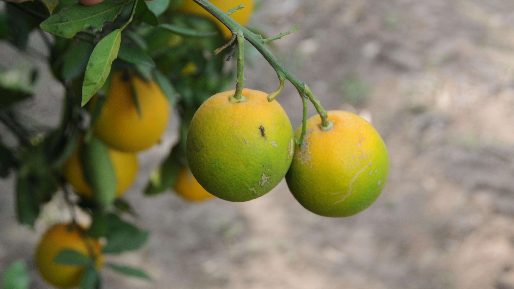
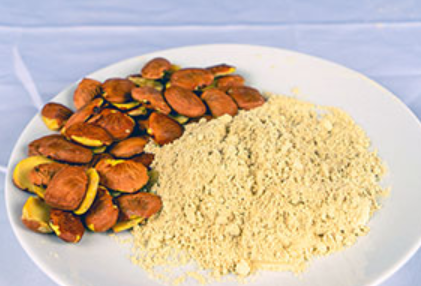
In this post, I discuss two very different risk responses to a devastating threat that has an oh-so-friendly name. The threat is “Greening”, and if you have anything to do with the farming of citrus, you are very familiar with this threat. From this US Department of Agriculture site: “ Citrus greening, also called Huanglongbing (HLB), is a bacterial infection of citrus plants, caused by the bacterial pathogen, Candidatus Liberibacter asiaticus (CLas). It is one of the most serious citrus diseases in the world. Once infected, most trees die within a few years. There is no cure.” The effects of this threat are stunning. Since 2005, HLB, first detected in the USA in Florida, has spread throughout that state, killing countless trees and devastating orchards, reducing citrus production by 75%, and more than doubling production costs. Unfortunately, it was not contained, and the disease has now progressed westward to Louisiana, Texas, and even California. Here’s a video describing the insect vector for the bacterial infection (the Asian citrus psyllid): One risk response: Avoid The Avoid threat response means NOT doing whatever it was that admitted the threat into the picture. So in this case, that means not planting citrus. Instead, farmers have used their fields to plant the Pongamia tree, an ancient Indian tree (Hindi name ???? karanj). This is a fascinating tree with uses as far-flung as using its twigs as a toothbrush to curing scorpion bites. But in this case, the tree provides a boost to the farmers affected by Greening by giving them a profitable crop that is healthy, durable and – ironically helps with the other sort of “greening” – because its pressed berries/seeds produce an oil that can be used (for example) as jet fuel, with the remaining product can be used as flour and other plant-based proteins. Vendors also sell the oil as cures for… well, you name it. Below are images of the tree, its flowers, berries, and examples of products made from it:
This video from the Associated Press sums up the Avoid response:
The other risk response: Mitigate Remember (my students will tell you that this is a grade-crushing pet peeve of mine) that Mitigate is not a synonym for Response. Many textbooks and papers on project management talk about risk response as mitigation. Sure, mitigation is a common response – it involves reducing the likelihood and/or probability of a threat; but it is NOT by any means the only way to respond to risk. You just saw, above how Avoid is another risk response strategy, as is Transfer, and Escalate, for example. So, in this case the mitigation is to reduce the probability of the infection and the impact if infected. To that end, (from this USDA site) “researchers at the ARS Crop Improvement and Genetics Research (CIGR) unit in Albany, CA, have discovered a way to augment the tree’s natural immune response to pathogens so that it recognizes HLB. According to James Thomson, a geneticist at CIGR, transgenic plants that produce receptor proteins that can recognize pathogens are able to activate a plant’s own immune response when exposed to Clas. Previously, the best ways to deal with HLB were to remove affected trees from orchards and kill the ACPs that were spreading HLB. Those efforts ranged from spraying pesticides to cloaking trees in tents. Transgenic trees with a boosted immune system that responds to Clas could potentially help citrus growers fight citrus greening.” Takeaways for project managers:
|
|
That’s not a typo. The word play is on the phrase concrete thinker – but this is about tinkering with concrete to make it do more than…sit there. I’d like to transition from the DunEcology series to regular (if you can call my posts “regular”!) posts. This one still involves sand, so there is still a connection to Dune. However, this sand is in the mix of a material we all know: concrete. What we may NOT know is that concrete may be a source of power. A recent feature story from BBC’s “Future” series (recommended!) is titled, “How The Concrete In Your House Could Be Turned Into A Battery”. Previously I have blogged about the idea of using roads (well, the pavement on roads) to power vehicles. It was a two-part series, recalling the fantastical "flux capacitor", called "Doc Brown Would Be Proud". Side note: could THAT be a real thing? See this video.
Now back from Hollywood, California to Cambridge, Massachusetts... This is about the use of concrete as a potential power source. It’s about supercapacitors, a much, much larger version of the little disc-like or cylindrical components (you know them if you are a ham radio enthusiast, electronics engineer or general-purpose tinkerer) that force us to unplug our routers for 20 seconds because there is a stored charge. Quoting the article’s interview with MIT researcher Damian Stefaniuk: carbon-cement supercapacitors could make an important contribution to efforts to decarbonize the global economy. "If it can be scaled up, the technology can help solve an important issue – the storing of renewable energy," he says. Don’t get your expectations too high now, though. The concrete supercapacitor can store around 0.3 KwH per cubic yard – enough to power a 10-watt LED lightbulb for 30 hours. You won’t be running your AC system on that. However, there is plenty of promise with the technology. According to the article, a foundation with 1,060-1,410 cubic feet of concrete could be sufficient to meet the daily energy needs of a residential house", says Stefaniuk. "Given the widespread use of concrete globally, this material has the potential to be highly competitive and useful in energy storage." And that’s with the current materials. Developments in material science and a focus on the Built Environment may yield leaps and bounds in the storage capacity of concrete and other building materials. To be fair, I’d like to present two views of this idea, one from the MIT researcher Damian Stefaniuk, and one from the (amazingly named Thinker and Tinker) video channel Robert Murray-Smith, who sees this only as a headline-grabber. Being the arbitrator that I am, I appreciate both views and imagine that the truth is somewhere in the middle. Here is the optimistic view by the researchers: And here is the ‘debunk’, by Robert Murray-Smith: I invite you to decide. Either way, there is a lot to learn and anticipate in terms of energy storage, the role of research, and the contributions to energy storage from the Built Environment. |
|
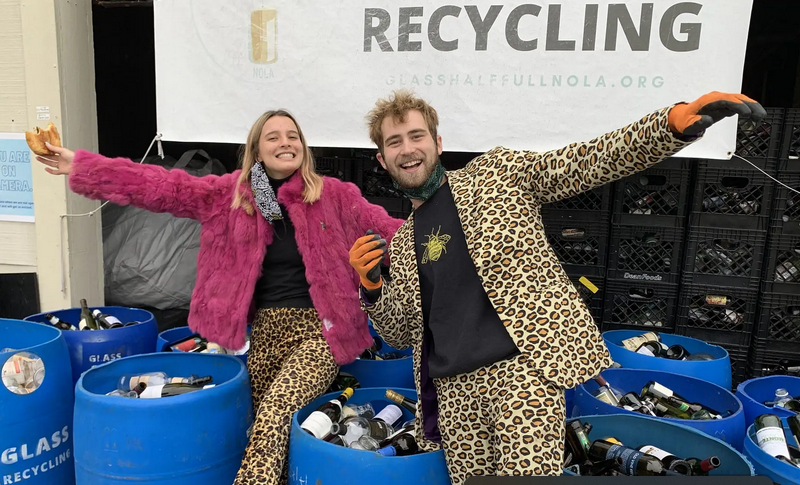
I thought I would bring us back to our world from Arrakis in this final posting of my series on Dune, by taking us very intentionally to New Orleans, Louisiana. That’s actually perfect, because if you know that city, you know it’s (justifiably) recognized for its food, including the beignets at Café du Monde. And what does Café du Monde mean? Café of the World. Our world - Earth. On Arrakis, most of the planet’s surface is sand. The ecology is based on sand, the very lack of water, and the giant sandworms that cruise through (and under) the sand. Here on Earth, sand is the basic ingredient of glass. Glass is the basic ingredient of wine and beer bottles, and wine and beer (and whisky, and bourbon...) are basic ingredients of New Orleans. After all, one famous expression from the city is "Laissez les bons temps rouler" - let the good times roll! What happens to all of those bottles when there is no recycling program in the state of Louisiana? And that brings us to Glass Half Full Louisiana. From their “About” page, here’s what this organization is about: As seniors at Tulane University in 2020, we were disappointed and frustrated with the lack of glass recycling in New Orleans. One night, over a bottle of wine that we knew would end up at the landfill unless we did something about it, we hatched a plan to combat this problem. Specifically, we wanted a system that was transparent, accessible, and most importantly, actually recycled glass into something functional. Instead of trying to take on the task of reforming the current system, we decided to look at the ‘glass half full’ by implementing our own grassroots glass recycling program. So they started their own grassroots recycling program, offering multiple free drop-off hubs across the city, where they collect glass “waste” from residents throughout Louisiana. This was all destined for landfill. Instead, they (see photos below)
This provides them with the ability to make gravel or (you guessed it!) sand. What happens to the sand? Ironically, one of the issues faced by Louisiana is erosion, caused, at least in part, by rising water levels and a greater quantity of and more intense hurricanes. In fact, the forecast for the 2024 season is very foreboding. In a press release from just a couple of days ago, the US National Oceanographic Atmospheric Administration (NOAA) is forecasting 17 to 25 total named storms (winds of 39 mph or higher). Of those, 8 to 13 are forecast to become hurricanes (winds of 74 mph or higher), including 4 to 7 major hurricanes (category 3, 4 or 5; with winds of 111 mph or higher). Forecasters have a 70% confidence in these ranges. The other causes of beach erosion serve as a good example of secondary project risk. Flood control structure projects have a good rationale but have caused significant problems in the long term. Project managers should be thinking not only of the short-term outputs and outcomes of their initiatives but also of what happens in the years or decades that follow. From the Glass Half Full website: Louisiana has lost a quarter of its wetlands since the 1930s as a result of flood control structures designed to protect communities and businesses from flooding. While well-intentioned, such structures have prevented the deposition of sediment into barrier islands and wetland areas by the Mississippi River’s spring floods, a natural process critical to the preservation of coastal areas. Consequently, land is disappearing much faster than it can regenerate. So the sand can be use for re-establishing beaches as well as many other purposes. From the Glass Half Full website: New Orleans wastes millions of tax dollars per year dumping recyclables in landfills (we pay per pound that's discarded) and on importing millions of pounds of sand. Turning glass back into sand saves money on both ends (less dumping, less importing of sand). I find this inspiring and a project (turned operation) worth our attention, and a solid example of how we can be more sustainability-oriented project leaders. For those of you who are more visual, here’s a video that describes this initiative: |
|
In Frank Herbert’s novels, the Fremen of Dune (formal name: Arrakis) are at work on a multi-generational project (or rather portfolio of projects) to transform Arrakis into a more habitable, temperate - even forested - planet. This was being done under the guidance of a planetologist (Liet-Kynes), who aimed to transform Arrakis into a livable world. NOTE TO READER: There's a great glossary of terms here if you're getting distracted by (or are curious about) the 'lingo' here. The process of making a world (or moon) habitable for humans is called terraforming. You can read more about it here: https://www.earth.com/earthpedia-articles/terraforming/ The idea of doing this very same thing to Mars – or Venus – or moons of the larger planets, for human habitation, is covered in this fascinating article which relates back to Dune’s ecology: https://www.sciencefocus.com/future-technology/dune-could-we-terraform-mars
Robert Zubrin, the founder of the Mars Society has proposed (and continues to propose) terraforming Mars with a mission called Mars Direct. Check it out here: https://www.marssociety.org/concepts/mars-direct/, and in his paper here: https://www.researchgate.net/publication/4702054_Mars_Direct_A_Simple_Robust_and_Cost_Effective_Architecture_for_the_Space_Exploration_Initiative In fact, this started me down a ‘rabbit hole’ of research on terraforming and it’s not just science fiction – there are serious projects (programs – or portfolios, really) that have been proposed: Research on terraforming https://www.researchgate.net/publication/234376372_Possibilities_of_Terraforming_Mars Back to Arrakis Doing this terraforming on Dune, however, dooms the sandworm. Water is poisonous to the this huge creature. Yet, the sandworm provides the basis (through its production of Spice) of the planet’s economic well-being, as well as a being worshiped by the Fremen. In this ironic twist, ecology defeats economy. On earth, a focus on a carbon-based economy – at least some say - could defeat the ecology. For the Fremen, they have to think about a long-term view (many generations terraforming their planet to be more habitable) and a hugely long-term view (they may destroy a creature they worship, which provides the planet with its main source of income, and which enables space travel). And now, back to Earth How about Earth? If you believe in the Anthropocene (see the link for details), we humans are doing the opposite of terraforming (anyone have a suggestion for a name? Terradissolution?). I think that anything we’re doing (starting with being conscious of our impact on the planet) to reduce the effects that humans have on the planet is important to avoid terradissolutioning the earth. I find the project/program/portfolio aspects of these initiatives fascinating in and of themselves, because they are such sweeping, huge, literally interplanetary efforts involving disciplines as far-flung as chemistry, aerospace, urban planning, and ethics. Maybe one day you will find yourself (if not on Mars) part of a terraforming portfolio! |
|
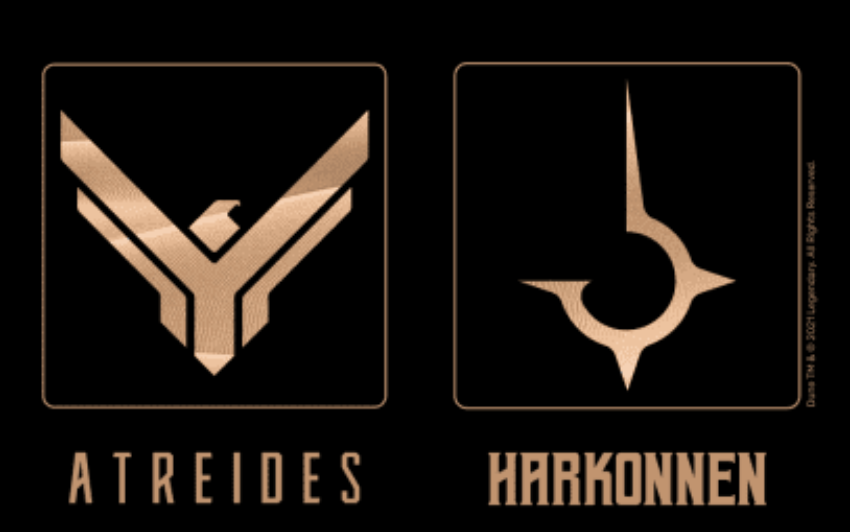
Photo Credit: Warner Bros. In the previously referenced story from Fast Company, we know that “Frank Herbert’s masterpiece also helped Afrofuturist novelist Octavia Butler imagine a future of conflict amid environmental catastrophe; it inspired Elon Musk to build SpaceX and Tesla and push humanity toward the stars and a greener future; and it’s hard not to see parallels in George Lucas’s Star Wars franchise, especially their fascination with desert planets and giant worms. And yet when Herbert sat down in 1963 to start writing Dune, he wasn’t thinking about how to leave Earth behind; he was thinking about how to save it.” This blog series now shifts to discuss how project managers can learn from some of the basic principles from Dune and strives to connect what we do as project managers that can make us project leaders if we apply these principles. Since this blog posting is a series, I am going to hold off on the many ecological aspects and how they connect with project sustainability thinking, and instead focus on a Dune Principle of project leadership. Don’t worry: the environmental themes are too important to leave out – they will be covered! Dune Principle 1: Servant Leadership and Empathy One of the most important themes of the book (and the series, and the movies) is the way that the House Harkonnen rule Dune (the planet Arrakis, where most of the story takes place), compared with the way that the House Atreides operates. For those unfamiliar with Dune, a House is “a dynastic seat of power, sometimes limited to a world and sometimes spanning several worlds. Numerous Houses existed within the imperial hierarchy, and collectively they formed the Landsraad” What’s a Landsraad? It’s basically a council of landowners, except that ‘land” could mean one or more entire planets. The symbols (thanks to Dream Artworks) of the two Houses are shown below.
So how did the two Houses’ leadership styles differ? Ask the Fremen. Or, note the way that the Harkonnens are portrayed in the film. Well, in short, one could say that House Harkonnen used Command and Control, and House Atreides embraced Engage and and Empower – at least in general. Things do change in battle. This whole dynamic is actually the subtitle of good friend Gordon Mackay’s excellent book which I use in my course, Project Communications and Leadership at Boston University. You can find the book here, and as you read it, think of those two Houses. I’ll summarize a little bit below. In his book, Gordon says: “…‘project management’ is, increasingly, a contradiction in terms. Managerial ‘command and control’ does not inspire or, engage, nor does it foster the synergy of collaborative working. The function of delivery to cost, time, quality and scope remains. But, the function in delivery is to adopt a form fit for purpose in increasingly VUCA external and internal delivery environments. This chapter expands on the new function of project leadership – what it seeks to achieve as underpinned by relevant contemporary theory. It is followed by a structured approach for the aspirant and unctiong project leader to apply, in order to establish effective project leadership. The function of project leadership is to empower and facilitate the realisation of individual and team potential, and the emergence of collaborative team synergy. Just as the function and form of ‘stakeholder management’ shifts towards ‘stakeholder engagement’ , so too, now, successful project delivery requires a move from ‘project management ’ to a function and congruent form resulting in a fully ‘engaged’, collaborative team. What ‘engages’ the team, and all project stakeholders? Gordon has been a guest in my courses several times. A further example of his wisdom can be found in this one-hour video: This applies, of course, to project leadership, and it has not gone unnoticed in the world of overall HR and leadership. In fact, I found an excellent blog post which covers the Houses as well as the Bene Gesserit by Luis Querido, right here. Here’s Luis’ summary of the two Houses: “House Atreides exemplifies ethical leadership, characterized by integrity, honor, and a profound sense of justice. Duke Leto Atreides, the patriarch, is revered not only for his strategic acumen but also for his compassionate and principled approach to governance. He places a high value on loyalty, trust, and the well-being of his people, which in turn inspires deep loyalty from his subjects and followers. This leadership style underlines the importance of ethical considerations in decision-making and the long-term benefits of fostering a positive organizational culture.” House Harkonnen represents authoritarian leadership, marked by power, manipulation, and greed. Baron Vladimir Harkonnen’s rule is defined by fear, exploitation, and treachery, focusing on the accumulation of power and wealth at the expense of others. This approach highlights the dangers of leadership that prioritizes personal gain over the collective good, often leading to resentment, rebellion, and eventual downfall. The main character of Dune’s initial trilogy, Paul Atreides, spends much of his time building trust with the Fremen, through logic, authenticity, and empathy. NOTE: those very specific words come from this foundational article on trust-building, team-building, and communications-strengthening from the Harvard Business Review. It is in this way that he is able to build an alliance that will enable House Harkonnen to generate (spoiler alert!) an unlikely victory over House Harkonnen. Can your leadership style evolve from Command and Control to Engage and Empower? Watch the movie (or read the books) and consider if there is some learning there. I assert that there is. |
|
I don't like to carry my wallet. My osteopath says it's bad for my spine. Throws my hip off kilter. - Kramer |