To Everything Turn, Turn, Turn


|
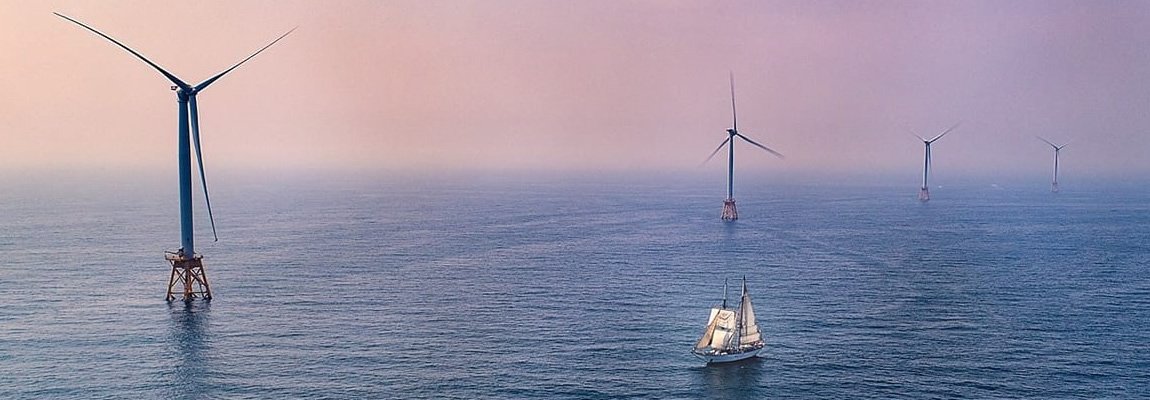
I recently posted about Vineyard Wind – a 100-turbine wind farm to be built off the islands of Nantucket and Martha’s Vineyard, Massachusetts. In that post, I discussed how stakeholders were aligning against the project with their own valid rationale(s) for opposing the construction. In the post, as I always do, I connect this to project management – secondary risks, stakeholder engagement and the like. A day or so after I posted, another article came out in the Cape Cod Times which covers a new coalition of stakeholders aligned in favor of the Vineyard Wind project. The coalition is called New England for Offshore Wind (see their website here). Their mission, as stated by Susannah Hatch, one of the founders: “We aim to drive governors and legislatures to support regional collaboration and more offshore wind procurements, building the political will to power every home in New England with offshore wind.” You can get a quick summary of their view of offshore wind in this rather inspiring video: From a project management perspective, note how the coalition acknowledges the types of stakeholders (the fishing industry, for example) by bringing them on board (excuse the pun) to share their opinions within the video. Next, note how they go over the economic benefits as well as the ecological benefits. The economic benefits are hard to ignore: The renewable energy industry has been one of the fastest growing job creators in Massachusetts, and Hatch pointed out that offshore wind has the potential to add billions to the economy regionally and tens of thousands of jobs. She cited a recent American Wind Energy Association report that hailed offshore wind as a $100 billion industry waiting in the wings, with the promise of $25 billion in economic output nationally and 83,000 jobs. With full buildout of the industry, that number could increase to $200 billion in new economic activity and 133,000 jobs, said Hillary Bright, director of special projects for the BlueGreen Alliance. The alliance unites both high-profile environmental groups, such as the Sierra Club and the Natural Resources Defense Council, with big labor unions,, such as the Communication Workers of America, United Steelworkers and United Association of Plumbers and Pipefitters, to advocate for the clean energy industry and the jobs that come with those projects.
Although in the prior article the opponents cover the secondary threats that the turbines and their construction bring to the environment, this coalition talks about the secondary opportunities, such as the reef-effect (the new fish habitats created by the protective rocks placed around the wind farm’s turbines). And New England (Boston, in particular) is known (properly, I would have to assert!) as one of the best regions in the world for academic excellence. What's the connection here? Another example of stakeholder outreach by this coalition: bringing this industry to our shores will solve a big problem - retaining our graduates who often get their high-quality education here and then head off elsewhere. From the coalition website: "New England’s greatest strength is the intellectual capital developed by its colleges and universities. Unfortunately, polls show that New England is not always good at retaining graduates after they complete their degrees. We educate the future clean-energy leaders we need to remain competitive in a low-carbon economy. But if the growth of our home-grown industry doesn’t keep pace, our graduates and researchers will need to leave the region in search of opportunities. New England’s colleges and universities can and will help this industry grow even beyond what existing public policy envisions. Our professors, students, and graduates will help ensure a robust offshore wind industry is built with minimal impact on the marine environment and maximum benefit for our economy and environment. As we educate the leaders of tomorrow, we need to build an industry that will keep our graduates in New England." Very persuasive stakeholder expansion, there, I would say! Consider these aspects of stakeholder engagement and secondary risk on your project. To whom are you reaching out? What coalitions are you building for your project? Turn around and find them, turn to them for support, turn to them to find out their reasons for opposition. Like the blades of the turbines in these projects, Turn, Turn, Turn! |
Sound Decisions
|
Off the shore of southeastern Massachusetts – Cape Cod, really - there are two relatively large islands (large by Massachusetts standards, not Texas standards): Martha’s Vineyard and Nantucket. They're in a chunk of the Atlantic Ocean called Nantucket Sound. A conflict arose there recently, not one between the islands per se, but between Vineyard Wind and the residents of Nantucket. Cape Cod is no stranger to battles regarding wind power. You may recall (I’ve blogged about this previously) that Cape Wind – the planned 130-turbine project – died about four years ago. Read about that adventure here. There are many lessons for project managers in the rise and fall of that project, particularly in the area of stakeholder identification, engagement, and in the unpredictable interaction between stakeholders which is often completely ignored (as it was with Cape Wind) by project managers. Have a look at this video by Mike Clayton with important tips on stakeholder engagement. It’s a few minutes well spent!
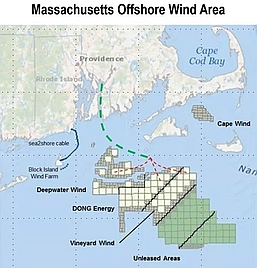
Remember: your stakeholders are not like museum exhibits, frozen behind glass. They are alive, they communicate, they interact with each other in real time, with their own interests in the forefront and your project in the very back corners of their minds. In this case, the battle is again between some varied stakeholders, aligned against the project – or at least wanting to get their voices heard. Vineyard Wind is an 84-turbine project based 14 miles southeast of Madaket (on Nantucket - see map) which will “serve about 400,000 homes and eliminate about 1.68 million metric tons of carbon-dioxide emissions each year, the equivalent of taking 325,000 cars off the road”. You can read about all of the positives of this project on Vineyard Wind’s website project page, and I encourage you to do so. On the other side are the various stakeholders, with valid concerns, who have aligned against the project, or, who want to be sure that threats to their objectives are responded to in kind. Read this excellent fair-minded story from Boston University’s WBUR. Rather than just soldiering forward, Vineyard Wind has been engaging with stakeholders. This article in the Cape Cod Times has the details. It starts: “Vineyard Wind has agreed to pay the town $34.4 million over the next 45 years as financial mitigation for the 84-turbine offshore wind farm it has proposed 14 miles southeast of Madaket that some town officials, preservationists, fishermen and environmentalists see as potentially environmentally and visually devastating.”
The solution is a combination of mitigations:
The conversations, and the engagement, I’m sure, will continue. Meanwhile the project appears to be moving forward, based on this story which highlights not only approval but the idea that it may be part of a larger effort to combine projects such as this into a program. In that article there is a great quote that reinforces the point about stakeholder engagement: "Public input is a core pillar to the renewable energy program and the expanded cumulative scenario is a direct result of stakeholder feedback received by our agency," Acting BOEM Director Walter Cruickshank said. "This expanded cumulative scenario is intended to better understand future impacts of the offshore wind industry while being responsive to the concerns of other ocean industries." I’ll be keeping an eye on this story as it evolves… resolves, and perhaps soon, as the turbines revolve. |
What is strategy?
|
In this post, I throw you a bit of a knuckleball* . Because the blog is about People, Planet, Profits & Projects, it's about thinking more holistically, thinking more broadly, more long-term, more strategically. However, when I try to find out what strategy really means, I run into a complex and ever-expanding web of different philosophies, different twists and turns - leaving me (and others) confused about what :::strategy::: really means. If we are going to change the way we think as project managers by linking our projects with the programs and portfolios - and environmental-level strategies in which they exist, we had better start by understanding what strategy really means. Right?? So...my request. Take a moment...please... I would simply like you to respond to this post with two sentences, you can make one long, one short, or both about the same length. You are limited to a total of 25 words.In the response I request that you provide your definition of strategy with the above constraints.Do NOT view others' responses first. Do NOT use a search engine or a dictionary or any type of reference book (online or paper). From your experience in the work world, what is strategy? I will post again with the top responses, giving credit (if you allow permission to do so). *from Wikipedia: A knuckleball or knuckler is a baseball pitch thrown to minimize the spin of the ball in flight, causing an erratic, unpredictable motion. The air flow over a seam of the ball causes the ball to transition from laminar to turbulent flow. This transition adds a deflecting force on the side of the baseball. ...and now: enjoy a video showing what this looks like. But don't forget my request!
|

Driving Overoptimism - Part 2 of 2
|
In Part 1 of this brief series, I discussed optimism bias and how it applies to projects, and to us as project managers. I referred to this article in Nature magazine and focused on this key point:
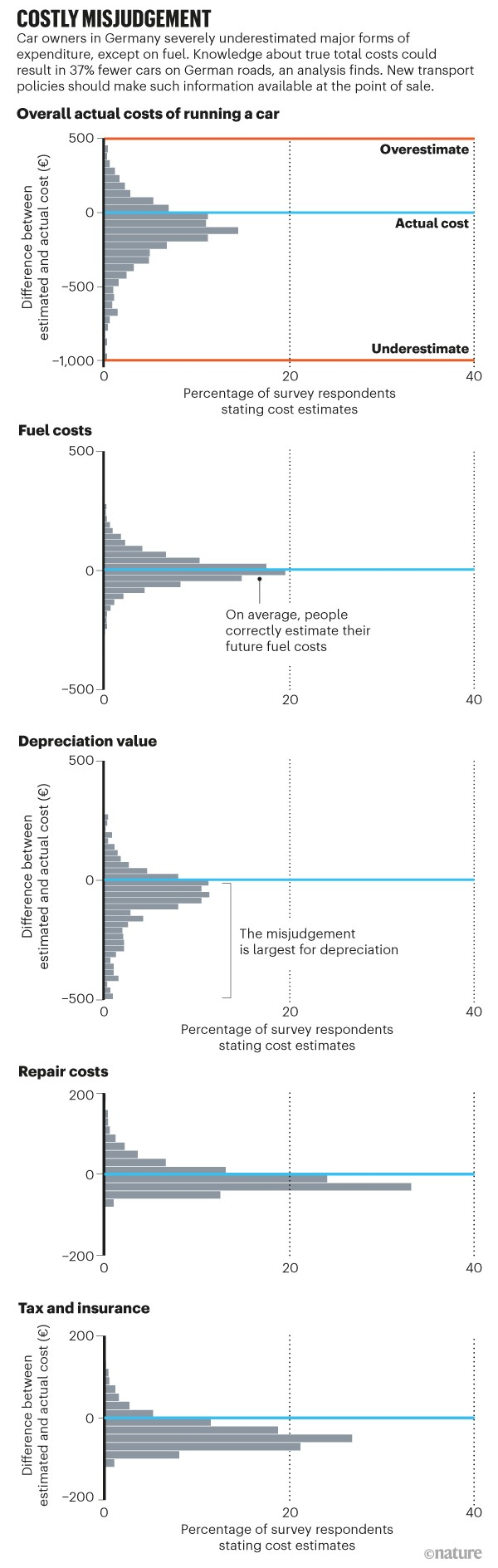
6,233 surveys were completed by car-owning individuals and about 5,500 stated their opinions of what the true monthly costs of ownership were.
Interestingly, respondents were fairly accurate when it came to fuel, but when it came to financial measures such as depreciation, this was the largest underestimation by far. Why? It’s information that is seemingly unrelated to driving. Fuel, maintenance, purchase price (or leasing costs) – these “fit” in the mindset of drivers. Depreciation – not so much appreciation for depreciation!
I found this to be a fascinating story – I hope it helps you when making a purchase decision, and in your day-to-day project management role.
|

Driving Overoptimism - Part 1 of 2
|
Photo credit: Consumer Reports MagazineOne of the most important lessons that is threaded through several of my graduate project management classes is the bias that we have as humans for optimism, often showing up in underestimating cost and time. And graduate student or practicing, pragmatic project manager, clearly that over-optimism is deadly to our projects if we want them to come in under budget and on time. In fact, I estimate that 10% of projects have this optimism bias, and that estimate is probably overoptimistic by at least 110%. (pause for ironic chuckle) In fact, I’m writing this blog post as I wait for service on my vehicle. They told me “about an hour or less”. Let’s see how that works out! (UPDATE: it took 92 minutes, so.... mic drop). Keeping the automotive theme, I’d like to post today about a Comment article in Nature magazine from 23-April-2020. In this article by Mark A. Andor, Andreas, Gerster, Kenneth T. Gillingham an Marco Horvath, the tagline is: Car owners underestimate total vehicle costs. Giving consumers this information could encourage the switch to cleaner transport and reduce emissions. So the points are these:
Some countries realize this and are taking stringent actions to control behavior and the mechanics of the emissions. For example, the UK, starting in 2035 will make the sale of new gasoline, diesel, and hybrid cars unlawful. Cities are taking action, too, by electrifying their buses. Still, almost all passenger cars still rely on fossil fuels, and, vehicle ownership continues to rise. Electric vehicles are expensive in upfront cost, although they are much cheaper to operate. Another bias we have as humans is to look only at the short term (and envision the upfront cost only and not the operating costs). So really, this is about decision making. Decisions – at least good ones – are based on data, or preferably, information, knowledge, and wisdom (see the DIKW pyramid – an excellent framework on this topic). What if, as this article, and my courses assert, what if the information we get – or the way we process it into wisdom – is incomplete or incorrect? Stands to reason: bad decisions, right? Right. And that’s the point of this article: Consumers decide whether to own a vehicle on the basis of considerations such as where they live and the vehicle’s upfront and lifetime costs. If they systematically underestimate total costs, this could increase car ownership and its associated emissions. It could also make alternative forms of transport – car sharing, alternative-fuel vehicles, public transport, biking or waking – seem less attractive. So the question now becomes: would individuals gasp the idea of a broader “total cost of ownership” ? And, armed with this better-quality information and knowledge, would they make a different choice? Turns out that the authors did some detailed work in this area,surveying over 6000 decision makers in Germany to see, and produced significant data on this. That data analysis – and a conclusion – will be Part II of this blog post.
|