Pillar Four - Open the Door - Part II


|
In the prior post I discussed the 3 Pillars of PPM (From scholar and all-around gentleman Jamal Moustafaev's book, Project Portfolio Management in Theory and Practice).
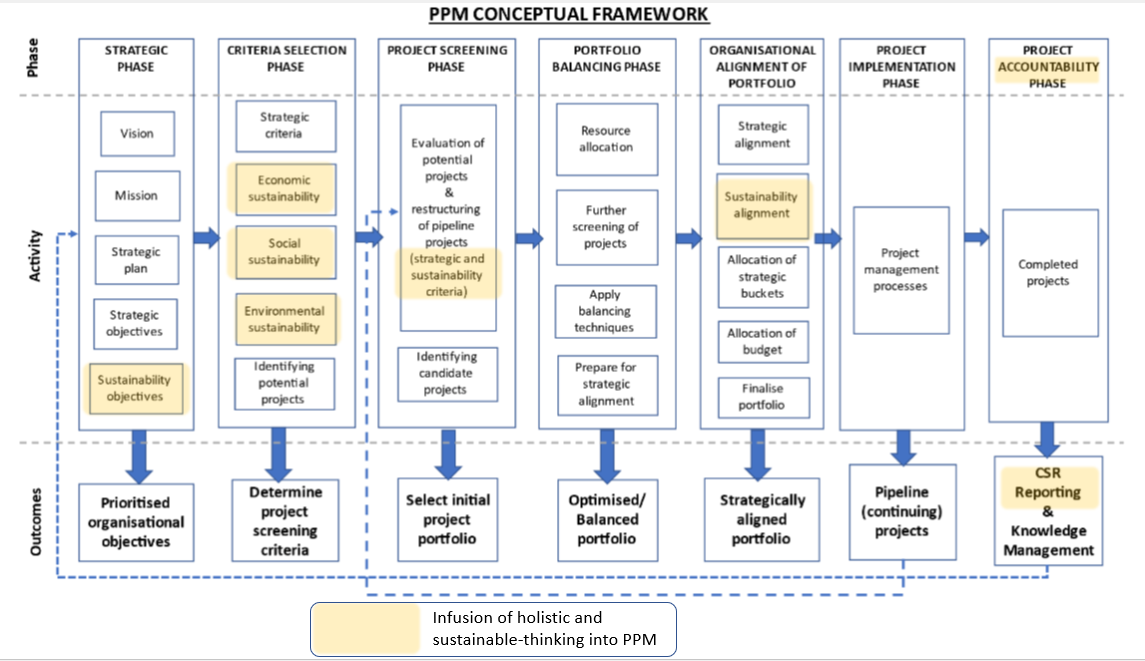
The Three Pillars of PPM Then I covered the fact that in an article by Javed Mohammad, Yu-Chun Pan, published just in 2022, and forwarded to me by graduated student Daria Risso as we work on her thesis for Politecnico di Torino, these authors imagine a fourth pillar: a pillar dedicated to sustainability and a holistic view. I like that pillar. A lot. I would like to give a shout out to my former Boston University student Daria Risso for pointing this article out to me. In this post, I want to summarize the remainder of the article and, with the kind permission of the authors, to share some of the key points and figures. But please, don’t read only this blog post – please read their very-well assembled and meaningful article (you can find it available on ResearchGate at no charge – just click here). The authors start by re-imagining the PPM Framework in the following phases, each of which is tinged, or perhaps better-stated, infused with long-term, holistic, responsible thinking:
See the figure below (highlighting mine) to show how they have done a great job to avoid tacking-on sustainability, but rather building it in.
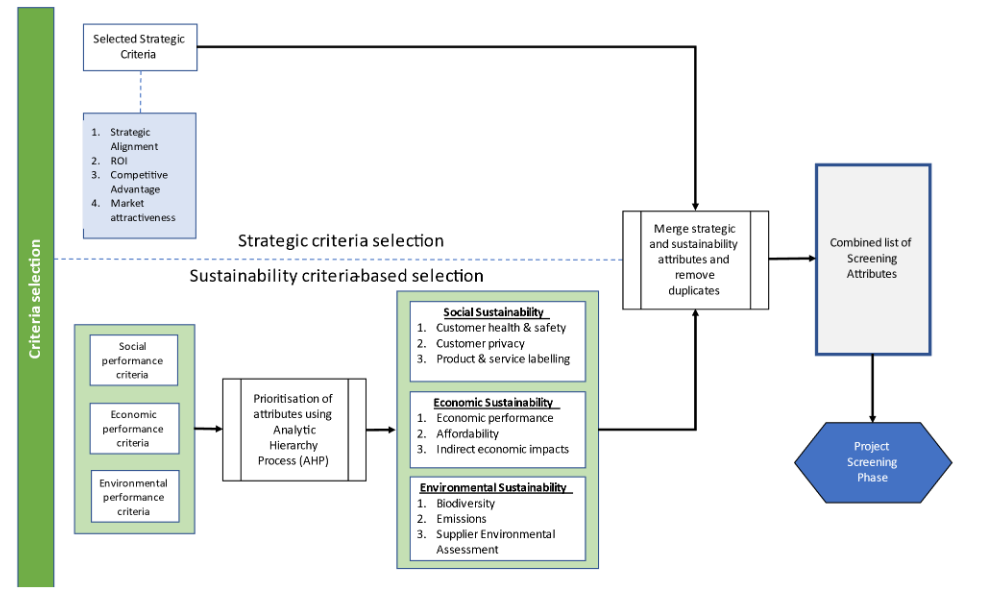
They have also put effort into criteria for project selection. It’s ironic that this comes up at a time when I happen to be teaching graduate PM students about exactly this – the selection of projects based on a multiplicity of criteria, including mathematical techniques like AHP: In this step, the participants may use any multi-criteria decision-making method (MCDM), e.g., the Analytic Hierarchy Process (AHP), that allows for pairwise comparison of variables thus establishing the relative importance of one variable against another. The process is repeated for the three categories of sustainability i.e., economic, environmental and social. See the figure below – it assures that these criteria categories are included.
Figures above used with permission of the authors (thanks!). I’ve been thinking (and writing) for a while about how some organizations have apparently misguided, or perhaps disconnected projects – projects like VW’s special sensors and software which led to Dieselgate while their C-Suite was indicating their desire to be a automotive leader in environmental sustainability. Somewhere there is a break in the connection between vision and execution – a break that I insist is at the PPM level. Perhaps Mohammad and Pan have found the fix for that breakage – a renewed focus on sustainability by those at the PPM level, those in powerful PMO positions who could filter out, with the right criteria, those projects which are misaligned from a sustainability perspective. If the organization is telling the world that sustainability is strategically important, that has to prevent projects which are producing sustainability disbenefits from ever being chartered. Here is a piece of the authors’ conclusion: It is recommended that other reporting tools should be applied to the proposed framework for a much wider understanding of these processes. Another area that requires research is whether sustainability is built into the framework bottom-up or top-down in the process and which method would be more effective. Finally, the proposal is open to contributions from the research, academic and practitioner community and should be viewed as an initial step towards developing a tried and tested framework that addresses some of the difficulties that organisations face when implementing sustainability into their project-related processes.
These authors, in my opinion, are one of a group on the leading edge of building sustainability thinking into projects with the intelligence and wisdom that comes from a PPM perspective. This is important. I urge you to read the article (that’s one reason I kept this blog post short – they say it all in their article!) and consider case studies or other suggestions that may help us as project leaders and citizens of the third rock from the sun to ‘get stuff done’ in efficient but also long-term effective ways.
|


Pillar Four - Open the Door
|
In the past few posts, I have been focused on breakthroughs in science that will yield new projects. I’ll continue to do that, of course, because they speak to the amazing new opportunities it will bring project leaders. Whole careers are going to be made for those who want to take on a project leadership role in, for example, the deployment of green hydrogen production, storage, distribution, and use, or, the creation of charging infrastructure for electric vehicles. Today, I’m shifting back to project (program, and portfolio) management itself and how it is maturing and blossoming, with our without wholly new scientific breakthroughs. In fact, the breakthrough here is more of a construction project inside Project Portfolio Management. It’s the idea of a shiny new, fourth pillar. We have the only known photo of this pillar, shown above. Naah, it’s not a literal pillar – it’s a metaphorical pillar. The original 3 pillars come from author and consultant Jamal Moustafaev, author, speaker, and CEO of Thinktank Consulting, Inc. Jamal is actually the author of a great book I’ve been using in my Program and Portfolio Management courses at Boston University for years. In his writing, Jamal has referred to the Three Pillars of PM as:
The Three Pillars of PPM But in a recent article by Javed Mohammad, Yu-Chun Pan, published just in 2022, these authors imagine a fourth pillar: adding sustainability and a holistic view. I like that pillar. A lot. I would like to give a shout out to my former Boston University student Daria Risso for pointing this article out to me. In the Abstract of this article, the authors say: This paper pursues the premise that sustainability is strategic and distinct from functional and tactical project management processes. Integrating the principles of sustainability into project management should, therefore, deliver limited outcomes or lack a comprehensive solution that is flexible and adaptable to different business models, functions and situations.
And they’re correct.
This has been a point we’ve made on this blog and that project managers have been un-shy about bringing up to me when I ask them to consider the responsibility a PM has to take sustainability into account. So how about ‘kicking this up a notch’ to PPM? That’s what I’ve called for, and I was pleased to see that this is the view of this article: Project portfolio management (PPM), on the other hand, has a much wider application and perspective. It bridges project management with the overall organisational strategy, goals and objectives. Not only is PPM strategic, but it is a continuous process, unfettered by the limitations of individual projects or programmes. The article mentions that adding a framework for sustainability thinking can help determine long-term benefits and project outcomes (this is the good side), but it also “adds some complexity” into PPM practices and will cause PPM managers and stakeholders to “prepare for additional responsibilities”. Is this trade-off worth it? Are we ready for this additional complexity? Do we think the “additional responsibilities” will pay off? This is what I plan to discuss in the next post, including a deeper dive into the article. Want to dive in with me? The article is publicly available on Research Gate, click here to access it. See you on the other side of the door… |

Green Hydrogen: Project leaders: have a gas!
|
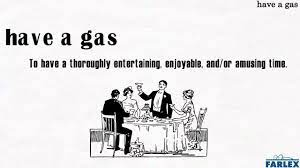
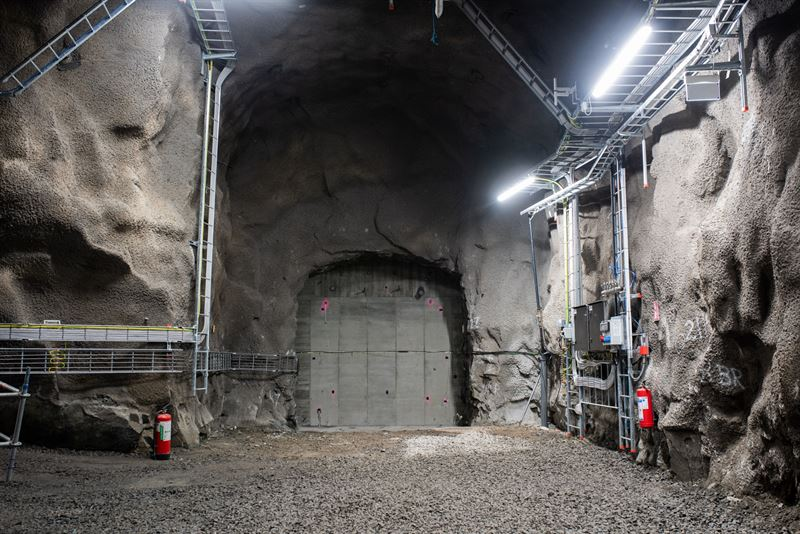
(the expression "to have a gas", as the image implies, means to have a great time. This post is about green hydrogen... and we think the opportunities abound for many interesting projects in which project managers can.... have a gas, literally and figuratively) Now that we traipsed through the spectrum of colors of hydrogen (see previous post), I’d like to talk about projects and programs to make one particular “color” of hydrogen: green. There’s some news here to start off with – as covered by PV magazine, the world’s first offshore green hydrogen pilot was just announced a couple of days ago. That project, by Lhyfe, is an 18-month offshore green hydrogen pilot project in France. According to the article: The pilot has the capacity to produce up to 400 kg of renewable green hydrogen a day, equivalent to 1MW of power,” said the France-based hydrogen producer. The 18-month wind-powered pilot in Saint-Nazaire, France, will operate near the shore for the first six months, before it is moved to a site 20 kilometers off the coast of Le Croisic. The project will be installed less than 1 km from the floating wind turbine. It will use wind power to pump, desalinate and purify seawater. In the video interview below with Creamer Media, Technical Director Thomas Créach reviews the where, when, how, and why of this pilot project.I found the ideas and mission of the start-up company Lhyfe very inspiring. Here’s a quick interview with their founder, Matthieu Guesne. There is more in the news however, besides this project itself. Another green-hydrogen-related story is about storing that hydrogen. In a cave. In Sweden. That piece of news is summarized here: “SSAB, LKAB, and Vattenfall have commissioned the HYBRIT pilot facility, which will store fossil-free hydrogen gas in Luleå, Sweden. “The rock cavern storage facility is the first of its kind in the world for storing fossil-free hydrogen gas,” wrote Vattenfall. After initial pressure tests with water in June, the 100-cubic-meter storage facility was filled with hydrogen gas and reached a maximum operating pressure of 250 bar. The two-year test period will continue with test campaigns to collect data until 2024. “HYBRIT technology will be used for the production of fossil-free sponge iron on a large scale at a first demonstration facility in Gällivare,” said Lars Ydreskog, director of strategic projects at LKAB.”
This is an amazing project, probably worth a blog post on its own. Read more about this really cool (pun intended) hydrogen storage cave here: https://www.ssab.com/en-us/news/2022/09/hybrit-milestone-reached--pilot-facility-for-hydrogen-storage-up-and-running. Some highlights:
Wow! But that’s not the end. In fact it’s just a beginning. Further, the referenced article also closes with two eye-popping stories regarding a flurry of projects related to green hydrogen: “The US Department of Energy (DoE) has opened applications for a $7 billion program to create regional clean hydrogen hubs (H2Hubs) across the United States. The project is part of the $8 billion hydrogen hub program funded through President Joe Biden's Bipartisan Infrastructure Law (covered in a People, Planet, Profits and Project blog post last month). The DoE aims to select six to 10 hubs. Concept papers are due by Nov. 7, 2022, and full applications are due by April 7, 2023. The European Commission has approved a second Important Project of Common European Interest to support research, industrial deployment, and construction of relevant infrastructure in the hydrogen value chain. Austria, Belgium, Denmark, Finland, France, Greece, Italy, the Netherlands, Poland, Portugal, Slovakia, Spain, and Sweden are participating in the project, and will benefit from up to €5.2 billion in public support. “We will also increase our financial participation in Important Projects of Common European Interest,” said Commission President Ursula von der Leyen.” Looking at the numbers in these initiatives should raise the interest of project managers who would like to work on projects that are oriented directly towards sustainability. Of course, the theme of this blog post has been that all projects need to consider the long-term, holistic outcomes, benefits, and value of their projects’ products, so really any project manager – or at least a project leader – has a say in sustainable PM. But the initiatives around green hydrogen, well, they are directly sustainable projects. Project Leaders – in the future, you may have a gas! |
The Many Colors of Hydrogen
|
In this post I would like to introduce green hydrogen, describe what it is, how it compares to the many other colors of hydrogen (did you know it came in colors?). Let’s start with the name hydrogen. Hydrogen means creator (gen) of water (hydro). Hydrogen is a colorless, odorless, tasteless, gaseous substance that is the simplest member of the family of elements. It’s number 1! Despite its number 1 status, Hydrogen sounds pretty boring, huh? But it’s also highly flammable (see video below), which means that any projects (even pilot projects) that work with this not-so-boring gas must include significant risk ID and analysis. And although this ‘boring’ gas it is indeed colorless, a whole spectrum of colors – mainly meant to describe how it is made – has been established. In my research for this post, I have encountered references to white, black, brown, blue, yellow, pink, and turquoise, and of course, green hydrogen. Below I’ll discuss the “colors” on the hydrogen spectrum individually. Much (but not all) of this comes from a very good National Grid site. Blue hydrogen is produced mainly from natural gas, using a process called steam reforming, which combines natural gas and steam. This produces hydrogen – but has carbon dioxide as a by-product. To prevent this CO2 from being released, carbon capture and storage (CCS) is essential to trap and store this carbon. Blue hydrogen is sometimes described as ‘low-carbon hydrogen’ as the steam reforming process doesn’t avoid the creation of greenhouse gases – it lowers it. Grey hydrogen is the currently the most common form of hydrogen production. Grey hydrogen is created from natural gas, or methane, using steam methane reformation but (thus the “grey” name) is produced without capturing the greenhouse gases that are byproducts. Black and brown hydrogen - Using black coal or lignite (brown coal) in the hydrogen-making process, black and brown hydrogen forms, as the name implies, are the absolute opposite of green hydrogen in the hydrogen spectrum and the most environmentally damaging. In fact, any hydrogen made from fossil fuels, such as carbon, through the process of ‘gasification’ is sometimes also called black or brown hydrogen. Pink hydrogen is generated through electrolysis powered by nuclear energy. Nuclear-produced hydrogen can also be referred to as purple hydrogen or red hydrogen. We really are covering the entire spectrum here! It should be noted that the very high temperatures from nuclear reactors could be used in other hydrogen production processes by producing steam for more efficient electrolysis or fossil gas-based steam methane reforming. Turquoise hydrogen is very new and yet to be proven at scale. Turquoise hydrogen is made using a process called methane pyrolysis to produce hydrogen and solid carbon. In the future, turquoise hydrogen may be valued as a low-emission hydrogen, dependent on the thermal process being powered with renewable energy and the carbon being permanently stored or used. Yellow hydrogen refers to hydrogen made through electrolysis using solar power. Yellow – sun – you get it. White hydrogen is a naturally-occurring geological hydrogen found in underground deposits and created through fracking. There are no strategies to exploit this hydrogen at present. Seems like a potential for new projects – at least research projects! Green hydrogen (finally!!) is produced with no harmful greenhouse gas emissions. Green hydrogen is made by using clean electricity from surplus renewable energy sources, such as solar or wind power, to electrolyze water. You remember electrolysis from your science classes, don’t you? Apply electricity to water and it breaks the H2O int H2 and O. As of this writing, green hydrogen currently makes up a small percentage of the overall hydrogen production, because creating it is expensive. Just as energy from wind power has reduced in price, green hydrogen will come down in price as it becomes more common. In my next blog post I will cover the process to create Green Hydrogen and discuss a very recent development – breaking news of sorts - in green hydrogen with a pilot underway in France. References: https://www.nationalgrid.com/stories/energy-explained/what-is-hydrogen https://www.weforum.org/agenda/2021/12/what-is-green-hydrogen-expert-explains-benefits/ Greentech article https://www.greentechmedia.com/articles/read/green-hydrogen-explained |

The Inflation Reduction Act and ...projects!
|
Photo Credit: CleanTechnica.com I was a bit surprised that an Internet search on "Inflation Reduction Act" (US H.R.5376, just signed into law this past week by US President Biden) and "project management" didn't yield many results. I found it surprising because whatever your political views (this is not a political post), this is a sweeping piece of legislation especially when it comes to the intersection of projects and 'green' - that is, sustainable development. The legislation's impact on green infrastructure is summarized very well in a posting by international law firm Davis Polk. That article states that the legislation: ...includes approximately $369 billion in tax credits and investments in clean energy. Once enacted, the bill will be the largest clean energy investment in U.S. history. This client update outlines the key climate and energy provisions of the IRA, as well as companion legislation under consideration relating to permitting of energy projects. Projects. Yes the paragraph begins with US$369B and ends with the word projects. So I would assert that this legislation and the investment it makes in projects means that opportunities for project managers - especially project leaders who are well-versed in concepts like benefits realization, the UN's Sustainable Development Goals, the idea that projects yield long-term results - things like that. This blog has been posting about those topics since 1893. Or at least it feels like that. Let's dive in a bit deeper into the legislation, to reinforce the idea that this will result in a huge boost in demand for project managers. Again, (adapted) from the Davis Polk article, here are the key elements:
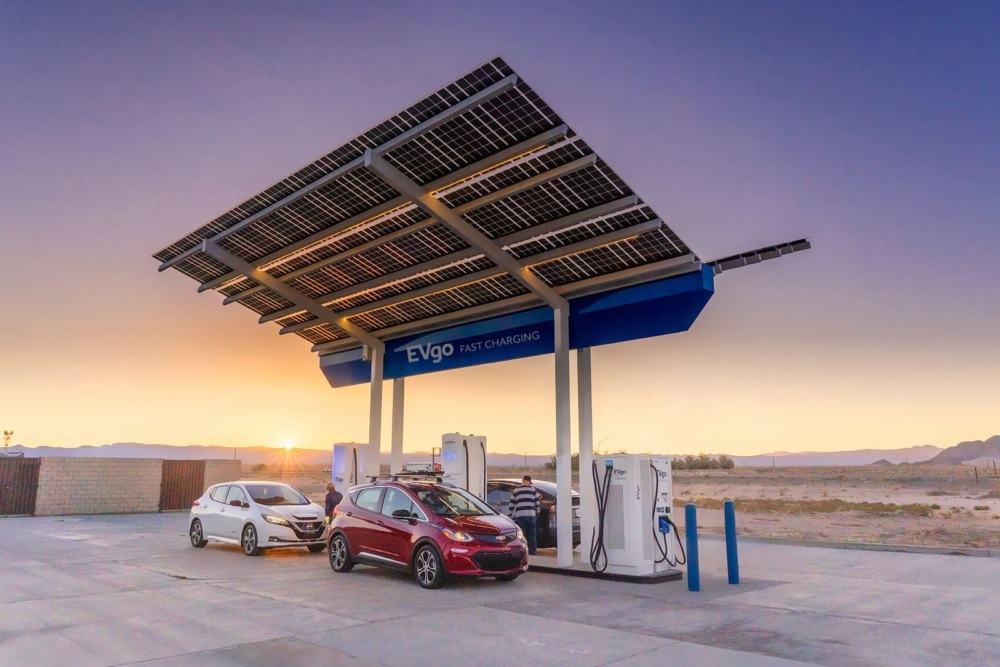
Think about the push for electric vehicles. That's part of the IRA. Those vehicles have to be charged, and that takes infrastructure - and that takes projects. In fact, in today's news I read that California is going to ban the sale of new petrol-based cars by 2035. So, keeping that all in mind, here's one little US$7.5B IRA example (and there are many more in this article from Protocol.com):
See more of these examples in the full article, which highlights the key tech winners from the IRA. The point of this post is that these 'tech winners' will need many project leaders! Another place in which I also found a connection between the IRA and projects is this site from RK&K - a globlal planning, engineering, and construction firm, which says: The IRA also includes $60 billion for clean energy manufacturing tax credits and roughly $30 billion in targeted grant and loan programs for states and electric utilities to accelerate the transition to clean electricity. One of the common themes was “hydrogen,” which appeared 65 times, almost six times as more as “biofuel” and more than twice as often as “carbon capture.” They're referring to green hydrogen. From the RKK posting: Experts believe the IRA may be the most important event in the history of green hydrogen, which is hydrogen generated from a renewable energy source such as wind, solar, or hydro. According to a recent report, tax credits offered in the new law would make it cheaper to produce green hydrogen in most parts of the country, than existing sources of grey hydrogen (the most common form), which is more harmful to the environment. I plan to follow up this post with more about what the legislation means to project management, in particular, this intriguing piece about green hydrogen. So stay tuned if you want to learn about green hydrogen, how it's different from grey hydrogen, and why that shift in color is worth a lot of the other green (dollars! many, many dollars!) to projects and project managers. Meanwhile, if you are curious as to what the IRA means to you (personally), click here to a look at this recent article from Forbes. |