The Inflation Reduction Act and ...projects!


|
Photo Credit: CleanTechnica.com I was a bit surprised that an Internet search on "Inflation Reduction Act" (US H.R.5376, just signed into law this past week by US President Biden) and "project management" didn't yield many results. I found it surprising because whatever your political views (this is not a political post), this is a sweeping piece of legislation especially when it comes to the intersection of projects and 'green' - that is, sustainable development. The legislation's impact on green infrastructure is summarized very well in a posting by international law firm Davis Polk. That article states that the legislation: ...includes approximately $369 billion in tax credits and investments in clean energy. Once enacted, the bill will be the largest clean energy investment in U.S. history. This client update outlines the key climate and energy provisions of the IRA, as well as companion legislation under consideration relating to permitting of energy projects. Projects. Yes the paragraph begins with US$369B and ends with the word projects. So I would assert that this legislation and the investment it makes in projects means that opportunities for project managers - especially project leaders who are well-versed in concepts like benefits realization, the UN's Sustainable Development Goals, the idea that projects yield long-term results - things like that. This blog has been posting about those topics since 1893. Or at least it feels like that. Let's dive in a bit deeper into the legislation, to reinforce the idea that this will result in a huge boost in demand for project managers. Again, (adapted) from the Davis Polk article, here are the key elements:
Think about the push for electric vehicles. That's part of the IRA. Those vehicles have to be charged, and that takes infrastructure - and that takes projects. In fact, in today's news I read that California is going to ban the sale of new petrol-based cars by 2035. So, keeping that all in mind, here's one little US$7.5B IRA example (and there are many more in this article from Protocol.com):
See more of these examples in the full article, which highlights the key tech winners from the IRA. The point of this post is that these 'tech winners' will need many project leaders! Another place in which I also found a connection between the IRA and projects is this site from RK&K - a globlal planning, engineering, and construction firm, which says: The IRA also includes $60 billion for clean energy manufacturing tax credits and roughly $30 billion in targeted grant and loan programs for states and electric utilities to accelerate the transition to clean electricity. One of the common themes was “hydrogen,” which appeared 65 times, almost six times as more as “biofuel” and more than twice as often as “carbon capture.” They're referring to green hydrogen. From the RKK posting: Experts believe the IRA may be the most important event in the history of green hydrogen, which is hydrogen generated from a renewable energy source such as wind, solar, or hydro. According to a recent report, tax credits offered in the new law would make it cheaper to produce green hydrogen in most parts of the country, than existing sources of grey hydrogen (the most common form), which is more harmful to the environment. I plan to follow up this post with more about what the legislation means to project management, in particular, this intriguing piece about green hydrogen. So stay tuned if you want to learn about green hydrogen, how it's different from grey hydrogen, and why that shift in color is worth a lot of the other green (dollars! many, many dollars!) to projects and project managers. Meanwhile, if you are curious as to what the IRA means to you (personally), click here to a look at this recent article from Forbes. |

Bee a Pyramid Climber
Categories:
project leader,
selena gomez,
only murders in the building,
bumblebee,
dna,
DIKW,
project,
research
Categories: project leader, selena gomez, only murders in the building, bumblebee, dna, DIKW, project, research
|
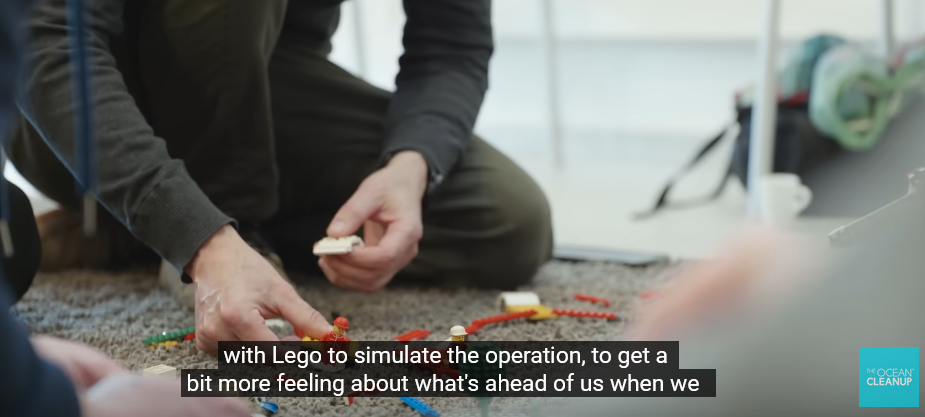
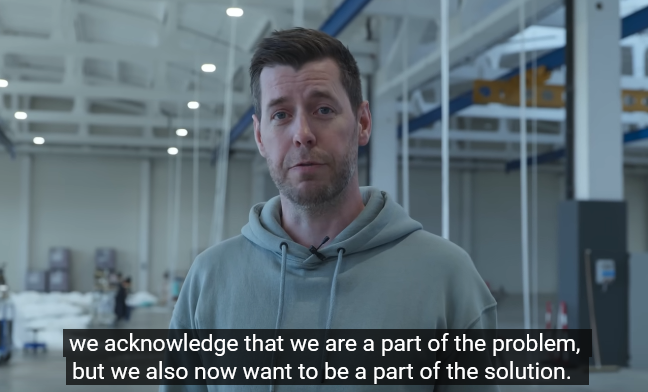
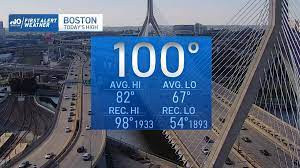
A wing and a leg. Sounds like a chicken dinner, right? Not in this case. This post is about bumblebee wings, bumblebee legs, pyramids, and the advancement of data into information into wisdom, into data. First of all, let’s talk about that advancement of data. In a book I co-authored with Loredana Abramo, entitled Bringing the PM Competency Gap, we describe this advancement using a puzzle as an example, we look at two axes, the vertical being the “Degree of connectedness” of data, and the horizontal axis being the level of understanding we have of that data. When both are low – that is, the data points aren’t connected (at least apparently) with each other, and we don’t have a high level of understanding of the data, it is indeed, just … data. In our example, we are presented with random shapes of random colors – we don’t know if they have anything to do with each other, and we don’t know what they are. As both of these attributes advance, things change. With a little more understanding and a degree of connectedness, we can tell that “wait a second, these are puzzle pieces!” and we can tell that they are meant to be connected. Moving further up to the northeast, with more connectedness and understanding, we can assemble the puzzle pieces but still don’t know what image is on the puzzle. Finally, with a great amount of connectedness (an assembled puzzle) and recognition of the image, we can see that this is a tropical aquarium. OK, so let’s start with that goofy title. It’s supposed to be a reference to that scene (clip below) from the 1939 film, The Wizard of Oz… You probably know what Legos(TM) are (if not, ask a parent, child or grandparent). And there is zero uncertainty around the fact that you know what a zero is. But do you know that the presence or absence of a zero (and not in salary) could actually be an inspiration to a project team? It can. Read on. Gyres You may not know what a gyre is. The US National Oceanic and Atmospheric Administration (NOAA) defines a gyre as a large system of swirling ocean currents. Increasingly, however, it also refers to the garbage patch as a vortex of plastic waste and debris broken down into small particles in the ocean. One of the largest such gyres is the Great Pacific Garbage Patch. I have previously blogged about Ocean Cleanup, the brainchild of Boyan Slat. This program has grown and continues to expand. Have a look at the video below. Really. It's 16 minutes long. Knowing that some of you won't watch it, I’ve also curated some of the key points for project leaders to take away. Much of it has to do with an agile approach to projects and the way teams work best together. There’s also some great nuggets in here about how stakeholders that could easily be opponents were made to be collaborators. Legos In the video you can see the relief on team members’ faces in that they now have a chance to meet face-to-face again. They take advantage of this by using Legos to model the new System 03. This is a large upgrade over Systems 001 and 002. That is not to say that these systes have not been effective. They have removed so far 55 tons of plastics from the Pacific. Note that System 03 has one fewer zero. Which brings us to the next piece, which is: Zeros. Zeros When Ocean Cleanup started, the program directors thought that it would take hundreds of these systems to clean up the Great Pacific Garbage Patch. So, three ‘places’ were held for the digits 001 through perhaps 472 or whatever the number of Systems it would take. With the radical redesign of System 03, it was determined that TENS, not hundreds of systems could handle the cleanup. So, for the simple numerical reason – but also as a motivator and a ‘totem’ of the project, one zero was removed. Do not underestimate the power of project ‘totems’ like this. Other takeaways As you watch the video, please notice some of the other project leadership ideas that this team has adapted, some which come from an agile mindset, some from predictive PM. They have done a great job of applying my three-word solution to the completely non-existent ‘versus’ situation when it comes to which methodology is best: Use What Works. As we saw with the Legos, the team used modeling – in that case physical modelling. However, they also make significant use of mathematical modeling which reportedly has been quite accurate in predicting where and when to launch the System 02 missions. They use what I call "careful KPIs", and a ‘balanced scorecard’ (although they don’t use that term). The KPI (key performance indicator) is cost per kg of plastic removed. They want to clean the ocean, but they want to do it in a fiscally responsible way. As for the balanced scorecard, they are quite aware that their efforts have an impact of their own – the vessels burn fuel, they do intercept some wildlife, and they are not ignoring it – in fact they use that in the measurement of their success, not just the tons of plastics they are removing. When the team encounters a problem (such as plastic escaping over the floating boundaries of the collection system) they use a ‘lockup meeting’ in which the team all gets together to brainstorm and cannot leave until they have a solution. They even make references to ‘locking the door and throwing away the key’. In general note how they have become a 'learning organization' and are allowing themselves to try-and-fail, try-and-fail, so that they can try-and-succeed. One of the most poignant segments of the video is a visit to the firm which is making the collection nets. The firm is a fishing company. Normally they are making nets to catch fish. It turns out that much of what is collected by the Ocean Cleanup is from the fishing industry. So the two groups might naturally be at odds. But each actually stands to gain from the other. The Ocean Cleanup team gets expertise and manufacturing capability for their nets. The fishing firm gets cleaner, ‘greener’ fish and as the interviewee says in the video, a chance to move from being ‘a part of the problem to being part of the solution’. I found this 16-minute video to be inspiring and informative, in particular for project managers who want to become project leaders. What did you think? Boston broke its all-time record temperature this week, reaching 100 degrees F. I've covered climate change enough to know that this is weather, not climate. Climate is over the long term. So a one-time blip of 100 degrees is not necessarily climate change. Trends, and continued breaking or near-breaking of the record, on the other hand is attributable to climate change. You can learn about the difference easily by visiting this site. Whatever you call it, being aware of and dealing with threats is probably one of the number one reasons you call yourself a project manager (or my preferred new title - project leader). Projects, by definition, produce a unique outcome, product, or service. By virtue of that uniqueness, whatever it is you are doing has never been done before. So you will - I promise you - encounter events which positively or negatively affect the outcome. That is the definition of risk. Previously, I have blogged (three times, even) about the identification of a threat in Boston, the threat of a heat wave, especially in vulnerable areas of the city without shade, often in lower-income neighborhoods. The City, under the leadership of Mayor Michelle Wu, has put in place a risk response plan, featured in my blog posts, which, now that the risk has become an issue (an issue is a risk which has become real). This is just a brief post to applaud the City for its following the best practices of the PMBOK(R) Guide, 6th Edition, which has as the processes for Risk, the following: The "Implement Risk Responses" bit is important. You can plan all day, and all night, but if you don't have a way to implement the plan, you fail. In this case, the plan was implemented, in the form of pools and tot sprays, and cooling centers, which have been activated based on this heat wave. Photo courtesy of Boston Globe Even the Boston Public Library is in the mix. Library locations are also available for residents to seek relief from the heat, and to find enriching activities and events. The East Boston and Egleston Square branches recently installed misters in their outdoor free WiFi zones. To me, it just goes to show - great project leadership is about (amongst many other things) broadly and deeply identifying risks (both threats and opportunities), coming up with well-thought-out and fact-based responses, and being truly ready to implement those risk response plans. One other thing: don't forget secondary risk. That's new threats (or opportunities) triggered by the risk responses themselves. In this case, an example of a secondary threat would be an injury on a poorly-designed splash pad, and a secondary opportunity would be increased Wi-Fi range as an effect of the misting. In the meantime, if you are in any of the areas of the world (Boston is by no means alone here) affected by the high temperatures, stay cool, stay safe, and keep leading cool projects! In Part 1, I promised that in Part 2, I would continue an analysis of Bruce Harpham's article. But Andy Jordan posted another excellent article, which became Part 2, so this becomes Part 3. Carry the 2, divide by the square root of -1, and here we are at Part 3. Bruce Harpham's post, Climate Change: Micro and Macro Opportunities for Project Managers, does an excellent job categorizing and making actionable the things that project leaders can do. I changed the word MANAGERS to LEADERS for reasons that I have explained in past posts and will continue to harp(ham) on in the future. The bottom line is that our title is incorrect. We are not project managers. We are project leaders. If you don't think so, have a look at this Harvard Business School post on the topic. You tell me which better describes what you do (or aspire to do) in your projects. In any case, what Bruce does in his post is to first break down the types of opportunities into micro and marco. I would offer my opinion that in this case, micro really does mean tiny. These are the things I first encountered when people were promoting "green" project management. They included things like using recyclable forks in your project office kitchenette. Yes, they contribute, and make incremental improvements but they are not at all what we really need to do if we want to make the transformative changes we need to make as project leaders. Bruce defines micro opportunities as being focused on decisions you can make as an individual project manager - and here they are: 1. Encourage remote work You indeed can do this for your project team, but often, this is an organizational guideline or policy. There is also a hidden danger here, as Jim Stewart and I will discuss in our upcoming book Great Meetings Build Great Teams: A Guide for Project Leaders and Agilists, it sometimes can make your project more efficient (less rework) if your team does have at least an initial face-to-face meeting. The impact of having the team together to build rapport can be worth it in the long run. 2. Change project procurement criteria This is a good one, and my only advice here is to escalate this beyond the project level to the organizational level. If you find a great 'sustainability-oriented' vendor, yes, use them for your project but also make this finding available for other projects and for the broader operational use! 3. Add a granular, specific interpretation of climate change to your risk register I would suggest that this could be easily made into a Macro Opportunity because this is process-related. If you consciously identify and respond to risks that involve long-term effects (not only climate change but also social impacts and long-term economic impacts), you are changing your mindset (see Part 2 of this series). That's Macro! Macro Opportunities 1. Seek out different projects at your organization This is good advice. Vote with your feet. Look for projects that are either aimed at a triple-bottom-line solution or have already integrated long-term thinking into their planning. 2. Get involved in carbon disclosure projects Again, this is a means of voting with your feet. Seek out these career opportunities! 3. Change companies I know what Bruce is saying here. Move to a company which has adopted a sustainability-oriented philosophy. It's as I say above - voting with your feet. However, there's nothing wrong with being a change agent at your current organization. As project leaders (there I go again) we are change agents by definition. I want to thank Bruce Harpham and Andy Jordan for their excellent contributions to projectmanagement.com. After writing the book Green Project Management* 4,308 years ago (actually only 13), it is rewarding to see the attention - the proper attention - the macro attention - that sustainability thinking in PM is finally getting. In fact, the term should be Sustainability Oriented Project Leadership or Value System Project Leadership, because 'green' implies a sort of 'save the whales, save the snails' *** focus, when in fact (although saving species is important) this is much more about long-term thinking than only about all creatures great and small. Your thoughts? Your long-term thoughts? ***This reference, by the way, to 'whales and snails', is the inspiration for the image that goes with the post. The late, great George Carlin talks here (language warning) sarcastically about going too far down a path of environmentalism. Remember: it's sarcasm. I hate music, especially when it's played. - Jimmy Durante |

 Posted
by
Posted
by