








Guessing is not a strategy: How to build decision velocity with AI and real-time data
June 10, 2026 | Live Webinar

You Can't Get They-ah From Hee-yah
Floating an idea into reality: the other side of the AI Project Paradox
The Environment of the Built Environment: an AI Paradox
6th, 6th Edfition, 6th Edition PMBOK, 7th Edition, 7th Edition PMBOK, 8th Edition PMBOK, 8th Edition PMBOK Guide, Activism, actuarial, actuary, adapt, addition by subtraction, Africa, africa, agriculture, airforce, ajaita, Alaska, amazon, analogous, analytics, ancient, and more power, antarctica, anti-science, apple, apps, architecture, arctic, arrakis, Artificial Intelligence, asch paradigm, Assistant, asthma, astronomy, automobile, automotive, autonomous cars, b, bankhar, Banksy Crypto, basalt, baseball, bats, batter, beauty products, benefit, benefits, Benefits Realization, beyond epica, biases, bicycle, big data, big dfata, big dig, bike, biodiversity, biomedicine, birdhouse, blockchain, blood, blue blood, blue trees, bluefin, bluefin tuna, book review, boston, boston university, Boyce, Brazil, brazil, Breakdown Structures, BS, building, buildings, built environment, built environment, bumblebee, cake, capacitor, car, Carbon, carbon, carbon capture, carbon negative, carbon neutral, carbon pool, carbon sequestration, carbonate, careers, CEO, ChatGPT, chatGPT, chatgpt, chatgpt, chess, China, china, chopsticks, citrus, cli-fi, climate, climate change, climate resilience, climeworks, Clumsy, CO2, co2, CO2 Utilization, coalition, cobalt, coffee pods, cognition, cognitive, Collabortion, colombia, concrete, Conflict, construction 5.0, cool projects xyloscope, cooling, coral, corn, cost of good quality, cost of poor quality, cost of quality, crazy, criticism of project management, cryptocurrency, CSR, csr, data, data analytics, data privacy, datacenter, dataset, death spiral, Decision Making, decomposition, Defense and Climate, definition of a project, deforestation, dependencies, dependency, desert, DIKW, dikw, dimopoulos, disposal, dna, DOD, dogs, dolphins, dream, drilling, drink, dune, dune, dutch, early start, earth, eatlocal, eco-tourism, ecological, economic, economics, EKC, electric grid, electricity, electronics, elysis, embodied carbon, emerging technologies, empower, Energy, energy efficiency, environmental degradation, escalate, escalation, ESG, extreme weather, fallacy, FARC, farming, finance, fish, fish brains, fishing, fix, fixing the earth, flint water, Flint Water Supply, flood, flooding, Food supply chain, food waste, forest, forest for the trees, forestation, forrestgump, frank herbert, Fruitcake, fungus, fusion, Galvao, garage, gas, gasoline, geese, gender equality, gender partnerships, generational differences, Generative AI, gladwell, gold, Goodness, google, Government, GPT, great pacific garbage patch, green, green building, green buildings, green energy, green iguana, green project, green project management, greening, guest post, gyre, harkonnen, Harvesting Benefits, hawasina, hedgehogs, heursitics, historical data, hlb, holitsic, holland, horseshoe crab, human-caused climate change, hydrogen, hydrology, ice, iceland, ignition, iguana, imagery, impact, india, inequality, information, initiatives, injection, insurance, intelligence, interacting risk, internal combustion engine, invasive species, investment, isomer, issue escalation, issues, ITER, jobs, Jupiter, justification, kids, kill point, knowledge, koch brothers, Kuznets, laboratory, LAL, landscape mode, lapampa, launch, LCA, Leadership, Leadership, life cycle analyses, life cycle analysis, lifecycle, Linkedin, liquid, lizard, local, long term, long-term, long-term thinking, look up, loud, maintenance, maker, makermovement, malcolm gladwell, management, marathon, marine biology, market, mars, Martin Luther King, mean, megawatt, MeHg, melting, mercury, metal, Microgrid, microplastics, migration, military, millennial, mindset, minerals, mission, mitigate, MLK, mongolia, museum, museum of london, nature, nematodes, net gain, Net Project Success Score, net zero, netherlands, network, New book, New Jersey, New Practitioners, new york, NFT, nitrogen, noise, noreaster, norway, nova, NPSS, NREL, ocean, ocean cleanup, ocean life, oil rig, oil rigs, oklahoma, oman, only murders in the building, opportunity, overall risk, oxygen, packaging, pareto, PBS, permafrost, persistence, peru, Pharmaceutical, planet, planet.com, planning, plant, plasma, plastic, playground, pm, pm education, pmbok, pmbok guide, pmnetwork, PMXPO-2018, podcast, pollutants, pollution, poop, poor, portfolio, power, power skills, privacy, privacy concerns, professors, program, Program Management, project, project leader, project leadership, project management, project management 3.0, project on fire, project progress, Project Success, project success, projecticity, projectleadership, projectmanagement, projects, psychology, pulse of the profession, purple bacteria, purpose, quiet, rainforest, rationale, reef, refugees, renewable, renewables, Repair, repair, repeatable process, repeatable processes, repurpose, research, resource breakdown strucuture, Resource Management, reversing climate change, revisionist history, rich, rigs2reefs, ripe, risk, risk avoidance, Risk Management, risk mitigation, risk response, risk responses, river, robots, rocks, rules of thumb, rural, rural India, russia, Sarcasm/Irony, satellite, saudi, schedule, sci-fi, Science, science, science-fiction, scientific american, screaming monkeys, sea, sea life, Sea-Level Rise, sea-level rise, seagreens, seawall, seawater, seawater temperature, seaweed. beat;es. farming, secondary risk, selena gomez, sequestration, shipping, skyscraper, SLR, smart cities, smart city, smelting, social, social pressure, soil, solar, solar panels, solar perovkites, solar saheli, sonic, sponge cities, SRI, stage-gate, stagegate, stakeholder, stakeholder management, steward, stewardship, storage, strategy, stupid, success, suffer, sulphur, sunk cost, supercapacitor, supply chain, survey, Sustainability, sustainability, Sustainable Investing, Sustainable Tourism, sybiosis, symbiosis, system 03, TBL, temperature, terraform, terraforming, test, threat, threats, totem, touchscreen, tour, tower, Trains, transparency, transportation, trash, tree, tree species, trees, trillion, triple bottom line, triple constraint, truth to power, UMass, us army corps of engineers, USDA, vacuum, value, venus, vision, voice, voltage optimization, vw scandal, washing machine, waste, wastewater, water, we mean business, whales, Whirlpool, wind, wisdom, women, Women in Project Management, wood wide web, woonerf, Work Breakdown Structures (WBS), world breakdown structure, worms, xian, xylotron, Yale


|
Electric vehicles appear to be the trend of the future. Ford is introducing a pretty cool-looking Mustang SUV which is fully-electric. Of course Tesla has had electric vehicles for years, and some states and countries are moving to eliminate all vehicles but electric in the near future. But what is interesting and surprising to many folks is that the move to fossil-fuel vehicles was actually a shift AWAY from the existing electric vehicles of the early 1900s. Everything old is new again. Below is a picture of a 1900s Fritchie, and below it, the brand new Ford Mustang all-electric Mach-e. Quite a difference.
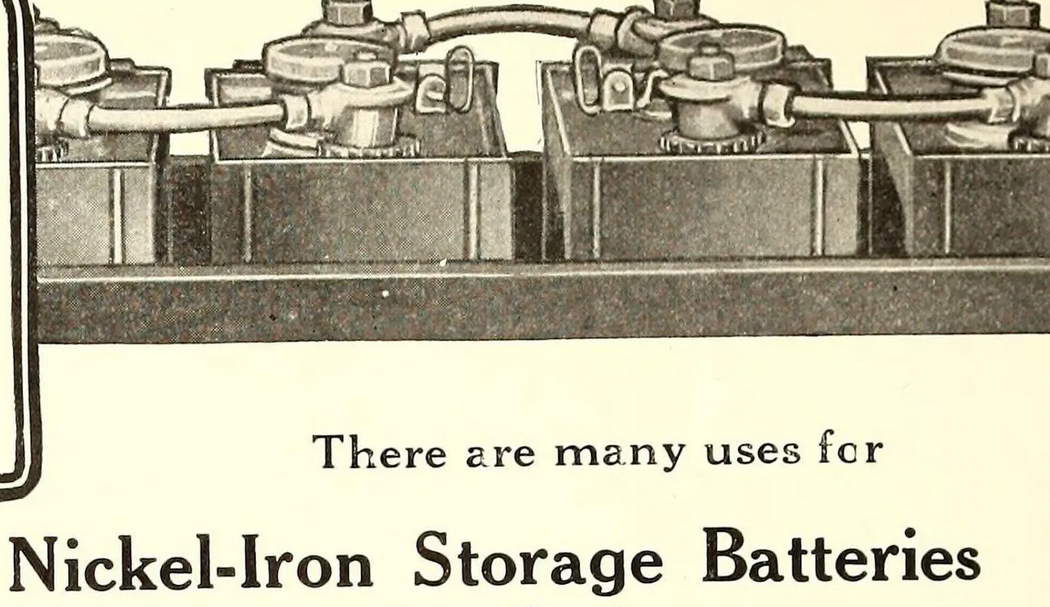
It’s actually quite an interesting story – learn more here. Download this interesting history of the electric vehicle: But that’s not the real story here, it’s more about the batteries in those old electric cars, a battery invented by a Swedish scientist and brought to popularity by Thomas Edison. And it’s also a story about Texas and some Texas-sized tall tales about wind power’s alleged failures. For example, Fox News’ Tucker Carlson said “a reckless reliance on windmills is the cause of this disaster,” claiming that “the windmills froze, so the power grid failed”. Here’s a story from the Texas Tribune on the power failures. Reuter’s news fact checkers came up with this conclusion: “The use of wind turbines in Texas does not appear to be the primary cause of statewide power outages amid historic cold weather. The state’s woes mainly stem from issues surrounding its independent power grid. The cold weather affected all fuel types, not just renewables.” Still, although the criticism of wind power contrived and very much ‘over the top’, it is true that one improvement to renewable energy would be to store the power from windmills that aren’t currently turning or solar panels that aren’t being bathed in sunshine. And that need for storage takes us to – you guessed it – batteries. Until I read the BBC article and did some follow-up research, I wouldn’t have thought that the breakthroughs would be coming from the 90s. And not the 1990s. The 1890s. The battery of concern, the nickel-iron battery, was introduced (and patented) by Swedish inventor Ernst Waldemar Jungner in 1899. It is very durable, is able to easily deal with the rigors of overcharging or being frequently depleted, but it does have the unique property of producing hydrogen as a byproduct. In the 1890s, this was an annoying and potentially dangerous issue. But 100+ years later, things are very different. Do you remember your high school chemistry class? Electrolyis? See this video, just in case you forgot. From the BBC article: A research team at the Delft University of Technology in the Netherlands happened upon a use for the nickel-iron battery based on the hydrogen produced. When electricity passes through the battery as it’s being recharged, it undergoes a chemical reaction that releases hydrogen and oxygen. The team recognised the reaction as reminiscent of the one used to release hydrogen from water, known as electrolysis. "It looked to me like the chemistry was the same," says Fokko Mulder, leader of the Delft University research team. This water-splitting reaction is one way hydrogen is produced for use as a fuel – and an entirely clean fuel too, provided the energy used to drive the reaction is from a renewable source. The technical paper about this process from Delft TU is here: https://pubs.rsc.org/en/content/articlelanding/2014/ee/c6ee02923j#!divAbstract The team came up with the name “Battolyser” (a cross between ‘electrolyser’ and ‘battery’) Conventional batteries, such as those based on lithium, can store energy in the short-term, but when they’re fully charged they have to release any excess or they could overheat and degrade. The nickel-iron battolyser, on the other hand remains stable when fully charged, at which point it can transition to making hydrogen instead. The University’s spin-off company Battolyser says this on the Koolen Industries website: Right now, the largest battolyser in existence is 15kW/15kWh, and has enough battery capacity and long-term hydrogen storage to power 1.5 households. A larger version of a 30kW/30kWh battolyser is in the works at the Magnum power station in Eemshaven in the Netherlands, where it will provide enough hydrogen to satisfy the needs of the power station. This video explains the functionality of the Battolyser project. One takeaway for me in all of this: it may be a century before a project’s product (in this case, the invention of the nickel-iron battery) starts to yield real benefits!
|
|
When a country charters the largest construction project in its history, it’s worth sitting up and taking notice. I highly recommend that you indeed sit up, grab a wienerbrød, and sip on a kaffe to best enjoy this post. Just to give you an idea why this is exciting – here are some examples of projects on the scale that I’ll discuss here (the largest in a country’s history):
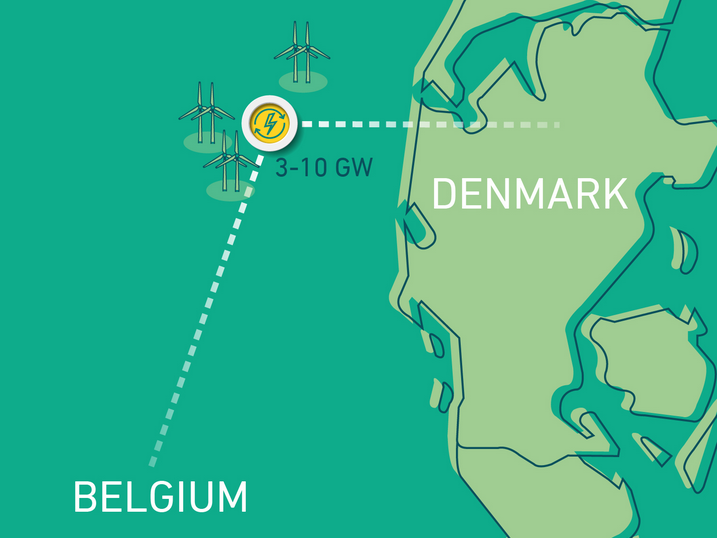
Most of these are in the tens or hundreds of billions of dollars (or equivalent currency). That is a lot of wienerbrød! So which country are we talking about here? Well, there was a hint in the title of the blog post, because that is (or is supposed to be) Danish. The story is about what is going to be a brand new Danish island, an Energy Island. Yes, you read that correctly – a brand new island in the North Sea, purpose built to generate and store power. The island will be located about 80 kilometers off the coast of Jutland, the large peninsula which contains the Danish mainland (see map, source: https://ocean-energyresources.com/2021/02/12/north-sea-energy-island-can-make-denmark-and-belgium-electricity-neighbours/).
The cost? Oh, about 210 billion Danish krone ($33.97 billion). The benefit? It better be huge, with that sort of expense. And it is: the island’s turbines will produce enough energy to power 10 million homes in Europe, including, of course, the entire country of Denmark. The construction project, believed to be the biggest in Danish history, will – aside from the construction of the island itself, no small feat – will build and link hundreds of wind turbines to deliver enough electricity for millions of households. Have a look at this brief video for details and striking images: What’s the rationale for this project? After all, you don’t just go building islands in the ocean for $30B for no reason. In this case, the rationale is directly traceable to Denmark’s Climate Act, in which the country has committed to an ambitious 70% reduction in 1990 greenhouse gas emissions by 2030, and to becoming CO2 neutral by 2050. Last December it announced it was ending all new oil and gas exploration in the North Sea. When built, the island will supply both clean power to homes and green hydrogen for use in shipping, aviation, industry and heavy transport. The decision came as the EU unveiled plans to transform the bloc's electricity supply. The bloc aims to rely mostly on renewable energy within a decade while increasing offshore wind energy capacity roughly 25-fold by mid-century (Ecowatch, 2021) From a project management perspective, what’s the time, cost, scope, value, and fit for this project? And the value?
Find more information about these projects here: https://www.nesoi.eu/content/1st-energy-island-will-be-built-danish-north-sea-coast https://www.thebalancesmb.com/top-ten-largest-construction-projects-844370
|
|
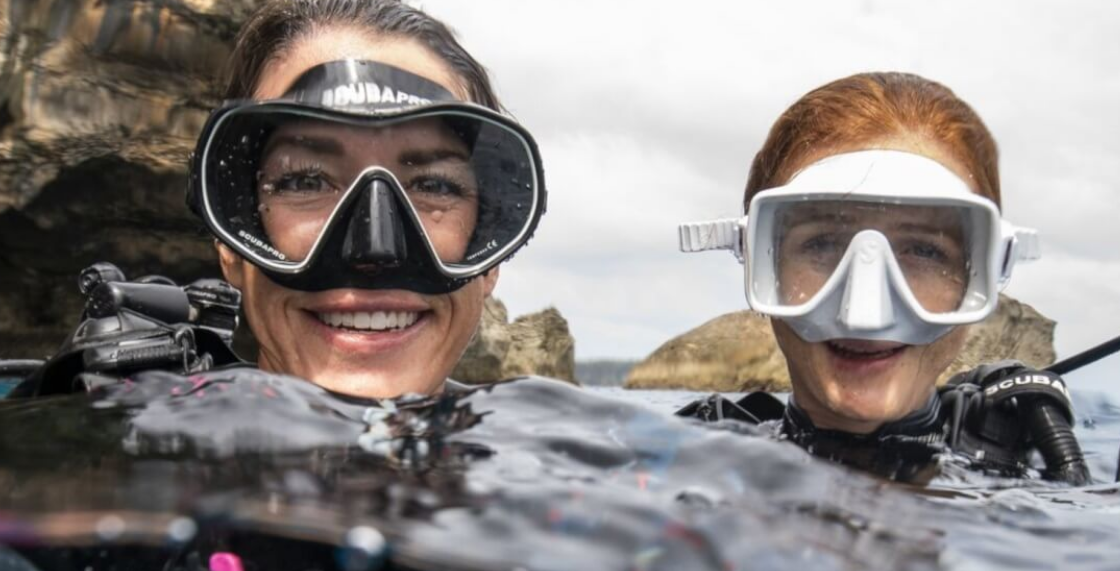
In the prior post, "Repurposed Rigs", I discussed the ways in which oil rigs at their end of life were being repurposed - as diving resorts, or coral reefs. One company, Blue Latitudes, specializes in the research, consulting, and planning for such projects. Co-founders, and marine biologists Emily Hazelwood and Amber Sparks have been featured in Forbes magazine (see this article) in their "30 under 30" section. I recently had the privilege of speaking with them about these initiatives from a project, program, and portfolio perspective. If you haven't already, please have a look at this amazing video that gives the background of the work Blue Latitudes is doing. Let me start with their backgrounds and then just have you take a look at the interview. Blue Latitudes' Mission (from their website) is: Our vision at Blue Latitudes is to find silver linings in our oceans at the intersection of industry and the environment.We unite science, policy, and communications to create innovative solutions for the complex ecological challenges associated with offshore industry.As to the co-founders, there's a photo above from a profile on Scubapro.com, and below, a photo of them with an old friend; then we get right into the biographies and the interview itself.
Emily Hazelwood is a marine conservation biologist, oil and gas consultant and explorer. She has a B.A. in Environmental Science from Connecticut College and an M.A.S degree in Marine Biodiversity and Conservation from Scripps Institution of Oceanography. Emily was recognized on Forbes 30 Under 30 list in the energy sector for her work with Blue Latitudes to develop sustainable, creative, and cost-effective solutions for the environmental issues that surround the offshore energy industry. Emily has extensive experience conducting both international and domestic environmental impact assessments for governmental agencies and private sector clients, and specializes in developing sustainable environmental strategies for offshore energy development and decommissioning. Mrs. Hazelwood previously worked as a field technician on the BP 252 Oil Spill in the Gulf of Mexico. This is where she witnessed first hand the destruction and devastation wrought by an oil spill. However, it is also where she learned of a unique silver lining despite the realities of offshore oil and gas development, the Rigs to Reefs program. She is a PADI certified Dive Master and an AAUS Scientific Diver. Amber Sparks is an oceanographer, environmental scientist and entrepreneur. She has a B.A. in Marine Science from UC Berkeley and a M.A.S in Marine Biodiversity and Conservation from Scripps Institution of Oceanography. In 2018, Amber was recognized on Forbes 30 Under 30 list in the energy sector for her work with Blue Latitudes to develop sustainable, creative, and cost-effective solutions for the environmental issues that surround the offshore energy industry. Amber also has a strong background in technology. A former Ocean Curator at Google, she engineered and launched intelligent layers in Google Earth and Google Maps that distill and relate complex concepts in ocean science for a variety of audiences. Today she uses those skills in the oil and gas industry to map fishing activity in proximity to offshore structures and inform decommissioning decisions in relation to commercial fisheries. Mrs. Sparks has extensive experience as a project manager specializing in ecological impact assessments, marine biological monitoring and habitat restoration through the Rigs to Reefs program. She is certified as an AAUS scientific diver. Here's the interview (about 37 minutes): |
|
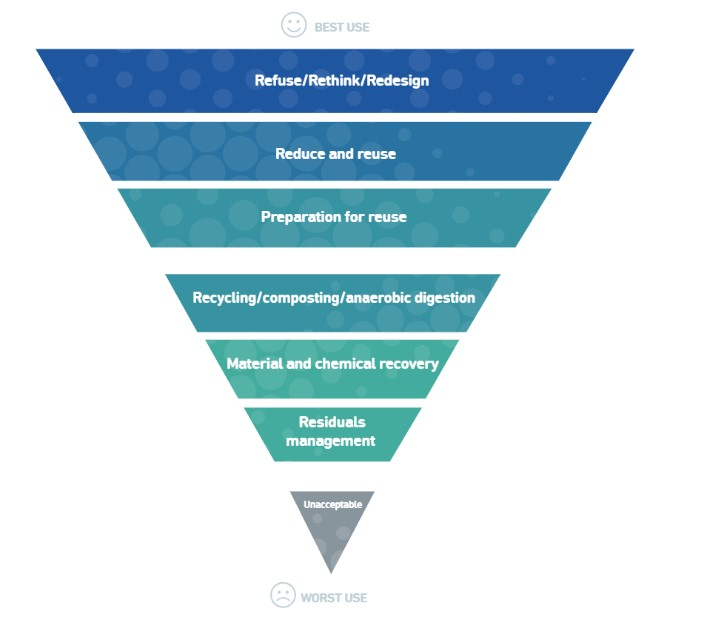
Photo: Getty Images This introductory blog post is the first part of a series that is themed heavily around “thinking past the end of a project” with an inspirational implementation of that idea. If you have been following People, Planet, Profits, and Projects, or if you have read Green Project Management or its follow up book, Driving Sustainability Success, or you have any sense of what ‘sustainability in project management’ really means, you know that it is not only about projects to build wind farms and solar panels. It is about integrating a thoughtful, holistic, responsible, long-term view into planning and executing projects, which, we like to say, means “thinking past the end of the project”, even to that point in time when the product of your project is (for lack of better words) dead, useless, kaput, “finito”, over-and-done-with. We don’t like to think that way, do we? As project managers, we think about the ribbon-cutting ceremony, the celebratory party, the congratulations-on-a-project-well-executed, and we want to begin working on our next project. It’s in our blood, our DNA, to get things done. And we see “done” as that time when that black diamond milestone that says “END” has passed. Let’s say your project is an oil rig. Or, perhaps it’s a drilling project based on an oil rig. Should you be thinking about what happens to the rig when it is no longer useful? After all, an oil rig, at some point, reaches its end of useful life. It then has to be decommissioned. A primer on the Waste Hierarchy All of us, I’m sure, have heard the phrase, “Reduce, Reuse, Recycle”. And many of us do a good job living our lives with that mantra. But not everyone is aware that there is a certain precedence to these different ways of reducing impact on the environment, or even that those are not the only three ways to do so. There are several version of this, but I prefer the one below (see image). It involves not three, but six ways of dealing with waste (whether that’s the plastic beverage bottle you from the iced tea you just finished while reading this, or an unusable oil rig). From Zero Waste Europe comes the Waste Hierarchy shown below.waswaswwaswwdd
At the top, you see “Refuse/Rethink/Redesign”, which, in the case of the oil rig, would mean moving away from carbon-based energy. That’s a non-starter for the existing 12,000+ oil rigs already out there. So let’s drop down a level and look at Reduce and Reuse. That’s where we are. Although it doesn’t say “repurpose” that’s what we’re going to discuss here – giving a new use to an oil rig – a new purpose. Note that Recycle is further down on the hierarchy. In fact, as we’ll dive into (excuse the pun) later, the recycling of materials from an oil rig is exceedingly costly, from both an economic and ecological perspective.
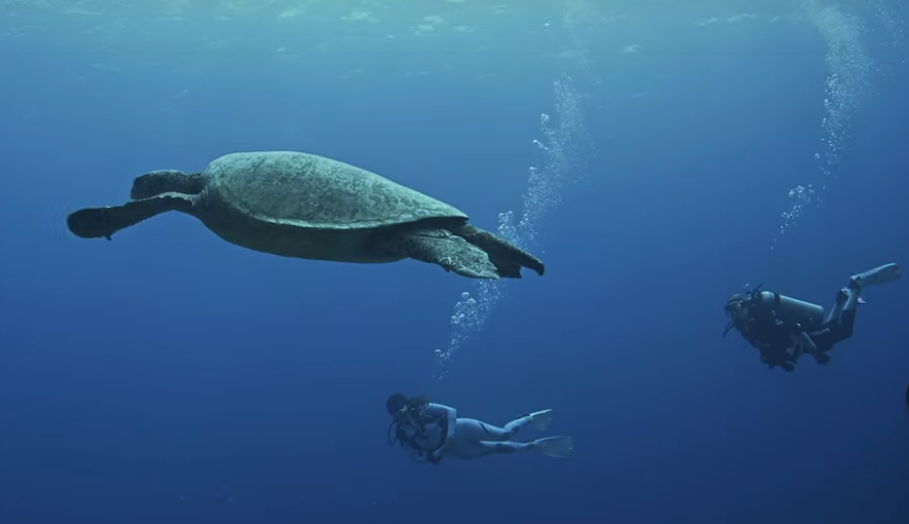
To summarize, we want you to think past the end of the project. Designing, deploying, and drilling from an oil rig – all are projects. Let’s look at some statistics. Already mentioned are the 12,000+ oil rigs in the Earth’s oceans. It costs about US$50M to decommission each oil rig. However, it costs about US$1M to repurpose them to become artificial reefs. And that is where we have a whole bunch of new projects to consider: repurposing these defunct oil rigs to become reef habitats.
A January 2021 article in BBC Future is what sent me down this path, and it features two marine scientists, Emily Hazelwood and Amber Sparks, based in California, who founded an organization in 2015 called Blue Latitudes. Their mission: to find silver linings in our oceans at the intersection of industry and the environment. We unite science, policy, and communications to create innovative solutions for the complex ecological challenges associated with offshore industry. In this introductory post, we just want to stress the importance of looking past (and thinking through) the end of your project by having you watch this visually stunning and engaging 38-minute video that will prepare you for the following posts. To understand the title, know that a transect is a method consisting of a field survey performed with a video-camera along a line of fixed length, with the registered images further analyzed using a computer. Really. Don’t skip this. Watch it. Watch it to be entertained by the amazing and quite beautiful underwater photography, and watch it from the perspective of a project manager (which you probably cannot help doing!). Make sure you watch for a key statistic at the end which compares a natural reef's ability to support a habitat for fish and coral with the same ability for a repurposed oil rig. The statistic will probably surprise you! We would like you to also consider some of the controversy here – it plays well into our role as PMs to consider multiple stakeholder views. Some environmental groups think this repurposing is actually counterproductive because it encourages more drilling. Some think this is an elegant solution for the existing oil rigs and should be pursued extensively. I will discuss that in the follow-up posts, and will also discuss how government (another stakeholder!) is playing a role. But for now, we would like to build your interest in this initiative because it is so intertwined with our discipline of PM, and helps make the point that sustainability is not an afterthought, or even a forethought – it needs to be integrated into our PM mindset.
|
|
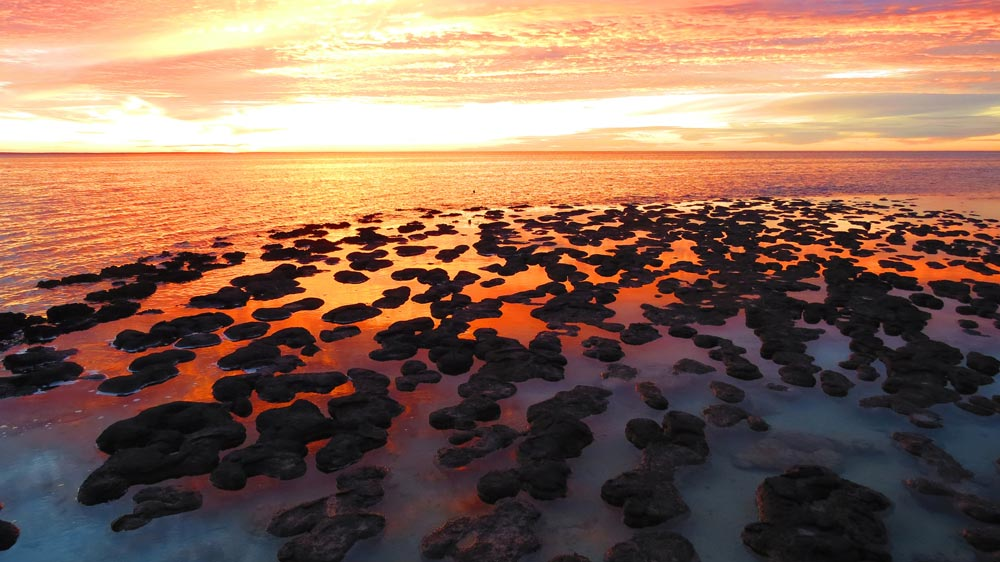
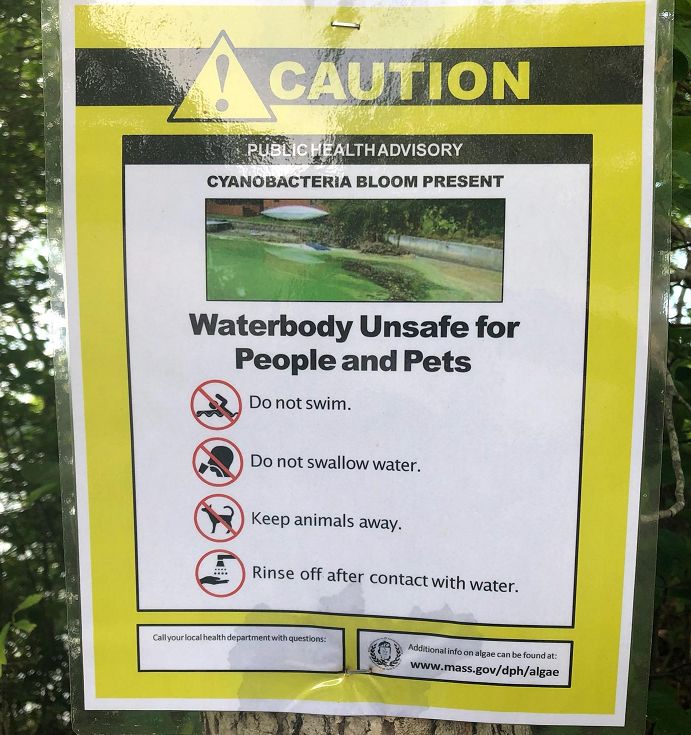
For one of my first posts of the NEW year, I would like to start with something old. Something very, very, VERY old: stromatolites. You, your dog, your cat, your friends, relatives and the ancestors of all of those mammals are only here today because of stromatolites. Wait, what? First of all what is a ‘stromatolite’? I found about these things in a BBC travel article, featuring strange, round formations found in certain places around the world, in this case in Western Australia, north of Perth called the Pilbara. From that article: …stromatolites are stony structures built by colonies of microscopic photosynthesising organisms called cyanobacteria. As sediment layered in shallow water, bacteria grew over it, binding the sedimentary particles and building layer upon millimetre layer until the layers became mounds. OK, you’re thinking, fine. But what does that have to do with me and my ancestors? And my DOG? Or my CAT? Well, that becomes clear with this next paragraph: Their empire-building brought with it their most important role in Earth’s history. They breathed. Using the sun to harness energy, they produced and built up the oxygen content of the Earth’s atmosphere to about 20%, giving the kiss of life to all that was to evolve. These have been around for billions of years – the same age as the solar system. So this speaks to sustainability. But it also speaks to something else important to projects and project managers – balance. The cyanobacteria which builds the stromatolites are sensitive to their environment, and thus the Hamelin Pool in which they reside has the highest level of protection from the Western Australian government. See details in this recently-published research. A quick way to learn about this is to view this 2-minute video: So to review: these cyanobacteria provided the earth with the oxygen balance we need to live. The cyanobacteria that create the stromatolites are, themselves, prone to a very careful balance to survive. You sense a theme here? Balance. But wait – the plot thickens. The balance becomes even more interesting. These same cyanobacteria – the ones that helped give rise to the rest of life on the planet…? Those same cyanobacteria have appeared here in my very own blog as a villain – a bad guy! You may recall that I blogged about the negative effects of what is (incorrectly) called ‘blue-green algae blooms’. You can visit that post here. You may recall this photo:
Cyanobacteria giveth – and taketh away. Just like risk can be opportunity or threat. And to further make the connection to our profession, just as we, as project managers must balance scope, time, cost, risk, quality, team engagement… and more, life on earth depends on balance, going back – way, way back. This is fascinating science in my opinion. You can learn more below in this summary and from other references. References From a Guardian article
https://www.westaustralianexplorer.com/stromatolites-at-lake-thetis/ https://www.whoi.edu/oceanus/feature/what-doomed-the-stromatolites/
|
|
"A behaviorist is someone who pulls habits out of rats." - Anonymous |