Em-bark-ing on a Communications Journey


|
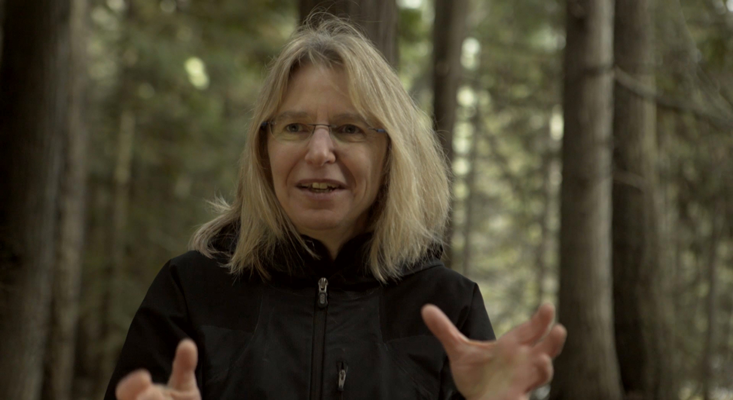
Photo Credit: Amelia Martin / Shutterstock Some of you who, are old enough, may recall a song by America called, “A Horse With No Name”. It's from 1971, so that's a few years ago... In that song, the following lyric appears: “The ocean is a desert with its life underground And a perfect disguise above Under the cities lies a heart made of ground But the humans will give no love” In reading the article “Never Underestimate the Intelligence of Trees” from Nautilis magazine, that song immediately came to mind. At least... my old mind... Hold that thought as I set this up for you. The article starts this way: Consider a forest: One notices the trunks, of course, and the canopy. If a few roots project artfully above the soil and fallen leaves, one notices those too, but with little thought for a matrix that may spread as deep and wide as the branches above. Fungi don’t register at all except for a sprinkling of mushrooms; those are regarded in isolation, rather than as the fruiting tips of a vast underground lattice intertwined with those roots. The world beneath the earth is as rich as the one above. See? If you are a fan of music from a certain era, that line should pop into your head – especially with the little push I gave it there at the beginning of the post. But this is not a post about America (the band nor the country). It’s about trees, and the magnificent ignorance we have as a species about them. It’s an ignorance which is fading, however, as we learn more about trees, forests, and the ways in which trees interact. The article features an interview of – more of a conversation with - Suzanne Simard (pictured below),
Simard, a scientist from the University of British Columbia, has shown, through extensive research projects, that fungal ‘mycorrhizae’ (a mashup of the Greek words for fungus and root) helps trees extract nutrients from the soil, also connects trees into root-based ‘networks’. It's a symbiosis - a mutually-beneficial natural relationship. That itself could be considered a form of communication (and even negotiation!). But there is much more to the story. In these networks, individual ‘hub’ trees (which she calls Mother Trees) form the center of forest communities. These forest communities are even linked to each other – which should sound a little like the Internet, because it quite resembles the Internet. Where this gets interesting to project managers – aside from the many research projects that are studying this interconnectivity – is best represented by this quote from the article: (Trees can be) understood as creatures with capacities that in animals are readily regarded as learning, memory, decision-making, and even agency. This can be difficult to wrap one’s head around. Plants are not supposed to be smart, at least not according to the rubric of traditions known as western thought. There’s also a case to be made that, while these behaviors are indeed extraordinary, they don’t map neatly onto what people usually mean by learning and memory and communication. Perhaps trying to define plants’ behavior according to our own narrow conceptions risks obscuring what is unique about their intelligence. We all know that communication is 90% of project management. We also know that learning (for example, “lessons learned”) is an important part of improving our discipline. Here we find that trees are doing this? Of course, I’m not suggesting that you hire a birch or oak as your next project manager. What I am suggesting as that we expand our perception of what “intelligence” and “communication” really means. In Part II I will continue this post by focusing on communications. By understanding the ways in which these ‘tree networks’ operate, we may be able to improve project communications as well. Between Part I and Part II, you can sit back, relax, and enjoy two videos – the first is the America song I referred to above (A Horse With No Name), and the second, is a 4-minute ‘backgrounder’ on how this tree network gets established and works. A Horse With No Name - America - 1971
How Trees Secretly Talk To Each Other |

Goa-head: Identify and Engage Your Stakeholders!
|
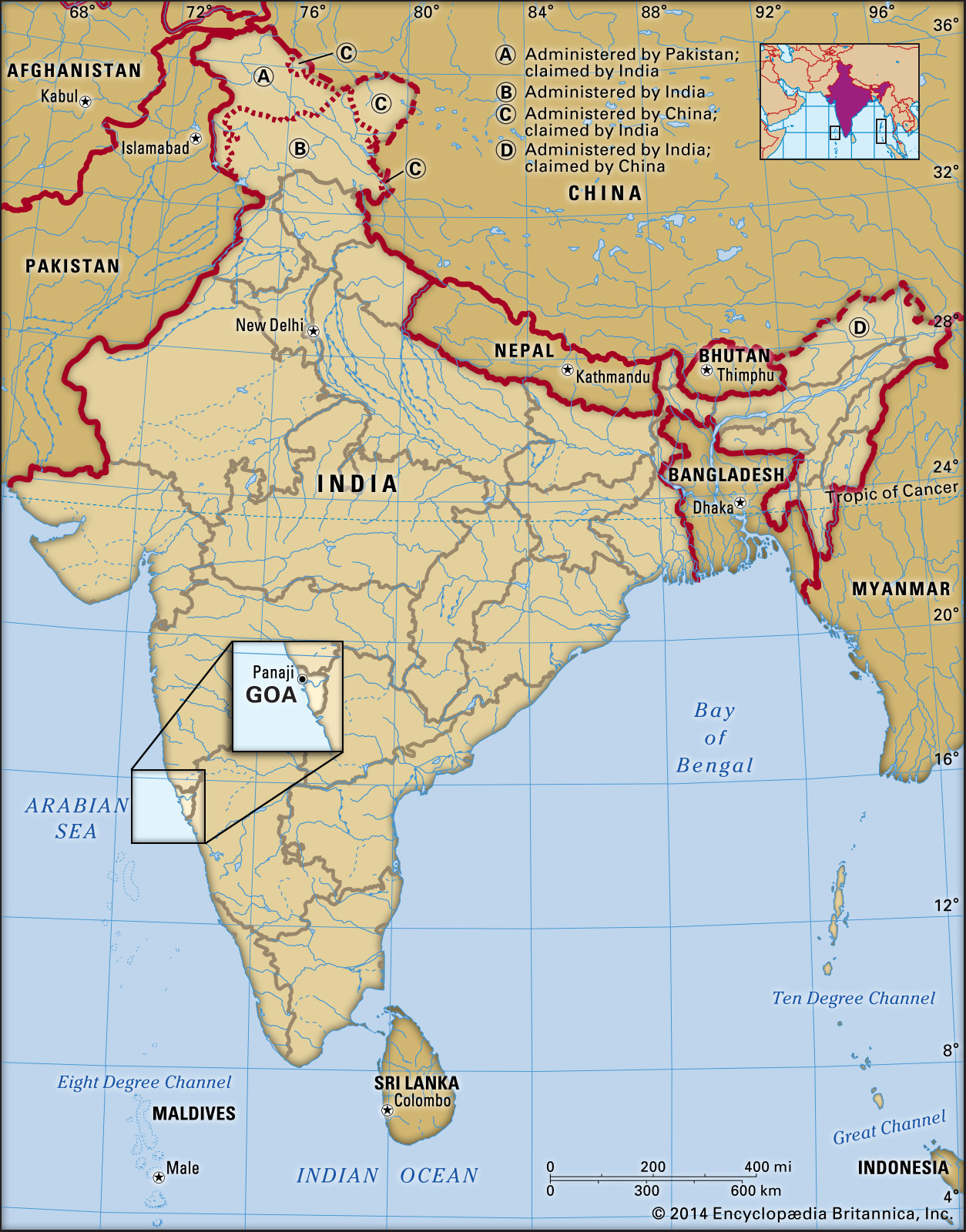
A recent story (4 hours old) from BBC caught my attention because of its intersection between project management and sustainability. The story is about not only the potential impact but the rationale for three infrastructure projects in Goa, a state located on India’s west coast. Of note, the state is a former Portuguese colony with a very interesting history, and the reason that many residents have names like Fernandes, Alvares, and Rodrigues. From Wikipedia: The Portuguese invaded Goa in 1510, defeating the Bijapur Sultanate. The Portuguese rule lasted for about 450 years, and heavily influenced Goan culture, cuisine, and architecture. See below for some geographic orientation:
The three projects, as summarized by this article in the Hindustan Times, are:
“Locals fear the works will damage the state's biodiversity and turn it into a coal hub”, says the lead of the story. Goa is indeed identified as a biodiversity ‘hot spot’. This had led to legal battles and protests. See, for example, this news clip from India Today:
For example, an organization called the Federation of Rainbow Warriors has filed a complaint, summarized here, which seeks to block the projects The story summarizes their viewpoint: "All the documents point to Goa becoming a coal hub," says activist Abhijit Prabhudesai. "We have shared these documents with the government more than five months ago, but they are still unable to produce a single document to refute our claims." The reaction to the three projects by local residents has been vocal. Below are two videos which summarize the stakeholder concerns:
Here you can also view a 50-minute (at times quite contentious!) interview by Faye D’Souza of Nilesh Cabra, Environmental and Power Minister of Goa.
And here is the interview with the stakeholders who are protesting, also by Faye D’Souza:
I’ll continue to track this and come back with updates but there is a lot to learn from this in terms of:
Keep tuned to People, Planet, Profits, and Projects for updates.
|



PS loves SPM - A Romantic Thriller - Part 2 of 2
|
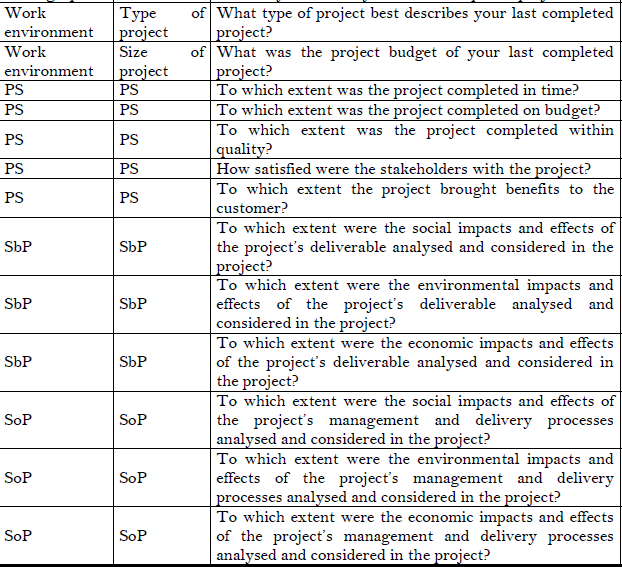
When we last left our star-crossed pair – Sustainable Project Management and Project Success (SPM and PS from here on in), we knew there was a certain tension between them but we also sensed that they may be made for each other. In this short entry we conclude the story. Sort of. Since this is based on academic research the answer, as usual, is “more research is needed”. And it is. However we do have a conclusion to share. The authors of the referenced article (Dubois and Silvius) got results from 112 participants in their survey. From the article: 112 responses were received. Based on the assumed total population of over 1 million project managers, the sample provides a confidence interval of 9.26% at a 95% confidence level. Given the 5-point Likert scales that were used in the questionnaire, this confidence interval is satisfactory. If you recall from Part 1 of this post, SbP is Sustainability by Projects and SoP is Sustainability of Projects. Those terms are defined in Part 1 (and of course, in the article itself). Here is a sample of the questions that were asked by the researchers:
The answers to this survey were very illustrative especially in the relationship of PS to SPM. Instead of going through the entire data analysis as did the authors, I will go right to the illustrative conclusion. And here it is: • SPM and PS show a strong positive correlation The main finding of the study reported in this paper focuses on the relation between SPM and PS. In line with the earlier studies on this relationship, also this study found a positive correlation that can be considered as strong. And despite the concerns that Silvius and Schipper (2016) expressed about the potential negative effects of considering sustainability on the iron triangle criteria of PS, the overall relation between SPM and PS still appeared as positive. Khalilzadeh et al. (2016) The study reported in this paper aimed to answer the question How does considering sustainability in project management relate to project success? Based on a literature analysis of the concepts of Sustainable Project Management and Project Success, the study developed a conceptual model of the relationship in which the independent variable SPM was operationalised in six questions, three questions related to SbP and three questions related to SoP. The dependent variable PS was operationalised in five items, which provided a holistic set of criteria. Based on the analysis of the responses of 112 professionals involved in projects, the study found that both variables PS and SPM showed a high level of internal consistency…This correlation subsequently showed a strong and positive correlation between SPM and PS. And although the study was not aimed at developing proof for the causality between SPM and PS, this conclusion does provides another indication that SPM supports PS. This is illustrated in the graph below as well:
So yes: Sustainable Project Management, which I assert means, “keeping the big picture in mind”, and “thinking through the end of the project to the steady-state”, and “Focusing on Benefits Realization Management and Value”, does indeed actually have a POSITIVE net effect on Project Success. So as you watch “It’s a Wonderful Life” this Holiday Season (you can’t help it in many parts of the world), starring Jimmy Stewart and Donna Reed (pictured at the top of this post), consider the wonderful life your project can have if it does indeed include Sustainable Project Management! |


PS Loves SPM - A romantic thriller - Part 1
|
In honor of the 10th anniversary of our book, Green Project Management, I’d like to aim this post at the relationship between Project Success (PS) and Sustainable Project Management (SPM). The connection was always there for me but it sort of came full-circle with the recent publication by Gilbert Silvius and Ophélie Dubois of their article, The Relation Between Sustainable Project Management and Project Success. This article directly cites Green Project Management (despite its ancient 2010 publishing date!) and brings home many of the ideas we published a decade ago. It’s not the only such article. A quick search yielded many more, for example, click here for one from 2016. However, the Silvius/Dubois article was the most recent and eloquent – and it is supported with data. In Episode 1 of this romantic suspense thriller, I will summarize some key points and set the stage for the dramatic and (spoiler alert!) happy ending. In the second, I will wrap things up, end the drama, and provide you with further resources to investigate if the subject interests you. It should. You are, after all, right here on this planet. Although we are currently in the throes of a global pandemic which is of urgent and immediate concern to all of us as it should be, the issues of climate change and social impact of project deployment has not been canceled. They’ve been there all along and remain another high priority for our species. So: on to the article. In the introduction, the authors say: Project success is indicated as one of the ‘impact areas’ of sustainability in project management (Silvius, Schipper, Planko, van den Brink, & Köhler, 2012) and the relationship between project success and sustainability is identified as one of the emergent ‘narratives’ in the literature on sustainable project management (SPM) (Sabini et al., 2019). Studies on this relationship are still limited in literature review on the topic found only five studies that specifically focused on the relationship (Khalifeh, Farrell, & Al-edenat, 2019) quality. The studies also differ in their operationalization of the variables SPM and project success, making it hard to derive an overall and undisputable conclusion. For example where Martens and Carvalho (2016a) found that considering sustainability is expected to have a positive effect on project success, Silvius and Schipper (2016) concluded that “paying attention to sustainability aspects in projects may also be perceived as costing time or money and therefore as not supportive to the time and budget constraints of a project”. We therefore agree with Khalifeh et al. (2019) that conclude that this relationship is still inadequately addressed in the literature and that more research is needed. It is this gap in the literature that the study reported in this paper addresses. Based on a quantitative survey-based research design, this study aims to answer the question, “how does considering sustainability in project management relate to project success?” When our book was published, we got lots of pushback from project managers. It often sounded something like this: “Come ON, Rich and Dave, we already get constrained by schedule, budget, and the need to meet requirements. We have to work without authority, in projects, which by definition are unique and therefore are dealing with unknowns. And now, you have the nerve to ask us to also think about the long-term, and bottom lines that have to do with social and environmental stuff that won’t be a factor until after our project is turned over? No THANK YOU, guys, we have PROJECTS to run! Shut up and let us get on with our work!” It wasn’t always that strong, but sometimes it was even stronger. What we’ve noticed is that this resistance has diminished in the past few years. Perhaps it is the introduction of concepts and practices such as Benefits Realization Management, Value Engineering, and including the ‘transition’ as part of the project closing process, that have softened the responses and even turned them around so that opponents to this idea have now become cheerleaders to including sustainability thinking in projects. But the real ‘kicker’ would be if there was some evidence that putting effort into sustainability thinking in PM provided the PM with higher levels of project success. This article takes a big step in that direction. Let’s start by getting our terminology straight. Here’s what we mean by Sustainable Project Management (SPM): “the planning, monitoring and controlling of project delivery and support processes, with consideration of the environmental, economic and social aspects of the life-cycle of the project’s resources, processes, deliverables and effects, aimed at realizing benefits for stakeholders, and performed in a transparent, fair and ethical way that includes proactive stakeholder participation.” There is an additional wrinkle here: From the literature on SPM, it appears that the relationship between sustainability and project management can be interpreted in two ways (Sabini et al., 2019; Silvius, 2015). These two interpretations are characterized by Huemann and Silvius (2017) as: • “Sustainability by the project” (SbP): the sustainability of the deliverable or result that the project realizes. • “Sustainability of the project” (SoP): the sustainability of the delivery and management processes of the project. This is very similar to the Rainbow of Green we introduced in Green Project Management in 2010. In the Spectrum of Green, SbP would be Green by Product Impact and SoP would be Green in General. See image below.
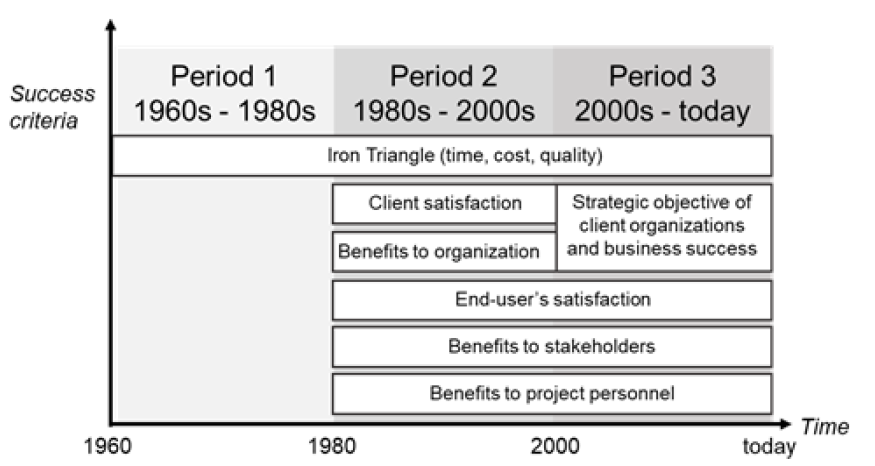
Project Success (PS) is a very squishy and even controversial topic. Of course one of the aspects driving this squishiness and controversy is the point of measurement. This is a big deal. When we have our ‘ribbon-cutting ceremony’ are we done as project managers? How much of a role do we have in transitioning the project? Are we concerned about use? Long-term use? Disposal? All of this smacks of life-cycle PM as covered in the 6th Edition of the PMBOK® Guide and much more so in the soon-to-be-released 7th Edition – and it is covered in Prince2 and IPMA standards as well. So PM as a discipline is buying into a longer-term view of ‘Project Success’. See below, from the Silvius article:
Even if the definition of Project Success includes the more ‘evolved’ definition, it’s clear that there is ‘more to your project’ – and a potential negative - if you focus on SPM. As the article states: …incorporating environmental and social considerations into projects suggest extra requirements and specifications (Maltzman & Shirley, 2010; Taylor, 2010), which increase the complexity of the project. For example Hwang and Ng (2013) conclude that incorporating sustainability in construction projects makes planning harder, causes more variations in design, causes difficulty in selecting subcontractors, causes uncertainty in the required materials and equipment, requires more coordination with different parties, and leads to more unexpected circumstances at project closure. This increases the pressure on project managers and decision makers (Knight & Jenkins, 2009). Moreover, it has been argued that incorporating sustainability raises the level of expectations of stakeholders of the project (Marcelino-Sádaba et al., 2015) and may increase tensions between them (Brandoni & Polonara, 2012; De Brucker, Macharis, & Verbeke, 2013; Singh, Murty, Gupta, & Dikshit, 2007; Tam, Shen, Yau, & Tam, 2007). Therefore, the expected impact of SPM on the iron triangle variables of PS is considered uncertain. So we can see that there is tension between these. Is there a chance that the investment of effort into SPM could instead have a positive net effect on Project Sustainability? You’ll just have to wait until the next entry (Part 2 of 2). Blogger’s note 1: I have permission to use quotes and images from this article directly from the author. Blogger’s note 2: This post’s banner image above is from The Big Heat (1953). For more about this and 99 other thrillers, see this site: https://www2.bfi.org.uk/thriller/100-thrillers-see-before-you-die
|


Winding Down: Part 0 of 2
|
In honor of Halloween (celebrated today in the US and elsewhere) I thought I would just at least start a very scary story. How would you feel if your project never operated – never actually realized any of the benefits and value it was meant to provide? Even worse, what a nightmare it would be if there was also no end in sight in terms of dis-assembling the work you did? This is the case for Wind 1 and Wind 2, renewable energy projects on Cape Cod. I will be tackling this story early in November. It’s going to be a spooky story about stakeholders - but one you can learn from. Stand by. |