Singapore's Green Plan (Portfolio)


|
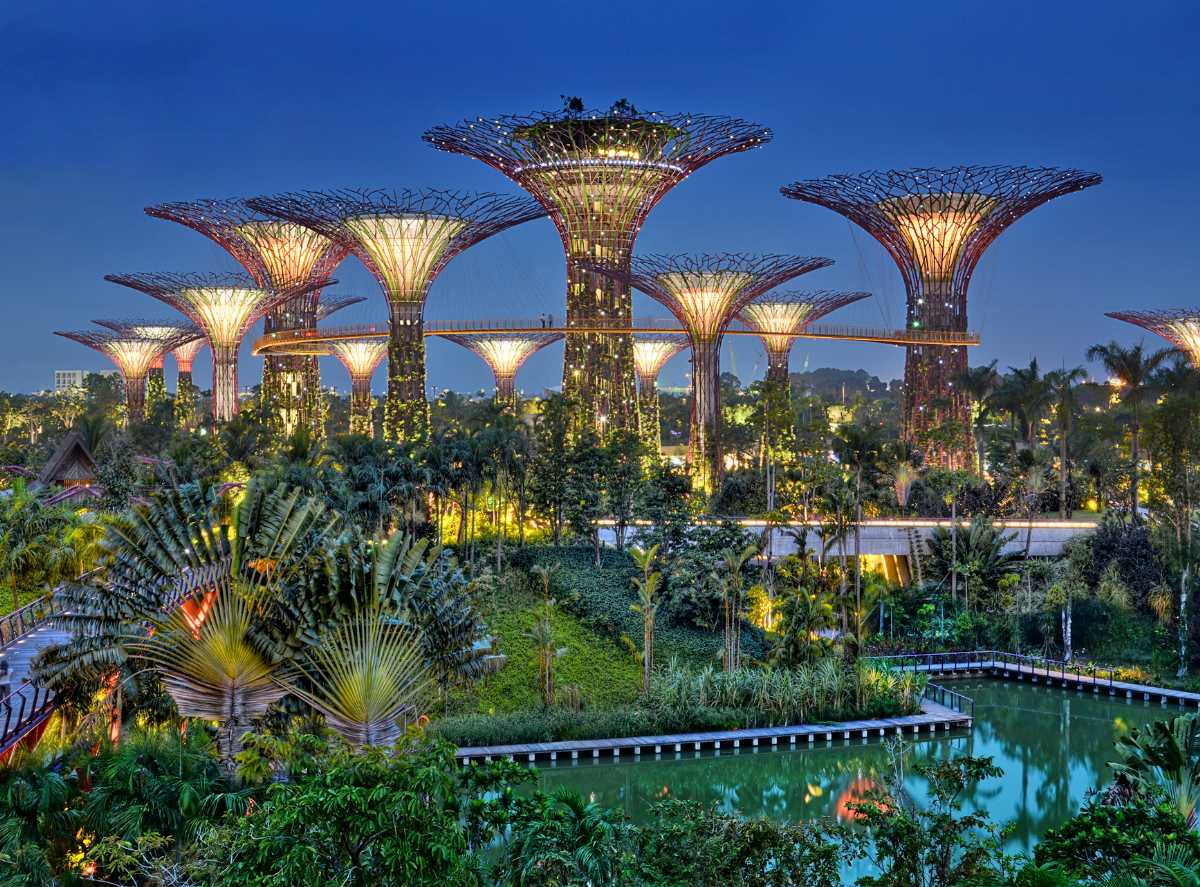
Inspired by the film, Cities of the Future (see last blog post, “An Optimist’s View of Construction Projects and Programs”), I wanted to look at the engineering, project management, and specifically to dig even further into the sponsorship and chartering of the initiatives I saw in the film. How did they get started? What was the rationale? Who were the sponsors? How did they identify the key stakeholders for inception, construction, and use? How did they get stakeholders to align? Having already covered The Edge, an amazing office building in Amsterdam, I shift here to Singapore, partially because the IMAX images of things like the Gardens by the Bay, the Marina Sands Expansion Project, and the tree-planting efforts literally evoked a collective gasp from the audience. I admit it – I was one of the louder gaspers. It turns out that these efforts (as you may have figured) don’t happen on their own. It takes a collaboration of government, industry, academia, as well as engineering prowess and, of course, great project leadership to get things like this started, done – done well, and maintained – thoughtfully. I came across an interview in ASCE’s with civil engineer Paul Lee, who was featured in the film – pretty much your tour guide to go along with John Krasinski’s narration. In the interview from ASCE’s Civil Engineering Source magazine, one particular Q and A caught my attention: CE (Q): Your own career path has not followed that of a typical civil engineer — you’ve worked as an engineer in technical and governmental policy positions. How might the civil engineers who design future cities need to expand their own experience or expertise in perhaps nontraditional ways? PL (A): A lot of times we think of civil engineering as a field that has discrete, specific areas. In school, we talk about our track or specialization, such as structural or geotechnical engineering. But more and more, from what I’ve noticed, civil engineers have greater roles and responsibilities as far as project management, planning, and policymaking. And there will be greater opportunities in which our work will be more intersectional, more policy related, more holistic. I think this speaks to the blurred lines we see even in my work at Boston University. Civil Engineers need project management (and project LEADERSHIP) skills and traits. Project Managers (and the certifications and training that go along with our field) need to know more about the technical fields in which they work. Bloomberg has produced a short video which gives some context about the drivers for these initiatives – watch it here. Singapore’s Green Plan is the portfolio of programs and projects. I think that’s worth a deeper dive. Singapore Green Plan The portfolio has 5 key pillars (we can think of these as programs).
Here is a breakdown of the key initiatives within each pillar: 1. City in Nature This pillar aims to create a greener, more livable, and sustainable home for Singaporeans by restoring nature to the urban landscape.
2. Sustainable Living This pillar focuses on encouraging Singaporeans to adopt a more sustainable way of life, with an emphasis on reducing carbon emissions and waste.
3. Energy Reset The goal of this pillar is to lower Singapore's carbon footprint by using cleaner energy and increasing energy efficiency.
4. Green Economy This pillar seeks to create new job opportunities and transform industries by leveraging sustainability as a competitive advantage.
5. Resilient Future This pillar focuses on strengthening Singapore's resilience against climate change, including addressing rising sea levels and ensuring food security.
Here’s a short summary video that covers the Green Plan, coming from the Singapore government (with more detail here). Finally, since this month’s posts have been about optimism, I leave you with an enjoyable walkthrough of Gardens by the Bay |
An Optimist's View of Construction Projects and Programs
|
I recently had a chance to see a tremendous film at the Boston Museum of Science, in the Mugar Auditorium (in IMAX mode). The film was “Cities of the Future”. It was narrated by John Krasinski of “The Office” fame, and for those of you who are fans, you’ll understand that I kept thinking I would see him (as his character, Jim Halpern) turn to the camera and make an ironic face (as below) However, that did not happen.
It's OK. If I want more of this, I can watch reruns. What did happen is that I saw – rather, experienced – a heartwarming, uplifting, optimistic view of some amazing infrastructure projects in progress, and some being imagined. The film takes you on sweeping, beautiful views of Amsterdam, Singapore, Los Angeles and more, featuring construction projects that should inspire you as a project leader. Here’s the trailer from the film:
As an example of one of the featured completed projects, here is an example from The Netherlands: The Edge – a building in Amsterdam considered the greenest building in the world, and featuring 30,000 sensors connected to a single app for the community, making it also one of the smartest, most connected buildings on the planet. Bloomberg has produced a wonderful 5-minute video about it which, although not the IMAX movie, gives you a sense of what kinds of wonders you’ll find in Cities of the Future. Please have a look: Although the projects were amazing and fascinating, it may be a program that really touched my heart. One of the most heartwarming threads of the film was the coverage of the Future City competition. This is a STEM program for kids in Middle School and High School. It’s a science fair on steroids. more than 85,000 students annually from the US, Canada, China, Egypt, and Nigeria and other countries. The kids are so passionate and interested in their projects. If we could capture even one-tenth of this energy for our projects (construction or otherwise) and sprinkle it on our teams (and you can do this as a project leader), imagine the innovation and motivation it would produce. Do you want to be inspired? Watch this: Or this: I’m planning to do a follow-up post on some of the other content from the film, so be on the lookout here at People, Planet, Profits, and Projects. But in the meantime, I do urge you to watch the short videos contained here for some inspiration and optimism! I think we need it.
|

Self-correcting systems - and projects
|
In a recent post, I discussed breaking the bonds of bureaucracy – with lots of the thought leadership coming from Yuval Harari’s Nexus. I continue to be fascinated with this book, and wanted to share one more insight that will be helpful to you as a project leader. This one deals with self-correcting systems. Harari talks about it mainly in the context of large organizations, especially governments. Although he is not shy about covering its flaws, he talks about the American government system established by the Founding Fathers, which has three independent parts – all given significant power – Congress, the Executive Branch, and the Judicial Branch, calling it the closest thing to perfection so far in history, in terms of self-correcting governmental systems. He has some strong words of warning about how that is in grave danger in the US as the Executive Branch swells with power at the cost of the other two, as well as entities such as Universities and the media. I will stay away from politics, but since it’s such a good example of how a self-correcting system CAN and SHOULD work, it needs to be brought up for context. Harari has an entire chapter called Errors: The Fantasy of Infallibility. As project leaders we know if we are too overconfident in estimation and in identifying (or probably more likely FAILING to identify) risk, we will have project ‘errors’ like not accounting for high-impact/high probability risks. How do we keep our egos in check, and avoid the ‘fantasy of infallability’? With systems of checks and balances. With an environment in which it’s okay to raise a potential threat. Applying an agile mindset that gives us permission to try something new early on. All of these things help. Harari’s insight is deep – he goes into the complexity of self-correcting system and how it’s actually important to make the system complex and interrelated. In fact, he says that one of the things that help dictators and authoritarian governments succeed is simplicity and ease of action by an Executive branch that can use simple, quick orders to get things done (without all of the inconvenience of potential checks and balances). I am not suggesting that projects need to become complex for the sake of complexity. Instead, my suggestion is that decision making needs feedback loops, good, solid, facts from which to work, and, as the diagram shows, some mechanisms to check and balance the decisions. See my other post from today about Seattle’s plumbing for examples of where this was not done – and they ended up with sewage geysers, centuries later, toilets which cost US$1M each which were sold for $1200 later due to missed threat identification and unchecked decisions. I’d like to quote from another blogger, Jared Mabry who posted on LinkedIn recently, also inspired by this part of Harari’s Nexus: He opens by defining a self-corrective system, and he uses a thermostat as an example – not a bad idea. But we can stick with toilets. They fill up with water until they sense that the fill-up of their tank is juuuust right, then they (hopefully) shut off the flow itself. It’s a self-correcting system. It’s just that the humans who use them are not necessarily so self-correcting! He goes on to talk about some of the techniques and the necessary environment to have self-correcting systems in projects and that’s what inspired me (not AI!) to create the diagram below which I hope you find helpful.
What sorts of self-correcting systems do you have in your projects? In your PMO? I am interested to hear about them, please do respond in the comments. Referenced Linked in post by Jared Mabry |


Lessons Learned (and not) from Seattle's Underground
|
I recently returned from some work – and time off – in Seattle. It’s an amazing, innovative city, known for coffee, and music, with friendly and helpful people, surrounded by amazing natural beauty in the nearby Northern Cascades, Mount Rainier, and huge Olympic National Parks. The Museum of Pop Culture was a surprise hit for us as well. We were amazed by the Chihuly Glass Gardens, and of course were compelled to visit the Space Needle. So – we went up – a lot. But we also descended. One part of our visit included a visit to Seattle’s Underground Tour. By the way, if you go to Seattle, do not miss this tour. The very quick story about Seattle’s underground takes place in its Pioneer Square, the original settlement of the area. Of course, the indigenous people of Seattle - the Coast Salish peoples, specifically the Duwamish and Suquamish tribes were in this area, which they called "Little Crossing-Over Place" or Sdzidzilalitch in the Duwamish language. A very short summary of what happened is below: In 1852–1853, the first non-Indigenous settlers, led by Arthur Denny, moved their camp from Alki Point to the eastern shore of Elliott Bay. They chose what’s now known as Pioneer Square for its strategic access to timber and waterways. However, the geography of the area posed serious challenges. The streets were muddy and poorly drained, often clashing with the natural tides of Elliott Bay. There’s another possible blog post coming about the famous potholes so large that people and horses could drown – and the way the local officials took care of that (with sawdust!). However, let’s stay focused on our main point here – it’s all about toilets. Early on, the city decided to be one of the first flush toilets (there’s that Seattle innovation spirit!) even though there was no sewer system infrastructure! They quickly came up with some wooden (!!!) 6” x 6” piping systems and relied on gravity to bring the waste down to the Bay. The system worked! …for about 6 hours, when the first tide came in from the Bay. Tide power was more than enough to carry the sewage up the slope., meaning that raw sewage could move, with force and speed, back up into homes and businesses — sometimes even causing toilets to literally explode sewage geysers in people’s homes or wherever the toilets (and their temporary residents) were in the city. NOT GOOD! I will finish the story so that you can understand the “Underground” but for this PM blog, I wanted the focus to be about Lessons Learned from the plumbing part of the story. So far, Lesson Learned #1: Innovate, but be ready with the rest of the infrastructure. In this case, it was great to be one of the first in the United States to use the new toilets, but think more holistically - plan for the sewage system if you are going to order flush toilets – and think about the fact that the Earth’s tides are powerful enough to take what you give it and push it right back up the same pipes! Fire promotes a re-boot Disaster struck on June 6, 1889, when a fire broke out in a woodworking shop. Since all of the buildings, including the nearby liquor stores, full of more fuel for the fire, were made of wood, the fire spread rapidly through the densely packed wooden structures, and within hours, 25 city blocks were reduced to ashes, including nearly all of Pioneer Square’s commercial district. Seattle had a mainly volunteer fire department of only six people at this time. They were ill-trained, and ill-prepared for an event of this scale. Clearly there are some other very worthy Lessons Learned here, but more about urban planning and less particular to project management. Let’s go in general with Lesson Learned #2 – provide the proper training and equipment for the most important risk responses! Despite the scale of destruction, no lives were lost. Still, the fire devastated the city's infrastructure and economy, resulting in an estimated $20 million in damage — roughly $600 million today. Raising Seattle In the aftermath, Seattle leaders wasted no time rebuilding. New city ordinances required buildings to be made from brick or stone rather than wood. A professional fire department was formed, along with a modern water system and improved building codes. Many business owners, eager to restart operations, began constructing new brick buildings directly atop the old foundations — even before the city completed its plans to raise the streets. The decision to raise the city stemmed from the same problems that plagued it before the fire: poor drainage, frequent flooding, and raw sewage flowing with the tides. Pioneer Square and the surrounding downtown area sat on unstable tidal mudflats. To address these issues and create a more navigable landscape, city planners decided to raise the street level by 12 to 22 feet. The original ground floors of buildings were buried and became basements, while new sidewalks and streets were eventually built above them*. *this may be a separate blog post because one of the many flaws in this project plan was that they FORGOT THE SIDEWALKS! During this strange period of transition, with a new city being built on top of the old, people had to use ladders to move between the old street level and the elevated sidewalks, creating a surreal, multi-layered urban environment. Over time, the upper sidewalks were completed, and the original streets below were sealed off. What remained was a network of hidden passageways and storefronts — now known as the “Seattle Underground” — a buried reminder of the city’s resilience, ingenuity, and haphazard rise from the ashes. A wonderful video summary of what I’ve discussed is below.
So: we have multiple headaches with the toilets. There is no way Seattle would make another project mistake with toilets again, right? Flush forward to 2008 -- Lessons Not Learned In September 2001, the Seattle City Council directed Seattle Public Utilities (SPU) to implement a pilot program for automated public toilets to provide clean and safe facilities in Downtown and urban centers. In October 2002, SPU signed a 10-year contract to lease and maintain five automated toilets. After site selection, permitting, and installation, the five APTs became operational in March 2004 in high-traffic areas. Problems and failures with this new system:
LESSON LEARNED: Consider how people will not only use, but unfortunately will abuse the toilets.
LESSON LEARNED: Consider that not all people are law-abiding and will take advantage of the way the toilets are situated.
LESSON LEARNED: Consider exceptions for innovative programs to allow advertising in this specific situation.
The unfortunate conclusion
NOTE: one thing that amazed me – and again, could be another whole blog post – was the story of a city leader named Lou Graham – an immigrant woman who became Seattle’s richest resident (follow the link below to find out how, although you may be able to guess) and basically funded the ‘raise the city’ effort, and on her death donated all of her money to Seattle’s educational system. Read about this amazing person here: https://www.seattlemet.com/news-and-city-life/2022/08/lou-graham-brothel-madam-seattle-history-underground-tour We found it a bit sad that although she saved the city, and although there are streets named after leaders who bankrupted the city, the only thing named officially after Lou Graham is a local bar. References: https://www.itsflush.com/post/seattle-underground-toilet-history |

Boldly Break the Bulky Boundaries of Bureaucracy!
|
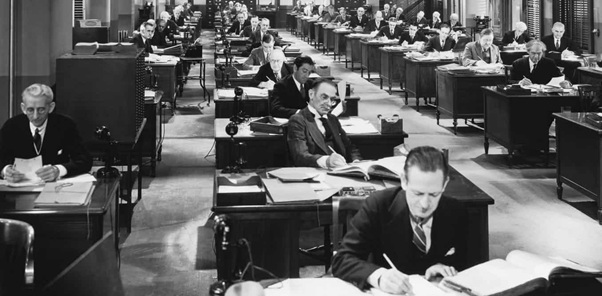
Well, here I am, sitting at a writing desk, working on this week’s blog post for People, Planet, Profits, and Projects. Looks like that puts me in a box called “bureaucrat”. What does that mean? Well, my writing desk also serves as a reading desk. And I am reading Nexus, by Yuval Noah Harari. It’s an amazing read. I want to share one gem from the book with you here in this post.
So about that thing… that bureaucrat thing… (quotes from Harari are italicized and are in sky blue.
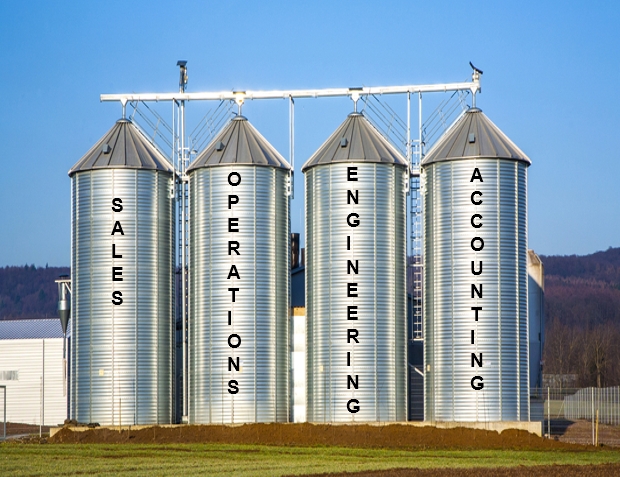
Bureaucracy literally means “rule by writing desk.” The term was invented in eighteenth-century France, when the typical official sat next to a writing desk with drawers—a bureau. At the heart of the bureaucratic order, then, is the drawer. Bureaucracy seeks to solve the retrieval problem by dividing the world into drawers, and knowing which document goes into which drawer. The principle remains the same regardless of whether the document is placed into a drawer, a shelf, a basket, a jar, a computer folder, or any other receptacle: divide and rule. Divide the world into containers, and keep the containers separate so the documents don’t get mixed up. This principle, however, comes with a price. Does this sound familiar, project managers? I’ll give you a hint. Three letters, starting with W and ending with S – and a B in the middle. Yep, this is our very basic practice of creating a Work Breakdown Structure. So, what’s the price that Harari’s talking about? Instead of focusing on understanding the world as it is, bureaucracy is often busy imposing a new and artificial order on the world. Bureaucrats begin by inventing various drawers, which are intersubjective realities that don’t necessarily correspond to any objective divisions in the world. The bureaucrats then try to force the world to fit into these drawers, and if the fit isn’t very good, the bureaucrats push harder. In other words, the drawers (perhaps our workstreams of a WBS?) may connect to the bureau, but are disconnected from the rest of the furniture, the rest of the room, the rest of the world. This is really the overall theme of People, Planet, Profits, and Projects. I have found Nexus to be a treasure trove of ideas for project managers who want to become Project Leaders. You will see more diamonds extracted from this mine here on this blog. Getting back to this post, though - the irony of silofication here is that although we will – out of good practice, force our projects’ work into silos (workstreams), we, as project leaders, should be silo-busters. Harari uses something familiar to me as an example – the world of academia: Consider, for example, how universities are divided into different faculties and departments. History is separate from biology and from mathematics. Why? Certainly this division doesn’t reflect objective reality. It is the intersubjective invention of academic bureaucrats. The COVID-19 pandemic, for example, was at one and the same time a historical, biological, and mathematical event. But the academic study of pandemics is divided between the separate departments of history, biology, and mathematics (among others). Students pursuing an academic degree must usually decide to which of these departments they belong. Their decision limits their choice of courses, which in turn shapes their understanding of the world. ….
Harari goes on with his example, using academic journals, and the way they are organized in “drawers”: … journals are divided by discipline, and publishing an article on virus mutations in a biology journal demands following different conventions from publishing an article on the politics of pandemics in a history journal. There are different jargons, different citation rules, and different expectations. Historians should have a deep understanding of culture and know how to read and interpret historical documents. Biologists should have a deep understanding of evolution and know how to read and interpret DNA molecules. As project managers – or better yet – as project leaders, we would hopefully sense the need to bust these silo walls and build a cross-functional, effective, project-focused team. The question is, do we as project leaders escape our OWN silo of project management thought, or do we instead let ourselves get trapped in a time-boxed world that ends with the end of the project and get constrained into scope-boxed world that considers only the immediate project stakeholders and sponsors? Or do we think more broadly, more holistically, more in the long-term? Harari continues with a point that really cuts to the core of not just this blog post, but the blog (People, Planet, Profits, and Projects) itself: A bureaucrat tasked with increasing industrial production is likely to ignore environmental considerations that fall outside her purview, and perhaps dump toxic waste into a nearby river, leading to an ecological disaster downstream. If the government then establishes a new department to combat pollution, its bureaucrats are likely to push for ever more stringent regulations, even if this results in economic ruin for communities upstream. Ideally, someone should be able to take into account all the different considerations and aspects, but such a holistic approach requires transcending or abolishing the bureaucratic division. If you consider ‘increasing industrial production’ to be a project (which it is), and you consider (as distasteful as it is) yourself the bureaucrat in this scenario – the project manager of the production transformation initiative (project), then the “someone” Harari mentions above is you – and the transcending he’s talking about is on you. It’s about that long-term, holistic thinking that will indeed make you a better project manager. I highly recommend Nexus as nearly mandatory reading for project managers who want to be project leaders. As I said, this is just scratching the surface of one topic in Nexus. There is more to come. In the meantime, Medium has a nice take on this part of the book as well, you can read that here. Harari, Yuval Noah. Nexus (p. 51). Random House Publishing Group. Kindle Edition |