









Guessing is not a strategy: How to build decision velocity with AI and real-time data
June 10, 2026 | Live Webinar

You Can't Get They-ah From Hee-yah
Floating an idea into reality: the other side of the AI Project Paradox
The Environment of the Built Environment: an AI Paradox
6th, 6th Edfition, 6th Edition PMBOK, 7th Edition, 7th Edition PMBOK, 8th Edition PMBOK, 8th Edition PMBOK Guide, Activism, actuarial, actuary, adapt, addition by subtraction, Africa, africa, agriculture, airforce, ajaita, Alaska, amazon, analogous, analytics, ancient, and more power, antarctica, anti-science, apple, apps, architecture, arctic, arrakis, Artificial Intelligence, asch paradigm, Assistant, asthma, astronomy, automobile, automotive, autonomous cars, b, bankhar, Banksy Crypto, basalt, baseball, bats, batter, beauty products, benefit, benefits, Benefits Realization, beyond epica, biases, bicycle, big data, big dfata, big dig, bike, biodiversity, biomedicine, birdhouse, blockchain, blood, blue blood, blue trees, bluefin, bluefin tuna, book review, boston, boston university, Boyce, Brazil, brazil, Breakdown Structures, BS, building, buildings, built environment, built environment, bumblebee, cake, capacitor, car, Carbon, carbon, carbon capture, carbon negative, carbon neutral, carbon pool, carbon sequestration, carbonate, careers, CEO, ChatGPT, chatGPT, chatgpt, chatgpt, chess, China, china, chopsticks, citrus, cli-fi, climate, climate change, climate resilience, climeworks, Clumsy, CO2, co2, CO2 Utilization, coalition, cobalt, coffee pods, cognition, cognitive, Collabortion, colombia, concrete, Conflict, construction 5.0, cool projects xyloscope, cooling, coral, corn, cost of good quality, cost of poor quality, cost of quality, crazy, criticism of project management, cryptocurrency, CSR, csr, data, data analytics, data privacy, datacenter, dataset, death spiral, Decision Making, decomposition, Defense and Climate, definition of a project, deforestation, dependencies, dependency, desert, DIKW, dikw, dimopoulos, disposal, dna, DOD, dogs, dolphins, dream, drilling, drink, dune, dune, dutch, early start, earth, eatlocal, eco-tourism, ecological, economic, economics, EKC, electric grid, electricity, electronics, elysis, embodied carbon, emerging technologies, empower, Energy, energy efficiency, environmental degradation, escalate, escalation, ESG, extreme weather, fallacy, FARC, farming, finance, fish, fish brains, fishing, fix, fixing the earth, flint water, Flint Water Supply, flood, flooding, Food supply chain, food waste, forest, forest for the trees, forestation, forrestgump, frank herbert, Fruitcake, fungus, fusion, Galvao, garage, gas, gasoline, geese, gender equality, gender partnerships, generational differences, Generative AI, gladwell, gold, Goodness, google, Government, GPT, great pacific garbage patch, green, green building, green buildings, green energy, green iguana, green project, green project management, greening, guest post, gyre, harkonnen, Harvesting Benefits, hawasina, hedgehogs, heursitics, historical data, hlb, holitsic, holland, horseshoe crab, human-caused climate change, hydrogen, hydrology, ice, iceland, ignition, iguana, imagery, impact, india, inequality, information, initiatives, injection, insurance, intelligence, interacting risk, internal combustion engine, invasive species, investment, isomer, issue escalation, issues, ITER, jobs, Jupiter, justification, kids, kill point, knowledge, koch brothers, Kuznets, laboratory, LAL, landscape mode, lapampa, launch, LCA, Leadership, Leadership, life cycle analyses, life cycle analysis, lifecycle, Linkedin, liquid, lizard, local, long term, long-term, long-term thinking, look up, loud, maintenance, maker, makermovement, malcolm gladwell, management, marathon, marine biology, market, mars, Martin Luther King, mean, megawatt, MeHg, melting, mercury, metal, Microgrid, microplastics, migration, military, millennial, mindset, minerals, mission, mitigate, MLK, mongolia, museum, museum of london, nature, nematodes, net gain, Net Project Success Score, net zero, netherlands, network, New book, New Jersey, New Practitioners, new york, NFT, nitrogen, noise, noreaster, norway, nova, NPSS, NREL, ocean, ocean cleanup, ocean life, oil rig, oil rigs, oklahoma, oman, only murders in the building, opportunity, overall risk, oxygen, packaging, pareto, PBS, permafrost, persistence, peru, Pharmaceutical, planet, planet.com, planning, plant, plasma, plastic, playground, pm, pm education, pmbok, pmbok guide, pmnetwork, PMXPO-2018, podcast, pollutants, pollution, poop, poor, portfolio, power, power skills, privacy, privacy concerns, professors, program, Program Management, project, project leader, project leadership, project management, project management 3.0, project on fire, project progress, Project Success, project success, projecticity, projectleadership, projectmanagement, projects, psychology, pulse of the profession, purple bacteria, purpose, quiet, rainforest, rationale, reef, refugees, renewable, renewables, Repair, repair, repeatable process, repeatable processes, repurpose, research, resource breakdown strucuture, Resource Management, reversing climate change, revisionist history, rich, rigs2reefs, ripe, risk, risk avoidance, Risk Management, risk mitigation, risk response, risk responses, river, robots, rocks, rules of thumb, rural, rural India, russia, Sarcasm/Irony, satellite, saudi, schedule, sci-fi, Science, science, science-fiction, scientific american, screaming monkeys, sea, sea life, Sea-Level Rise, sea-level rise, seagreens, seawall, seawater, seawater temperature, seaweed. beat;es. farming, secondary risk, selena gomez, sequestration, shipping, skyscraper, SLR, smart cities, smart city, smelting, social, social pressure, soil, solar, solar panels, solar perovkites, solar saheli, sonic, sponge cities, SRI, stage-gate, stagegate, stakeholder, stakeholder management, steward, stewardship, storage, strategy, stupid, success, suffer, sulphur, sunk cost, supercapacitor, supply chain, survey, Sustainability, sustainability, Sustainable Investing, Sustainable Tourism, sybiosis, symbiosis, system 03, TBL, temperature, terraform, terraforming, test, threat, threats, totem, touchscreen, tour, tower, Trains, transparency, transportation, trash, tree, tree species, trees, trillion, triple bottom line, triple constraint, truth to power, UMass, us army corps of engineers, USDA, vacuum, value, venus, vision, voice, voltage optimization, vw scandal, washing machine, waste, wastewater, water, we mean business, whales, Whirlpool, wind, wisdom, women, Women in Project Management, wood wide web, woonerf, Work Breakdown Structures (WBS), world breakdown structure, worms, xian, xylotron, Yale


|
As project managers we are (or should be!) very familiar with the concepts of risk response, including secondary and residual risk. As a quick refresher, secondary risk is new risk (threat or opportunity) generated by the risk response. For example, an air bag is a risk response to the impact of a car crash on a human. It is possible that this very air bag causes injury to you (this has happened - see this video). The new threat, generated by the air bag, is a secondary risk (in this case, clearly a threat). If the air bag does not do a sufficient job in reducing the impact (perhaps it does not inflate fully), and injury still occurs, then that’s residual risk. In this post, I’ll talk about CO2 emissions (which 99% of scientists agree is a threat) and the threat responses that have been proposed. This is taken mainly from a Nature magazine article from this month (Vol 575, P87) and 10 “pathways”, which we can consider risk responses, and the potential secondary and residual risks of these pathways. Below is the abstract from the article: "The capture and use of carbon dioxide to create valuable products might lower the net costs of reducing emissions or removing carbon dioxide from the atmosphere. Here we review ten pathways for the utilization of carbon dioxide. Pathways that involve chemicals, fuels and microalgae might reduce emissions of carbon dioxide but have limited potential for its removal, whereas pathways that involve construction materials can both utilize and remove carbon dioxide. Land-based pathways can increase agricultural output and remove carbon dioxide. Our assessment suggests that each pathway could scale to over 0.5 gigatonnes of carbon dioxide utilization annually. However, barriers to implementation remain substantial and resource constraints prevent the simultaneous deployment of all pathways."
The pathways focus on utilization of carbon dioxide, as opposed to carbon capture and storage (CCS) which I have blogged about several times on People, Planet, Profit, and Projects, for example here, and here. Why talk about this in a project management blog? Well, there’s already the connection to risk identification, analysis, response, and control, but the ten pathways discussed here each offer significant potential for project initiation – and project management jobs. So there’s another good rationale to cover this topic! So: on to the ten ‘utilization pathways’. Utilization here refers to the use of carbon dioxide – not as naturally occurring, but ‘concentrated’ at levels above those found in nature – to serve as raw material to supply or fuel a machine or industrial process (feedstock). One example is using derivatives of ammonia to capture and condense the CO2 from the air for use as feedstock. The article defines utilization as “a process in which one or more economically valuable products are produced using CO2 whether the CO2 is supplied from fossil-derived waste gases, captured from the atmosphere by an industrial process, or – in a departure from most of the literature – captured biologically by land-based processes”. Covered below are some – not all – of the utilization pathways, but the ten that are illustrated will give you an idea of the potential projects that could be launched, and some of the secondary and residual risks involved. In short form, the 10 pathways are:
The image below (from Nature magazine) provides a clear graphic explanation, including net flows, and coding as to whether the pathway is closed, cycling, or open.
(Figure from cited Nature magazine article) Fascinating to me as a project manager were facts such as this: “perverse indirect effects – such as land-use change resulting from BECCS* – could increase net atmospheric CO2 concentrations”. *Bio-Energy with Carbon Capture and Storage This is actually up for debate. See the video below for coverage of that scientific debate about BECCS: As far as the 10 pathways, I won’t discuss them all, but here are a couple of examples (see the article for a table that summarizes all of them):
Enhanced Weathering: In this technique, atmospheric CO2 is mineralized through the use of pulverized igneous rocks to be used for cropland, grassland and forests. The product is agricultural crop biomass, and it has low probability of release, except under extreme acidic conditions. The process is described in the 8-minute video below from Harvard University. Products from microalgae: CO2 from the atmosphere is absorbed by microalgae, producing biofuels, and bioproducts such as food for aquaculture (fish farming). This has a high probability of release, based on combustion and consumption of the bioproducts. This process is explained in the short video below: Again, what was fascinating to me as a project manager was the attention that this article gave to secondary and residual risk. In particular there is a sidebar in the article dedicated to “net climate benefit” which refers to doing LCAs (Life Cycle Analyses) on the entire pathway to see if the process under consideration actually does contribute a net benefit or a net problem with respect to carbon impact. The conclusion of this article is as follows: Life-cycle analyses on some industrial CO2 utilization pathways suggest that the potential for net emission reductions is much larger than for net removals (CCS) which appears very modest. The article closes with a mildly optimistic view of the pathways of carbon utilization: CO2 utilization is not an end in itself, and these pathways solely or even collectively will not provide a key solution to climate change. Nevertheless, there is a substantial societal value in continued efforts to determine what will and will not work, in what contexts the climate will or will not benefit from CO2 utilization and how expensive it will be. From a project management perspective, the “efforts to determine what will and will not work” sounds to me like a set of projects to be launched. The 10 pathways are already launching real projects all over the world, and the lessons learned from the life-cycle analyses are applicable to projects of all kinds. So whether this means a new job – or even a new career path – for you, or whether this simply yields a learning opportunity, there’s value in discovering what is being done in this area of CO2 utilization. |
|
"When does a project manager’s responsibility begin and end?" This is the first line of text from Bournemouth University’s “Responsible Project Management” landing page. It’s also – if you have read any posts from this blog – the main theme here at People, Planet, Profits, and Projects. The coaching we’ve been giving here since 2010 in one form or another is that your projects’ outcomes are lasting and we should be thinking about and planning to accommodate that fact, even though we are eager to move on to our next projects. In fact, nothing stops you from moving on to the next project, and we don’t expect you to “stay on” with your project’s operations for the long term – that’s not the point. The point instead is that you consider what the project’s outcome contributes in terms of value, benefit, and impact, for the long term. At Bournemouth, they are focusing on this element and I’d like to share some of what they’re up to with you in this post. The two senior academics in project management from Bournemouth University’s Faculty of Management who are working on this (along with others), are Dr Nigel Williams and Dr Karen Thompson. They discuss this in detail on a separate site, RPM (Responsible Project Management), which was the inspiration for the image in this post (by way of the 33 RPM vinyl record album format). On their RPM site, Drs. Williams and Thompson start with the Ten Principles of RPM:
You may recognize these as traits, or character strengths, or capabilities, or competencies, or the lack of them, in some cases, in yourself. Here we have a strong tie-in to a several books that come to mind immediately: Be a Project Motivator: Unlock the Secrets of Strengths-Based Project Management (Ruth Pearce) - this book talks about Character Strengths and even gives you a chance to measure your own. Project Delivery, Uncertainty and Neuroscience: A Leader's Guide to Walking in Fog (Carol Osterweil) - this book talks about how the brain works when faced with challenges such as thinking way into the foggy distance, beyond your project's end-date. Bridging the PM Competency Gap (Abramo/Maltzman) - this book looks at how PM has changed, and where there are some pretty big competency gaps that need to be filled for modern project management, including that of 'perspective'. Cognitive Readiness in Project teams (Belack et al) - This book dives deep into the neuroscience of project management and helps the reader understand how PMs can be more ready for change - such as considering the longer term. These books – in different ways – approach the issue of what it takes to do what the RPM folks are asking us to do – because it isn’t necessarily in our basic DNA as project managers to think this way. A fundamental change in mindset is required. This team is doing important work and has just published the second edition of their guide to RPM, which they have published here. I highly recommend that you have a look at this 32-page powerful document TODAY. Here’s a brief extract that will give you a flavor of what they’re up to: Why does Project Management need to be responsible? The Project Management profession faces a paradox of influence on visible, high impact projects and invisible project managers. Projects can influence communities before, during delivery and after delivery. Before delivery, the announcement of a planned project can change perceptions of a location, attract protests and encourage economic activity by entrepreneurs. During delivery, projects can have significant environmental impacts and can displace communities. After delivery, project outputs may positively or negatively impact economies, the environment and society. Project managers therefore have a responsibility to ensure that communities, the natural environment and wider social ecology are not harmed or even further, are restored by the activities under their purview. The scale of this challenge is even more urgent given the recent warnings of disruptions to economic systems likely to occur from a changing climate and the related human impacts such as forced migration and resource conflict. As I like to say, they get it. They understand how Project Management must change, and they are taking a strong lead in guiding us there.
Before you do, you can consider one other resource – a PMI-published book called “Responsible Leadership in Projects – Insights Into Ethical Decision Making”, by Nicholas Clarke, Alessia D’Amato, Malcolm Higgs, and Ramesh Vahidi. This book is a study of four projects, focused on the nature of personal, value, and ethical dilemmas faced by project managers and the factors that influence how (project managers) make ethical or value-related decisions. This is a good companion to the Guide, and I plan to post again soon with a more thorough review of this book as well as the RPM Guide. In the meantime, I would be very interested to hear your thoughts on the concept. Please respond after you’ve had a look at the Guide. I’ll sum up the feedback as well in that post. So please take some time from your day and read the RPM Guide. In fact, I don't want to FORCE the issue, but I have a very specific, Obi-wan Kanobi sort of suggestion. You will dust off an old vinyl record, you will get that rickety old turntable working again, and you will listen to your favorite old-timey music while you read the RPM Guide. You will comment here in response. |
|
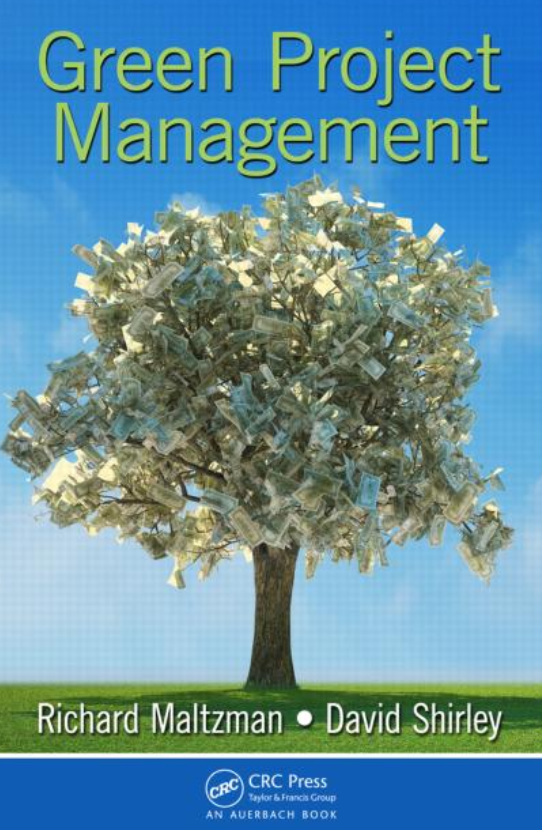
Ten years ago, Dave Shirley and I embarked on an effort to bring an element of long-term thinking into project management. Dave and I both had had decades of experience as project managers and supervisors of project managers, knew from self-awareness and then observing our teams of PMs that project managers are “Get-R’Done” people. This is important because focus on the project is key. However, we also knew that there was an increasing focus on the Triple Bottom Line – economic, ecological, and social outcomes. We knew that project managers would benefit from including planning that was holistic, and included long-term thinking, well past the end date of the project. So we began work on Green Project Management, a book with this in mind.
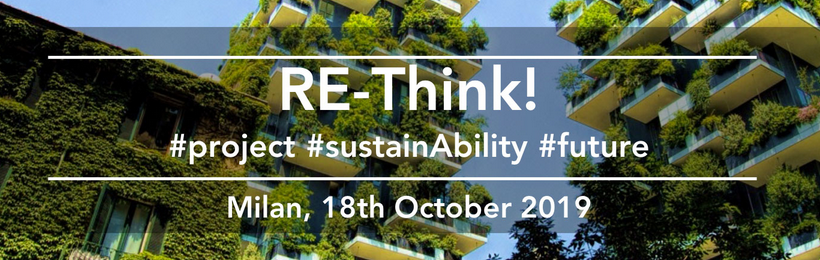
Months and months later, and with the insistence of Dave to stop researching and get writing, and then to get this project (yes, writing a book is a project) done, the book was published. Although not a best-seller, this book did do something we never expected it to do - it won PMI’s Cleland Award for literature. Since then we’ve started to notice a slow, but steady increase in interest in the topic, with the book showing up as being cited by academics, and with requests for us to make presentations, which we’ve done in countries like South Africa, Malaysia, Costa Rica, Canada, and even the United States. Almost 10 years to the day, I was lucky enough to present this topic to the 3rd National Conference of the Italy PMI Chapters, who had the foresight to theme their conference, “Re-Think #Project #Sustainability #Future”. Some 700 attendees focused on this topic last Friday, 18-October. I was proud to be able to make this presentation and pleased to experience a tremendous reception to the concepts and tools presented.
It’s Ten Years After, and today when I was debating whether or not to blog about this, a song by Alvin Lee came on the radio. Alvin Lee was the front man for a band whose name was (you guessed it) Ten Years After. And thus, this blog post. The song in the video is, "I'd Love To Change The World". I'm certainly not implying that the book changed the world, but I do know this: Project managers are change agents. And if project managers put their focus not only on their project's outcomes, but the impact of the project outcomes, with a perspective that is holistic and long-term, we have a chance to make our projects more successful and indeed may be able to make the world a better place. Let me close by thanking the Italy chapters of PMI for inviting me to speak and for being outstanding hosts, and thanks to the attendees, i hope you enjoyed the presentation and the day focused on sustainability in PM.
|
|
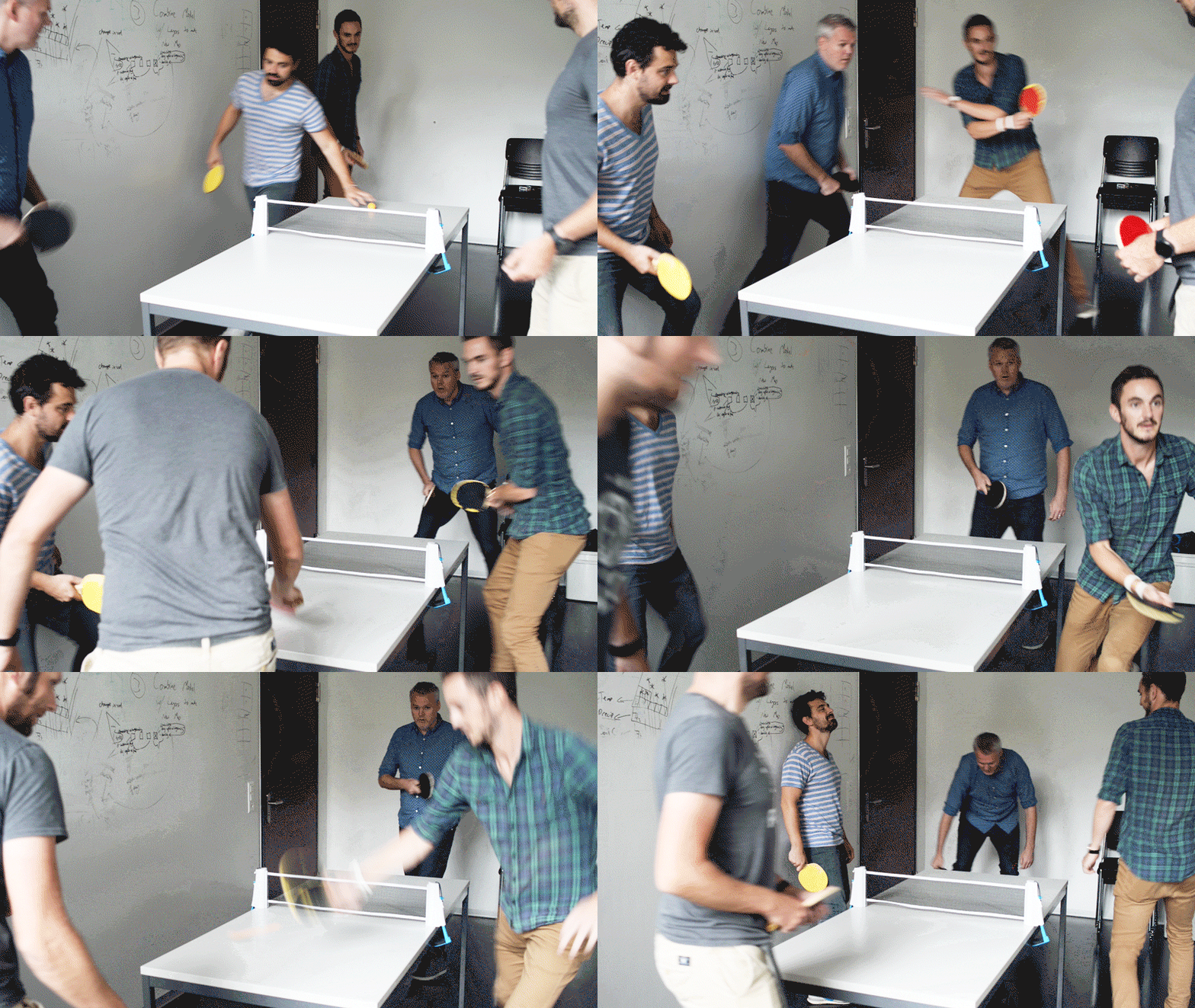
In Part 1, we covered a story about research centered on identifying life on earth by geography, featuring the lowly (literally) nematode. In this short Part 2, as promised, we’ll briefly discuss lessons learned for project management and more about the connection between AI and Earth. One lesson learned was clarity of communication, and the potential for misunderstanding. After one of his reports was summarized in a way that unintentionally, made it look like we could relax in our efforts on climate change, as long as we planted lots of trees. This was not his intent, but Crowther and his team faced significant criticism for something they didn’t intend to do. From the article: Two months on, Crowther is chastened by the furore his paper created among scientists who thought its message might encourage the public to relax about curbing carbon emissions as long as they planted enough trees. “We certainly did our communications a little bit wrong, and we’ve learned from that,” he says. “I want to be extremely clear that cutting greenhouse-gas emissions is absolutely essential if we are going to have any chance to stop climate change.” Another lesson is that Crowther and his team keep things fun and focus on building teams. From the article: “…worktops are crowded with clusters of chopped tree parts. In the office that Crowther rejected in favour of a desk in the communal room, four staff hurl themselves around a ping-pong table, playing “the smashing game” — a chaotic version that incorporates walls, ceiling and floor. It is one of several that Crowther invented and prescribes are played daily to break up the mental effort, forge bonds and keep life fun. (see blog post main photo)” …all of this for a good cause: to gain a baseline of life on earth – trees, worms, whatever. Here’s a video that shows the good work of this team: |
|
Big Data. Analytics. It’s hot now, and for good reason. The ability to apply machine learning and Artificial Intelligence (AI) to vast amounts of data to, for example, decide to put up an advert of a certain athletic shoe on your desktop, to decide whether a competitor may be worth acquiring, or to choose between investments. And although money is important, AI can be applied to much, much more than money. Think about the data of the Earth. Well, yes, the planet Earth, but also literally, the earth - the soil - on which you are standing (or the building on which you are standing … is standing). What’s under you? Soil, roots, worms. There is a laboratory in the Swiss Federal Institute of Technology, led by a man named Thomas Crowther. That laboratory has embarked on a project, which, in a way, is an accounting project. The thing for which it is doing the accounting is, well, it’s the Earth. Crowther’s lab is funded for 10+ years to collect individual observations (many, MANY of them) and use AI to reach conclusions about the count of trees, fungi, and, for example, nematode worms. So far, his lab has concluded that there are 3 trillion trees and 0.4 sextillion nematode worms. We'll come back to these little wigglers later. Why do this? Well, as project managers we know about baselines. If we are to make improvements and/or to understand the changes taking place so that we can make corrections or note the effect of attempted corrections, we need that baseline. All of this comes mainly from a cover story in the most recent edition of Nature magazine, in an article called, “The Everything Mapper”, by Aisling Irwin. It’s a fascinating story – partially because it’s a fascinating project. The project has already realized benefits, and has some lessons learned for project managers. For starters, when Crowther was getting started, he was at Yale and proposed the idea of using ground data from actual tree counts (satellite data can’t peer below the canopy). To do this, he needed to get scientists from different institutions to collaborate and share their data. He had to build a team from disparate organizations. Sound familiar? The professors around him though it was a ridiculous idea but he managed to do it, to the point where he had data representing an area the size of a US state. Granted, the state was Rhode Island, but still – quite an accomplishment. He then worked with data scientist Henry Glick to compare the ground-level counts with the satellite imagery to make informed decisions about how many trees there really were. The benefit realized was that the mapping done by Crowther and Glick (and others) was used to build the first global model of tree density – and the figure of “3 Trillion Trees”, which in turn changed the name of the UN’s “Billion Tree Campaign” to the “Trillion Tree Campaign”. Their database continues to serve the Forest Biodiversity Initiative, which studies and manages the world's largest tree-level forest inventory database. A snapshot of the status of the Trillion Tree Campaign is shown below.
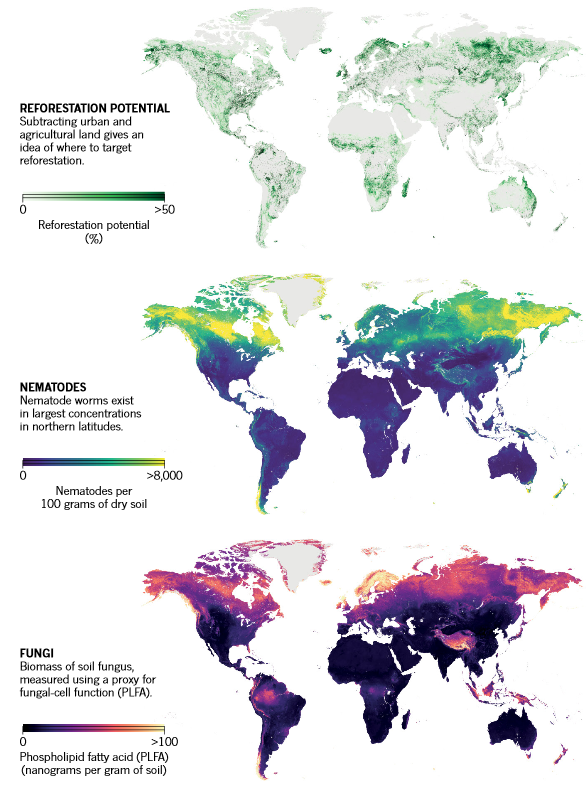
Another outcome – an important one – is a conclusion that “tree planting is easily the best way to remove carbon from the atmosphere, and could be the key to slowing global warming”. This is a conclusion that obviously spawns many new projects, but that’s another story. Let’s get back to nematodes for a bit. They're usually tiny, around 50 micrometers thick and 1 millimeter long - but the nasty parasitic kinds (this is sort of sickening) can be up to 3 feet long. They actually play an interesting role in solving climate change. This recent article from Brigham Young University covers that aspect. One thing of interest to note is that the biomass of the nematodes of the planet is almost equal to our weight. That is, add up the weight of all the nematodes and you have 80% of the weight of the entire human population! The relationship to carbon is summed up here: “Knowing where these tiny worms live matters because nematodes play a critical role in the cycling of carbon and nutrients and heavily influence CO2 emissions. An important finding of the paper is that nematode abundance is strongly correlated with soil carbon (more carbon = more worms). Understanding the little organisms at a global level is critical if humans are going to understand and address climate change.” Below is a figure from the Nature article summarizing the data from Crowther's research for trees, nematodes and fungi.
In Part 2, I will talk about more lessons learned for project management and more about the connection between AI and Earth. |
|
"Would you tell me, please, which way I ought to go from here?" "That depends a good deal on where you want to get to." - Lewis Carroll |