


Wight A Minute! Part 1 of 2


|
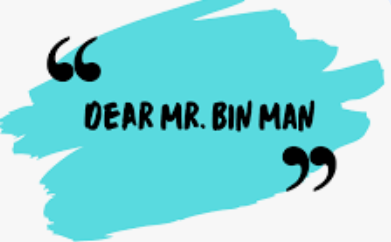
This is a post about a tiny island off the southern coast of England (offshore between Bournemouth and Portsmouth, if you must know). It’s the Isle of Wight. And on that island is a company which makes … T-shirts. Teemill started out as a company to make T-shirts, but this is about much more than that. It’s about a mindset shift – a portfolio, if you will - to focused on sustainable practices and a circular economy. You may want to read on. At the core of their idea is that all manufacturing is speculative. Products are made with the hope that someone will buy them. If they are not purchased, they sit on the shelf and cause economic waste, and job loss (social impact!) and when these speculations are wrong, and items are taken off the shelf and shipped back (ecological impact!) or sent to landfill (more ecological impact!). What Teemill is up to is to manufacture in near-real-time. Products are made when the demand is there. They have brought in significant technology (each implementation a project) to accomplish this. It’s really (trust me!) worthwhile to take a look at this short video by Teemill’s co-founder Mart Drake-Knight. Good! You watched it. Didn’t you like the part about the 5-year old’s letter to “Mr. Bin Man”? So Teemill started with clothing. Why?
That’s in the talk. You remember, right? You watched it, right? The young founders of Teemill realized that they would have to move away from a linear production model, which consists of these steps:
To do that, people would have to be able to make millions of decisions at the speed of light and implement them on machines and systems that could act on those decisions almost instantaneously. People simply cannot do that. But computers can – especially networked, highly-capable computers, with outstanding purpose-built software. And this is what Teemill does to make T-shrits. See it here in this video. In Part 2 of this post, I will talk more about the circular economy and the projects that will help make that real. |
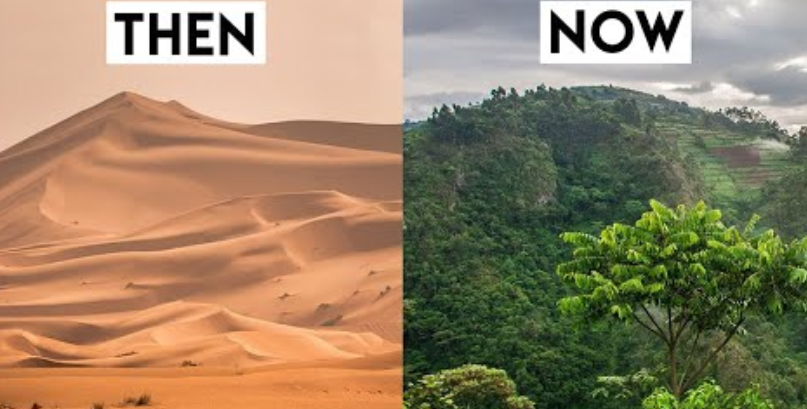
The Desert Is Getting Fruitful
|
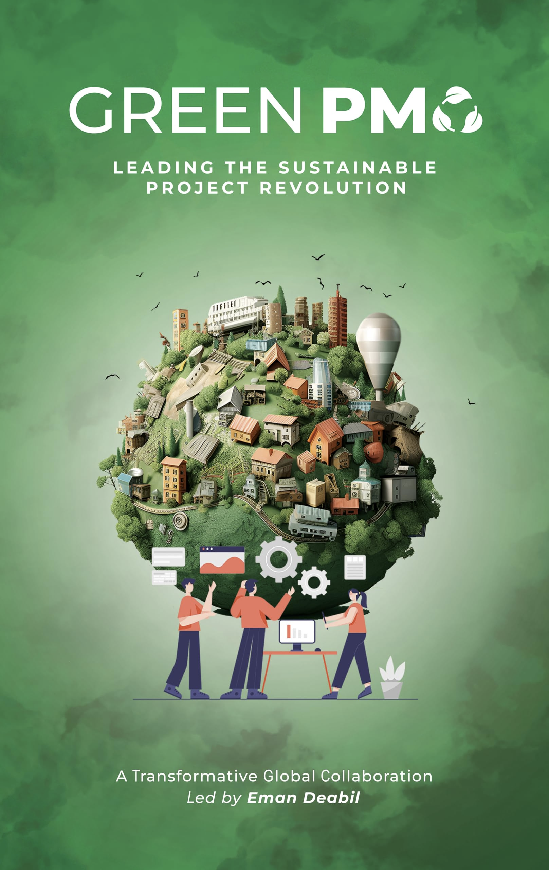
When I started out investigating and writing about the intersection of project management and sustainability, it was a bit of a desert. There were no references at all in project management standards, a few articles a book here or there, but it was a topic that project managers considered (ironically) out of scope. Some still do. But what I’ve found is an accelerated ‘take’ for the idea of considering a much broader set of aspects when planning a project, and a willingness to think past the end of the project – to a time when the project’s product (its outcome) in in use, and even (dare I say it) to that time when the project’s product is no longer needed and is being disassembled, made defunct, terminated, disposed of, jettisoned, ditched, scrapped… choose your own word here. As examples, I’d like to (again) mention the Green PMO book recently published by Sentiente and led so well by Eman Deabil, with 333 pages of articles by 37 authors covering a wide range of topics but all themed around holistic, thoughtful, long-range thinking in project management.
I also would point you to the APM’s recent post by Hugo Minney: Navigating the path to sustainability and regeneration: Tools, barriers and incentives. What I really like about this post and its ‘attitude’ is that it combines two of my favorite (and related, I assert) themes – the aforementioned sustainability thinking in PM, and the idea that PM is actually the wrong name for our profession. The “M” in PM is Management. Are we really ‘Managers’? Do we hire and fire employees? Do we monitor when they ‘punch in’ for work and ‘punch out’? Do we oversee their salaries and do performance reviews? Well, we may if it’s a heavily projectized organization but most likely our project team is made up of those NOT reporting to us. We’re not managing this (functionally-diverse) team, but we are leading them – inspiring and influencing them to do the work of the project and to bring business value to our organization. So that’s why I was happy to see how this blog post worked. It takes on a Servant Leader attitude. Servant leaders remove barriers. From the post: Barriers to including sustainability and regeneration in project success criteria Despite the clear benefits, several barriers often prevent organisations from fully integrating sustainability into their project success criteria:
Overcoming barriers: The role of soft skills (Comment from Rich: I would call these Power Skills) While technical knowledge is crucial, overcoming these barriers often requires well-developed soft skills:
That’s right! We are acting as Project Leaders when we bring sustainability thinking into the picture; and actually there is no way we will get buy-in to these ideas which are sometimes seen as ‘too much’ without the use of power skills and taking on the true role – I would argue the true title – of our profession. The desert is not so barren anymore. I see that it’s bearing fruit. Sustainability thinking has caught on, and hopefully so is the idea of Project Leadership. The blog post is so well-written that I will conclude mine with the conclusion of the post by Hugo Minney: “As project professionals, we have a unique opportunity — and responsibility — to drive sustainable and regenerative practices through our work. By understanding the complexities of the systems we operate in, developing our soft skills and leveraging available incentives and best practices, we can overcome barriers and make sustainability a core component of project success. The path to sustainability and regeneration is not always straightforward, but it’s undoubtedly necessary. By embracing this challenge, we not only contribute to a more sustainable future but also deliver more resilient, valuable and impactful projects.” |
The Northern Lights are in my mind...
|
Several things come together for this particular post. First, I’ve been a longtime fan of a ‘prog-rock’ group called Renaissance. They’ve been around since 1969 and are currently in their Farewell In Gratitude tour - and I went to see them in Boston. One of their most popular songs is Northern Lights. Here they are in their early days, performing this song – and I have to say that 45 years later they still perform it pretty well, with lead singer Annie Haslam still hitting those super-high notes.
Secondly, recent solar storms have triggered astounding Northern Lights in our area (New England, USA), making the sky bright magenta and aqua for a few nights in row. The blog feature image above is pretty much what many of us in New England were able to see (although our phone cameras did better than our eyes in capturing the images). And finally, I saw a news item regarding new funding for Arctic sustainable development – and that’s what put me ‘over the top’ to write this post. The news item, ’EU boosts innovation for Arctic sustainable development’ reviews results from the Arctic Circle Assembly 2024. Highlighted as results from this meeting was its focus on four main goals:
In turn, these goals serve as the basis for the launch of projects – some quite large – which will need project leaders. Billions of euros are involved in this funding program. Examples of projects, which will require a wide set of knowledge and skills, including, of course, project management skills, are:
Copernicus is particularly noteworthy. It’s worth a visit to its website. It’s the Earth observation component of the European Union’s Space program, “looking at our planet and its environment to benefit all European citizens. It offers information services that draw from satellite Earth Observation and in-situ (non-space) data. At the heart of Copernicus is a constellation of satellites – the Sentinels – that make a huge number of daily observations of the Earth ecosystem. The technological prowess of Copernicus, especially in terms of availability and accessibility, has made Copernicus the largest space data provider in the world. Anyone can access this data – it’s a free and open platform. You can find it here: https://dataspace.copernicus.eu/. Overall, Copernicus provides these features Health Hub - The Copernicus Health Hub brings together all the Copernicus environmental data and products pertinent to Health, including that related to physical health, mental health and well-being. Coastal Hub - The Copernicus Coastal Hub provides open and free access to a selection of coastal Earth observation data from the Copernicus Sentinel satellites and all Copernicus Services. Energy Hub - Copernicus Energy Hub: Connecting environmental data and Earth Observations to the green energy transition. Arctic Hub - The Copernicus Arctic Hub provides access to data and information in the Arctic. Explore interactive maps and thematic use cases and empower decision-making and sustainable practices. This video summarizes the data capabilities provided by Copernicus. So as you look up at the Northern Lights, know that a network of Sentinels is looking back at YOU. And perhaps that’s a reminder that project leadership opportunities abound above, below, and all around you! Being aware of and focused on the intersection of project management and sustainability may just be not only the right thing to do – but the right thing for you. |

Weather is not Climate. But they're linked - ask Helene.
|
As I write this post, Hurricane Helene is 1 hour away from landfall in Florida as a Category 4 storm. While hurricanes are ‘weather’ events and not climate, the intensity of storms has increased. I draw your attention to this article from the BBC. It asks the question: Is climate change affecting hurricanes? The article provides plenty of evidence that the answer is yes. Below is a chart showing the number of powerful hurricanes over time. You can see as we move from left to right the number of strong storms has increased.
In short, from the article, these effects of climate change may contribute to more intense hurricanes:
The article concludes: The number of tropical cyclones globally is unlikely to increase, according to the IPCC (Intergovernmental Panel on Climate Change). The report referenced there is a treasure trove of information in knowledge in the relationship between extreme weather events and climate change. Check it out! But as the world warms, it says it is "very likely" they will have higher rates of rainfall and reach higher top wind speeds. This means a higher proportion would reach the most intense categories, four and five. The more global temperatures rise, the more extreme these changes will tend to be. The proportion of tropical cyclones reaching category four and five may increase by around 10% if global temperature rises are limited to 1.5C, increasing to 13% at 2C and 20% at 4C, the IPCC says - although the exact numbers are uncertain. Overall, the IPCC concludes that there is "high confidence" that humans have contributed to increases in precipitation associated with tropical cyclones, and "medium confidence" that humans have contributed to the higher probability of a tropical cyclone being more intense. If you compare 2017 plus (recent) with 2006 to 2016, here's the stark contrast:
As a project manager – or rather, a project leader, this means you’ll want to take this into account when assessing risk, and in considering sustainability in your project planning. That’s what this blog is about, so stay tuned (or look through the archives) for ideas on how to do that. Here is a video showing the damage from Helene (over 50 people have been killed so far, unfortunately).
You may also want to consider how projects are being launched to acknowledge the frequency and intensity of these storms and to be more READY for them. A follow-up post on this subject is coming. UPDATE: Posting this on behalf of the outstanding author Ruth Pearce: https://www.linkedin.com/pulse/copy-ask-all-experts-what-would-beryl-say-pt4-ruth-pearce-pcc-rz89e/?trackingId=GS5SkdCuRWO0EbMMWOj2VA%3D%3D
|


AI's dirty little secret - addition by subtraction
|
In a previous post, I may have besmirched the name of AI. And since I don’t want the robots to come for me first in anger and revenge, I want to update that post. In that post, https://www.projectmanagement.com/blog-post/74012/ai-s-dirty-little---clean-little---secret , I talk about the carbon footprint of AI. I did (robots, take note!) talk about many helpful applications which may make that carbon investment worthwhile, saying, amongst other things, “Overall, generative AI systems have the potential to help solve the climate crisis by providing more accurate climate modeling, optimizing energy usage, facilitating the deployment and management of renewable energy resources, and improving the efficiency of carbon capture technology.” But the main thing I (and others who were taking this angle) forgot to do in that first post was to subtract the carbon footprint of the humans working on the task that AI was doing either instead of, or along with, the human. To that end, I discovered this article from Nature magazine, which says,
AI is poised to take over roles once thought to be solely the domain of humans—those requiring creativity and the ability to integrate across multiple intellectual domains to synthesize concepts from each. In this study, we have compared the impact of AI to the impact of humans performing two tasks—writing and illustration—to highlight the role that AI is positioned to take in society, as AI transitions from digital tools of limited utility to more complex instruments with high generative capacity. We found that, for these two activities, at least, AI has a substantially lower carbon footprint than humans engaged in the same task. This study provides new insights on the relative environmental footprint of AI and humans, and it highlights the importance of considering the impact of AI relative to a human when evaluating its overall impact on the environment. In their example on creating an image, the researchers created a carbon footprint bar chart (see below) which shows that a human creating one image is greater than a DALL-E or Midjourney image creation by a huge factor.
I suggest having a look at the article as it also provides good advice for project manager who are looking at change management plans. Always remember to include the baseline, and to take into account not just what the change brings (in terms of positives and negatives) but also the broader impact that a change brings, thinking holistically.
|




