


Turning the "Sea of Death" into a Land of Life, Part 1


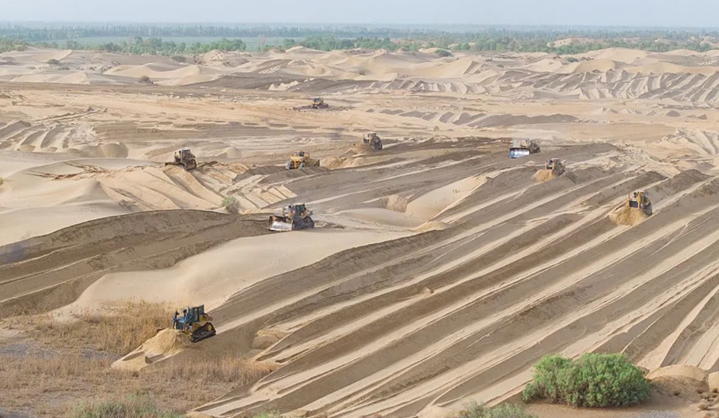 Image: Live Science Plus (see link below) In this short series, I want to cover a portfolio of programs that are aimed at the long term, as described in the last series, “Faith in the Eighth” (referring to the Eighth Edition of the PMBOK® Guide). In Part 1, I want to introduce you to the portfolio and in Part 2, I want to derive meaning and meaningfulness (that is, lessons learned) from the portfolio. In China, there is a large desert (see map below) which is called the Taklamakan Desert (which is also sometimes called the Taklimakan or Takla Makan Desert – or even by its haunting nickname, “The Sea of Death”.). The portfolio, which, in turn, is part of a larger portfolio, aims to plant millions of trees and shrubs and to geo-engineer the land, building a “Great Green Wall” around this – and other – deserts. as drawn to this portfolio because of the recently reported results – and the fact that the projects in the portfolio have been going on for more than 45 years. 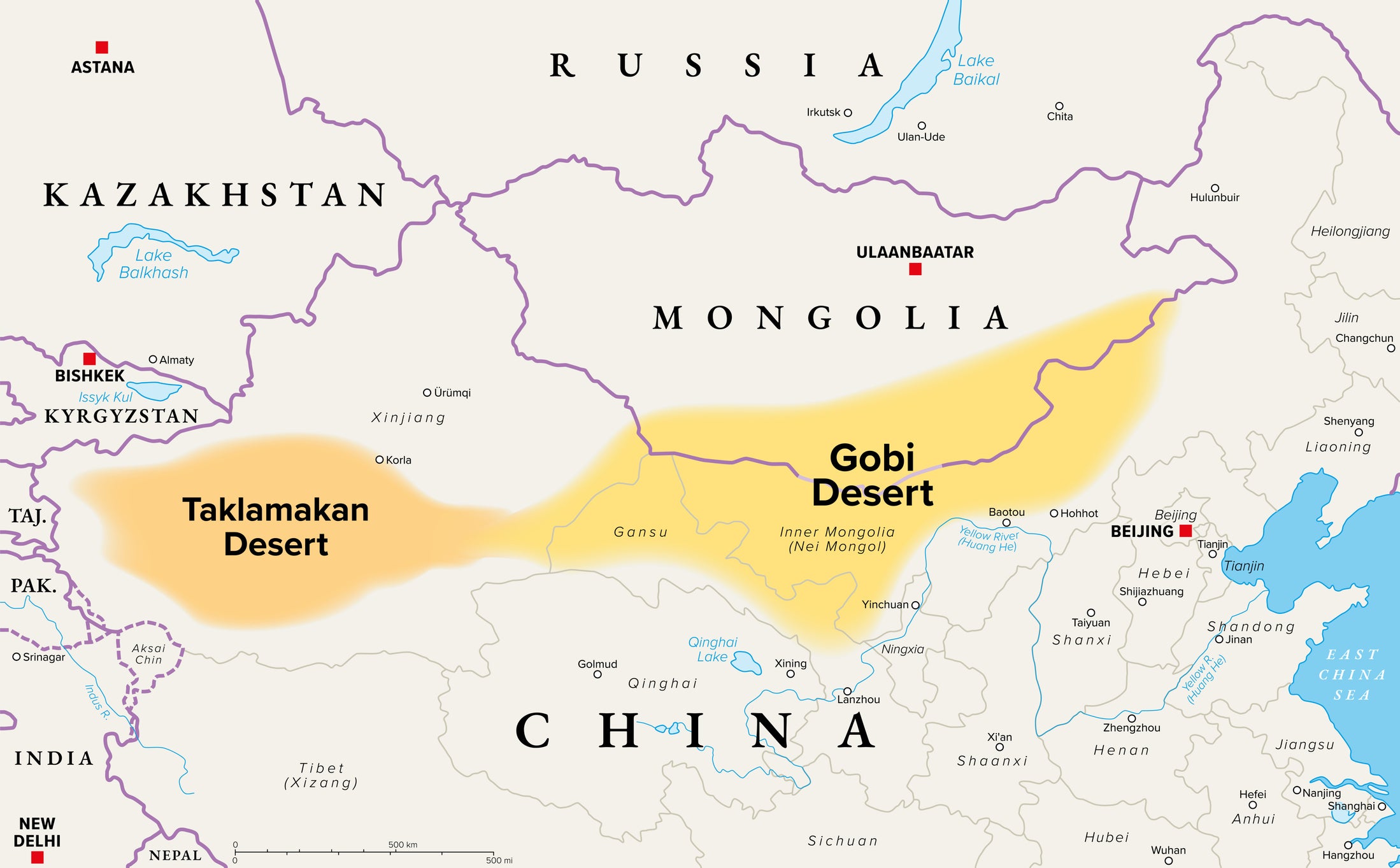 Map source: Getty Images The official name of the overarching portfolio that includes the Taklamakan Desert afforestation work is: Three-North Shelterbelt Forest Program. It is also commonly referred to as:
So for one immediate lesson learned we can see the concept of projects, which are part of programs, which in turn are part of portfolios which are part of still other portfolios – is a real thing. Beginning with the end in mind (to be covered mainly in Part 2), scientific studies now conclude that there are positive results (value!!) delivered by this portfolio. "We found, for the first time, that human-led intervention can effectively enhance carbon sequestration in even the most extreme arid landscapes, demonstrating the potential to transform a desert into a carbon sink and halt desertification," study co-author Yuk Yung, a professor of planetary science at Caltech and a senior research scientist in NASA's Jet Propulsion Laboratory, told Live Science in an email. Yung’s research can be found here: https://web.gps.caltech.edu/~yly/yly_mac/ReprintsYLY/N457_noor-2026-taklamakan-afforestation-project.pdf NOTE and credit: Much of the information for this post came from this article from Live Science Plus: https://www.livescience.com/planet-earth/plants/china-has-planted-so-many-trees-around-the-taklamakan-desert-that-its-turned-this-biological-void-into-a-carbon-sink Some details about the project: The Taklamakan Desert (the portion of the portfolio covered here) is slightly larger than Montana – or roughly the size of Germany, covering about 130,000 square miles (337,000 square kilometers). High mountains, which block moist air from reaching the desert for most of the year, encircle the area, creating extremely arid conditions that are too harsh for most plants – this, combined with massive wind and dust storms – gives it the nickname “Sea of Death”. Most of the desert sand is ‘shifting sand’ – dunes – which has been growing since the 1950s. In 1978, China began this Three-North Shelterbelt Program, a combination of geo-engineering, botanical science and massive infrastructure, including trench digging and solar panel installations. In late 2024, the Sea of Death was finally completely encircled with vegetation – and recently, the findings have begun to emerge – thus this blog post series, focused, as is the last series, on the delivery of value. Rewinding for a moment to its start – The Taklamakan Desert initiative is part of the Northwest China component of this portfolio, focused specifically on the Xinjiang region, to do the following:
I hope this gives you sufficient context. I will be coming back in Part 2 to show the relevance of this portfolio to People, Planet, Profits and Projects. |
Faith in the Eigth, Part 3
 In this series (Faith in the Eighth), I have discussed the theme of project success - outcomes, benefits, and VALUE delivery as the real work of project management - which I am increasingly calling project LEADERSHIP (because that's what it really must be). Another way to think of it is as Responsible Project Management - and there is some outstanding thought leadership in this area - you should definitely check out their work here: https://www.responsiblepm.com/ In fact, they have published (amongst many other valuable handbooks) a Responsible PM Manifesto, modeled after the Agile Manifesto, which says that as project managers (I would say project leaders), we value... 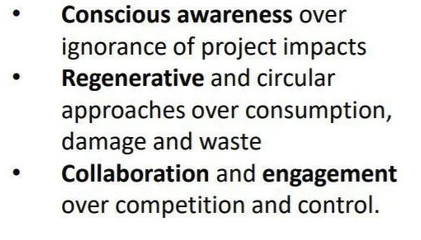 I know that many of the readers of this blog - critics and supporters both - understand "People, Planet, Profits & Projects" to be about so-called "Green Project Management" - the name of the book Dave Shirley and I wrote about this topic decades ago. However, if the Eighth edition of the PMBOK(R) Guide tells us anything, it's more about thinking long term, and thinking about your project's success by envisioning its delivering service well into the future. This showed itself to me in a recent news clip (see video below) about a sinkhole in Omaha, Nebraska, USA. I am not a civil engineer nor a roadway construction manager, but the clip made me think (and I hope it does the same for you) about the construction of this section of roadway and whether the planners took into account the base of the road, the presence of water, the general profile of what was underlying the paved surface, before they considered their project a success. As project managers we are often so focused on getting the project done on time, within budget, and meeting the 'specs of the moment' - that we fail to think of the project's product in the steady state. In this case, it's the capability of the road surface to safely carry the weight of vehicles (note that these were only basic cars, not trucks or heavy equipment) for the long term. Admittedly, I don't know the specifics of this situation in Omaha, but I think it can still serve to be a striking visual reminder of the need to think long-term, to think about the product of your product "in service", which in this case may have been doing some sonar testing (yes, I know that costs money, and takes time) and other work to assure that not only will there be a pizza party to celebrate this segment of roadway being completed, but that there will be an assurance that the roadway will deliver value into the future and not endanger people. Let me reiterate the theme of the blog - indeed, I do think that it is about considering the triple bottom line of people, planet and profit, and yes, it is about preserving species and considering effects on towns and villages and employees and it is about long-term profitability, but in general it is about thinking responsibly and projecting (PUN INTENDED) your thinking into the future beyond the end-date of your project, months, years, even decades into the future when its product is delivering value. |
Faith in the Eighth, Part 2
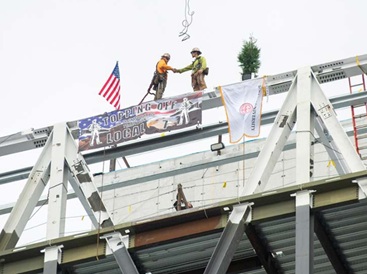
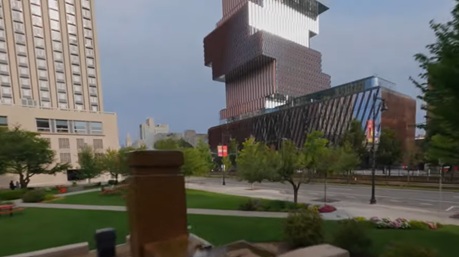
 In Part 1 of this post, I hopefully conveyed the idea (and hopefully you agree!) that the 8th Edition PMBOK® Guide represents a breakthrough in project management maturity – so much so that it literally redefined the “P” and the “PM” in PMBOK. I even assert that the “M” should maybe be advanced to “L” for Leadership. Who knows, maybe the 9th Edition could be the PLBOK® Guide? NOTE: I had thought this would be a 2-part post. Nope. It’s going to be 3 parts. Turns out there’s more to say about this – and more to learn about this – than I originally thought! This post focuses on what that advancement looks like when viewed through the lens of that figure. The header of the figure (repeated here for your convenience) indicates that of course projects produce outputs – interim deliverables – along the way. These deliverables (think “frame of house completed”) don’t necessarily produce value to the end-user. First, here's the infographic I created, for your convenience. 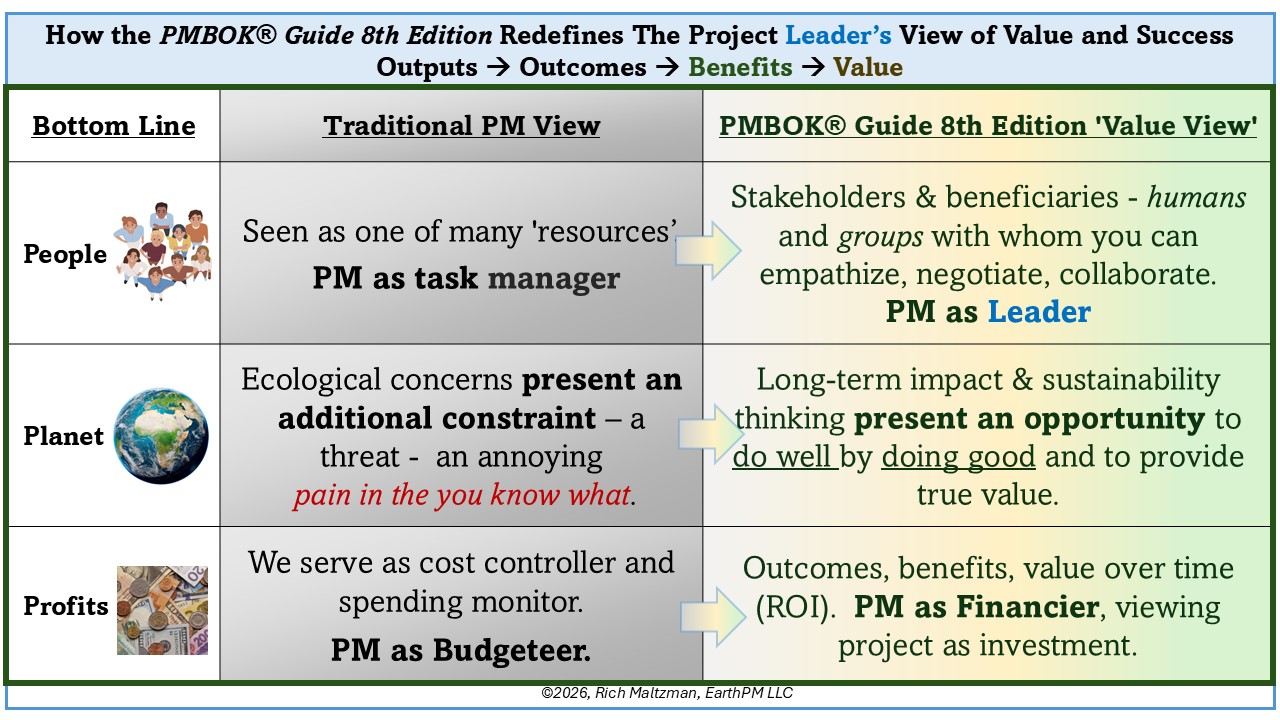 I need to take a brief tangent and a story to illustrate some of this – these outputs can and should be used by thoughtful project leaders as a way to motivate teams and to celebrate success along the way. I recall the so-called “Jenga” building construction project at Boston University. This is formally called the Duan Family Center for Computing and Data Sciences. I happened to be teaching a course in Project Leadership in the building across the street while teaching a segment on motivation. Literally in the midst of that conversation on project motivation with the students, a huge "top-off" celebration took place at the base of the building – music, food, with probably over 350 construction workers, managers, officials – marking the completion of the steelwork for the building (see below image). In other words, they were celebrating a milestone – an interim deliverable. I would argue that there is value there – perhaps not easily measured, but real value in terms of human team-building and motivation, which shows itself in the remaining work, aimed at the outcome – the availability of an amazing building. So amazing, that I urge you to take 5 minutes and click here to take a tour RIGHT NOW from your seats, from the eyes of a pretty fast-moving drone. Hold on to your seats and... GO (but then come back).
So that’s the beginning of the O – O – B – V progression – Outputs, Outcomes, Benefits, and Value. Value - this is value as seen by the users and sponsors (in the case of the Jenga building: Faculty, Staff, Students, local residents and businesses, alumni and more) is achieved only after the outcome – the ‘product of the project’ is delivered. That outcome produces benefits (in the case of the Jenga building, classroom and conference space, a showcase of sustainable construction, and so on) which – collected over time, creates value. Perhaps the most important phrase in the paragraph above is 'collected over time'. And this is fundamental to understanding the infographic featured in this series. Value (from the user, or from the project investment perspective) cannot be measured at the point of delivery of the outcome. It can only be measured after benefits start to accrue – and that means collecting benefits over time. And that leads to an important tangent about benefits and disbenefits. As humans, we tend to have optimism bias. It varies by culture, but generally all of us have this. This may lead to us thinking only of the positive benefits. Most projects also generate disbenefits. So in the case of the Jenga building, perhaps someone in an apartment building nearby used to have a view of the Boston skyline and the new building blocks their view and makes their property less saleable. This is subtle, but very important. When you manage (or rather lead) a project, are you thinking about what the product of the project does (both good and bad) in the longer term?If it is a single-serve coffeemaker, for example – what happens to the pods when they are discarded? If it’s a building, how is it heated and cooled?If it’s a service, how does it affect others besides those using the service? Good questions to ask, yes, even for a project leader – nobody else may be considering these things, and it may come down to you. Perhaps even if you are not the main decision-maker you can influence those who do make decisions about the project’s outcome in the steady state. Think about it. Wait, don't go - did you take the drone tour? Go for it! Click the picture and hold on to your seats!
In Part 3, I will proceed through the main part of the table, covering People, Planet, and Profit and how the 8th Edition PMBOK® Guide brings us from M up to L (manager to leader). |
Faith in the 8th, Part 1
Categories:
8th Edition PMBOK Guide
Categories: 8th Edition PMBOK Guide
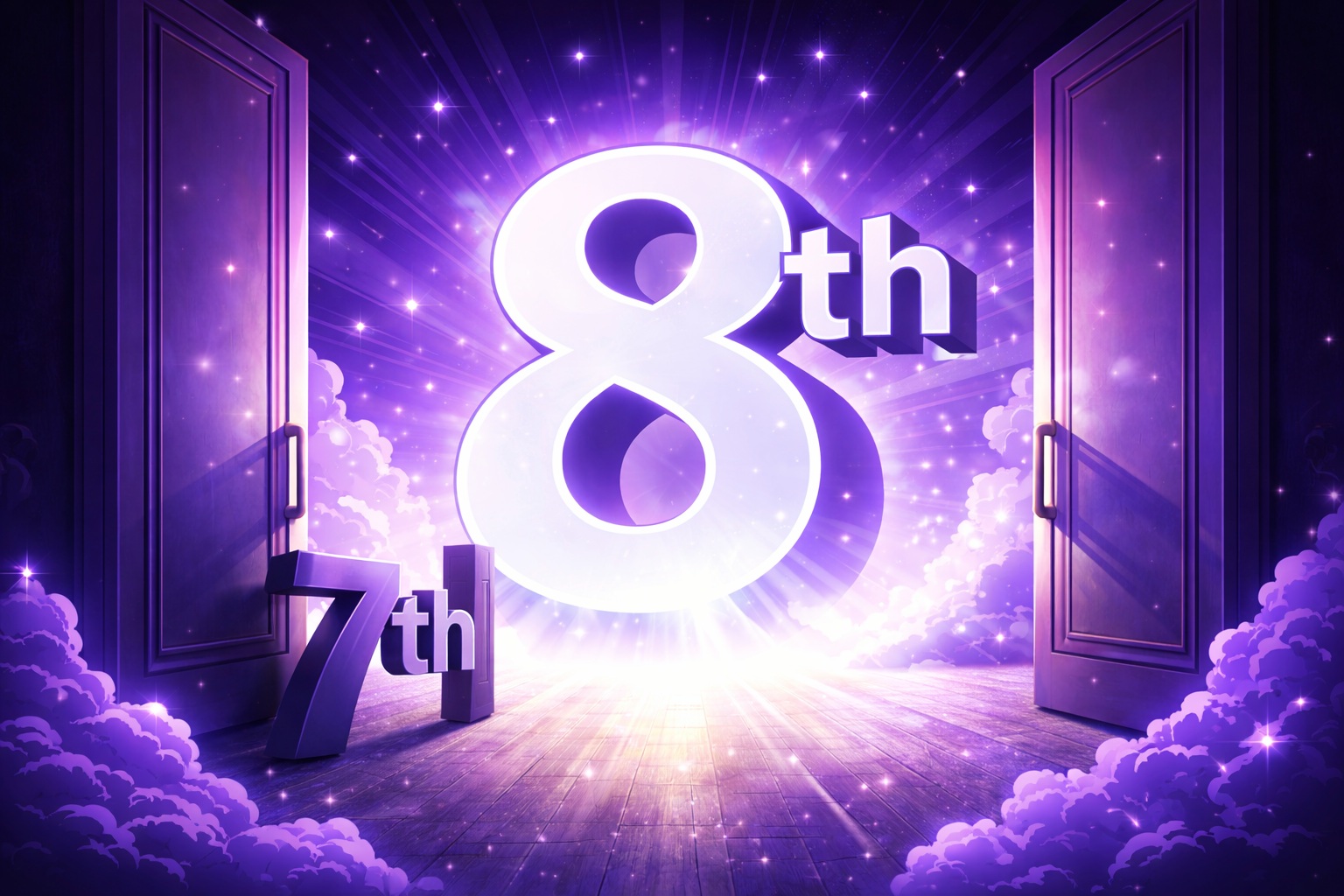 The 7th Edition of the PMBOK(R) Guide cracked open the door of Project Leadership. As a principles-based Guide it set up future editions to help our discipline mature. The 8th Edition boldly kicked that door wide open and sent us through, even daring to change the very definitions of project and project management - changes that start to make even our discipline's name - Project Management - seem quaint and inadequate, relative to what we need to do as we walk through that door. There are multiple aspects to to this passage, and in this series of two or three posts, I want to focus on People, Planet, and Profits - mainly because that's the title of the blog. This post is short. It is simply going to introduce a summary graphic which has my assessment of how the 8th Edition moves us forward (through the passageway, if you keep my metaphor in mind) from project manager to project leader. I believe the graphic will be mainly self-explanatory, however, if you have followed the blog, you know I won't be able to resist the temptation of fleshing this out with a paragraph or two about each row, and I hope that will be helpful for you. For now, have a look at the graphic and think about what it might mean for you personally, or your organization, especially if you are in a PMO or Center of Excellence sort of position. Of course if you have any comments on the graphic, or the post in general, they're welcome and appreciated. 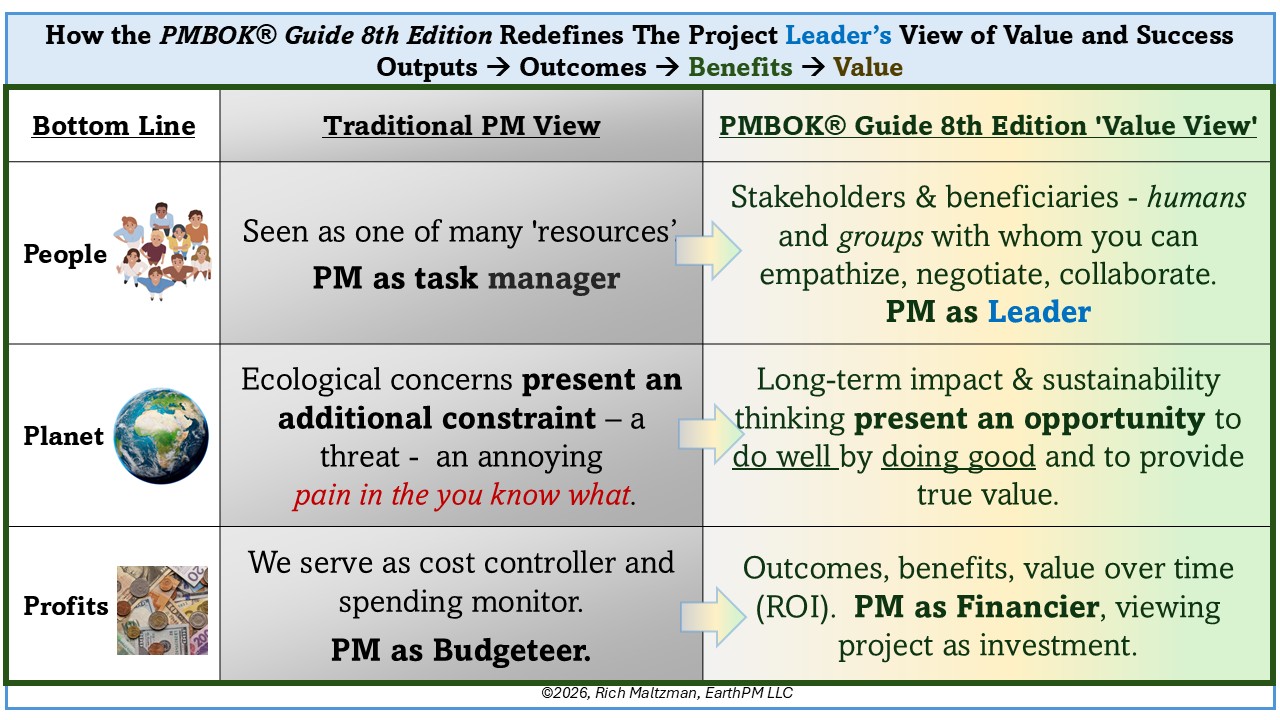 |
Resolve!
 It’s time to make New Years’ Resolutions. One of mine is to have shorter, more concise, and helpful blog posts. So… I have a few suggestions for project managers who want to 'elevate' to Project Leaders: Commit to being a lifelong learner
Check anything that an ‘expert’ tells you – and that ‘expert’ can be AI. Is what the expert told you:
Become more self-aware and develop your Power Skills • Communication: Clearly conveying information and ideas. • Problem-Solving: Effectively addressing challenges and finding solutions. • Collaborative Leadership: Guiding and working with teams to achieve common goals. • Strategic Thinking: Seeing the big picture and making plans for future success. • Active Listening • Adaptability • Conflict Management • Emotional Intelligence (EI) • Negotiation • Relationship Building • Team building and teamwork That’s it – I am consciously avoiding a long, boring post to keep my resolution! I hope to sustain it through 2026. Happy New Year! |


