Sunk Costs Part 2 of 3: Introducing the SMIRF


|
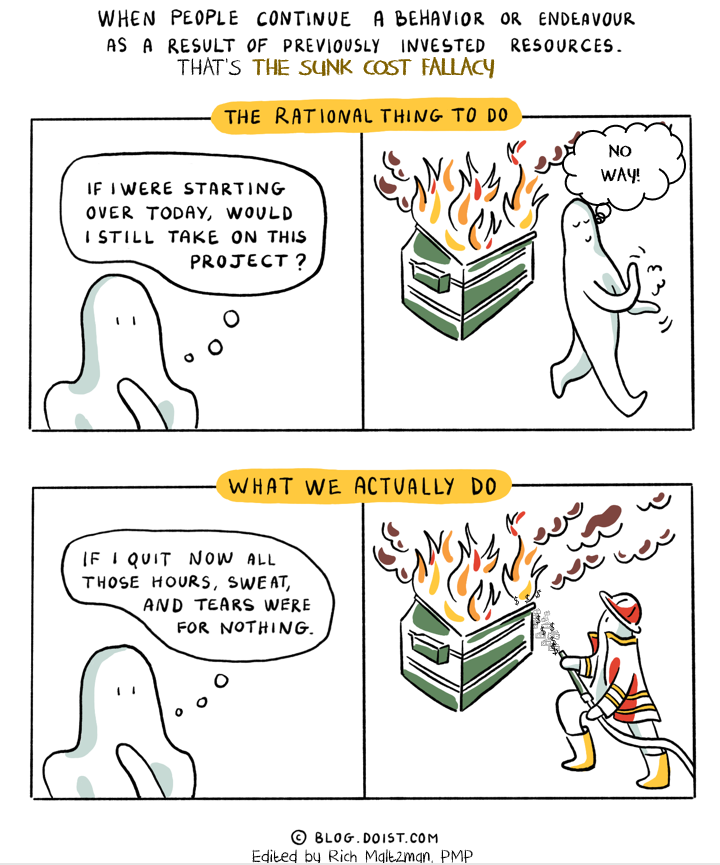
In Part I of this post, I discussed the Sunk Cost Fallacy, by way of referencing the abandoned Cincinnati Subway project of the early 1900s. It got some interesting feedback and generally readers agreed that this is an important aspect of human behavior – especially group behavior – of which project leaders should make themselves aware. I indicated that Part II would discuss the sustainability aspects of this. Warning: there is Post Creep here. This is now a 3-part post. So here is Part 2 (or II, if you count in Roman numerals)... To move this post series over to the topic of sustainability and project leadership, let me start by dissecting the middle word of the Sunk Cost Fallacy – Cost. Cost includes, of course, the dollars, yuan, pounds, Euros, yen, dinars, rubles and/or cryptocurrency, that we continue to “throw down a black hole of a project”. But what about the non-monetary elements of cost? How about the social and environmental impacts of a project that don’t show up at the ribbon-cutting ceremony?
I want to challenge your thinking here and talk about the converse of the Sunk Cost Fallacy and instead ask you if you have ever considered the Spending/Saving Money for Irrational Reasons Fallacy – SMIRF® (I just coined that!). There are indeed SMIRF examples in which projects DON’T spend money (or effort, or research, or resources) on efforts that have to do with long-term impacts of the project’s outcome, when those outcomes should be front-and-center during planning. There are other SMIRF examples, in which organizations spend money to try to work around a compliance item (usually involving safety or environmental controls or constraints imposed by a government agency). Sometimes SMIRF is not really even about saving money, but rather an odd cultural motivation to ‘outsmart a government agency’ - to make this an 'us-versus-them' battle (when really 'us' and 'them' are on the same overall team). In all of these cases, these SMIRF project behaviors are in the name of ‘saving money’ and ‘staying on budget’, or in some cases, ‘being on time’ – especially in beating a competitor to market. When this happens, the project has become so narrowly driven by the cost and/or time constraint, that it consciously or subconsciously severs all ties with the objectives not only of the project, but the strategic goals, objectives, vision, and mission of the organization. This can be worse than the Sunk Cost Fallacy, because the outcomes are not simply wasted money, but potentially horrific events and impacts that affect people and planet. Since this blog post is one that challenges your thinking, I will avoid blathering on and on here, and instead seek some reaction and even examples. I have my own that I will share with you in Part III. They won’t be pretty. But they’ll be fodder for lessons learned to avoid SMIRF. |

A Clean Start for the 2022 Project Leader, Part 2 of 2
|
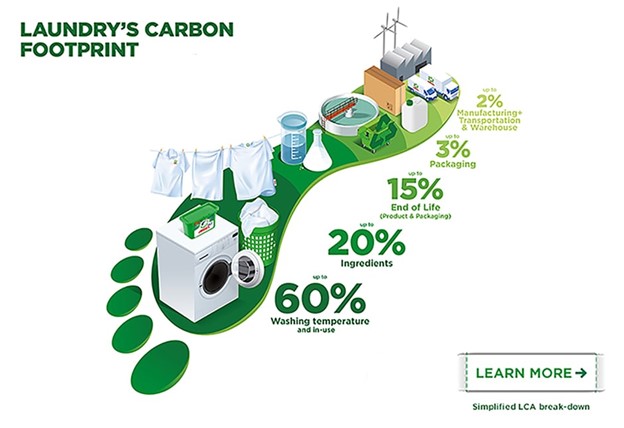
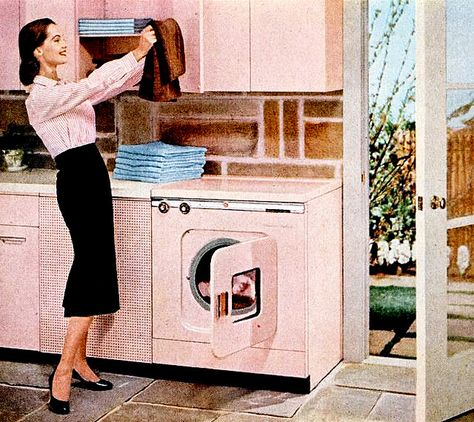
In part 1 of this blog post, “A Clean Start for the 2022 Project Leader”, I make a point – or rather I try to make a point – in the very title of the post. Project Leader is a term I am beginning to favor greatly over Project Manager. I won’t go through my full rant here, but think about it: what do you do as a project manager? Do you oversee daily arrival time of employees? Do you assess their performance for raises? Do you see if they are following company policies day-to-day? No, no, and no. You aren’t generally performing supervisory/management functions. Do you need to inspire your team, to serve them? Do you get roadblocks out of the way, and often work with diverse teams from different groups that don’t directly report to you? Yes, yes, yes, and yes. That’s leadership. Congratulations. You’re a Project Leader. OK, good. We covered the title. Now back to the topic. In that blog post, I refer to a podcast episode by Malcom Gladwell’s Revisionist History. In that episode, he visits the Procter and Gamble HQ and talks with Todd Cline, Director of R&D, North America Fabric Care. Cline walks Gladwell through a lab where testing is taking place on detergents that can work in cool or even cold water. It’s not a trivial thing – in the US, we do 300 loads of laundry a year and each load uses 41 gallons of water. Do the math. And that is just household laundry. Commercial clothes washing adds a bigger chunk of impact. The carbon impact of a washing machine or detergent has very little to do with manufacturing or shipping it, or even disposing of it (although these should also be considered). Environmental impact is almost all in the “use” phase of the life of a washing machine. This is because most of the carbon footprint comes from the energy to heat the water. A 70% reduction in carbon footprint is achieved simply by using cold water. And to bring it closer to home, use of cold water would also make your clothes last longer. So, the “holy grail” of laundry is washing clothes in cold water. This whole idea of a Life Cycle Assessment (LCA) and in particular, the LCA of a washing machine, was actually covered in our 2010 book, Green Project Management, with the intent to wake up project leaders (yep, it’s that term again) to the idea that their project’s product goes on (sustains) well beyond the project’s existence. We refer to this paper (see reference below) and use the figure below to make the point that Gladwell is hearing about at P&G headquarters, 9 years later.
This is also covered nicely in a National Geographic piece called Lightening the Load. And it’s also covered by P&G laundry detergent Ariel in this piece. P&G is of course, pushing their product, but they are indeed tackling an important problem and the article does have good information – and it provided us with a really cool (pun intended) lead-off picture.. PMI® has been talking about life cycle thinking for a while, but it has never been as relevant and PMI has never been as holistic and expansive in its standards and PMBOK® Guides as it now has been in the PMBOK® Guide, 7th Edition. Now, PMI is saying things like: “It is becoming more common…to consider social and environmental impacts in addition to the financial impacts…this may take the form of a product life cycle assessment which evaluates the potential environmental impacts of a product, process, or system…” (PMBOK® Guide 7th Edition, section 2.4.1, Planning Overview). So, here’s the thought for our clean new (well, somewhat new) year. Think clean through the end of your project. Plan in considerations for how the product of your project (which could be a chunk of hardware like a washing machine or a piece of software, or a highway surface, or a house-cleaning service) impacts social and environmental AND financial long-term outcomes. Imagine the product of your project in action, 3 years from now. What does it use? What does it produce? Who does it impact? Now expand that to 10, 30, 100 years. I know. This is hard for us. We are get’R’done folk. On to the next project. But we are doing a disservice to our stakeholders (some of whom are our grandchildren) when we don’t take the bigger picture into account when we plan.
Reference: Koroneos, Christopher & Achillas, Ch & Nanaki, Evanthia. (2013). Life Cycle Thinking in the Use of Natural Resources. Open Environmental Sciences. 7. 1-6. 10.2174/1876325101307010001. |

Literally Sunk Costs – Part 1 of 2: Tunnels to Nowhere
Categories:
sunk cost,
project on fire,
kill point,
stagegate,
stage-gate,
psychology,
biases,
fallacy,
project,
project management
Categories: sunk cost, project on fire, kill point, stagegate, stage-gate, psychology, biases, fallacy, project, project management
| |
A Clean Start for the 2022 Project Leader
Categories:
project leader,
project leadership,
revisionist history,
podcast,
gladwell,
malcolm gladwell,
lifecycle,
washing machine,
LCA,
Leadership
Categories: project leader, project leadership, revisionist history, podcast, gladwell, malcolm gladwell, lifecycle, washing machine, LCA, Leadership
|
For our last post of 2021, I am going to leave your head spinning. Almost literally. It’s going to be short and sweet, but I am going to follow up with you in the clean new year. What’s all this about spinning…and cleanliness? I want to end 2021 by sending you to a podcast episode from Malcolm Gladwell. He has an OUTSTANDING podcast series called Revisionist History. I would say every episode is worth a listen. In its own words, here’s what the podcast says about itself: Revisionist History is Malcolm Gladwell’s journey through the overlooked and the misunderstood. Every episode re-examines something from the past — an event, a person, an idea, even a song — and asks whether we got it right the first time. Because sometimes the past deserves a second chance. The particular episode to which I implore that you listen (and then come back early next year for a discussion) is called Laundry Done Right. And yes. It is about washing your clothes. What the (insert bleep here) does this have to do with project management, you ask? Well, for the past 10 years or so, I have been giving talks about sustainability in project management in Italy, Costa Rica, South Africa, Canada, the USA, The Netherlands, Malaysia, and China. And I have been using the analogy of a washing machine as a way to get project managers to – well – to become project leaders, to think about delivering value rather than just producing outputs or outcomes. The analogy (not to give away the punch line) has to do with where the ecological value could come from in improving the whole process of washing your clothes. It's about a cycle, all right - but not a wash cycle - or at least not only a wash cycle. More next year - in other words, in a few days. Gladwell nails it in this episode. Give it a listen and I promise to connect this to sustainability thinking in project management (read that as project leadership) on the other side of 11:59:59PM, 31-December, 2021. Hope you enjoy it. HAPPY NEW YEAR! May all of your projects be successful, and deliver ongoing value! Cheers! Rich Maltzman, PMP
|
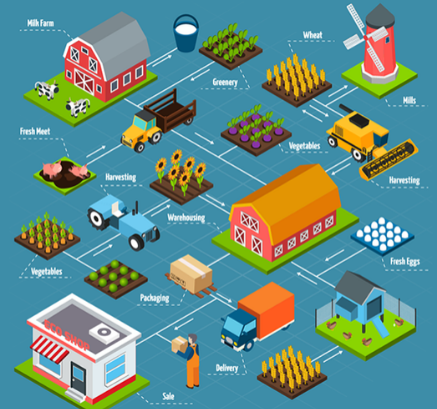
Smart Farming - Part 3b - B for Blockchain
|
Just finishing up on our “Smart Farming” series, which was inspired by this article in UMass Magazine, let’s talk about projects in the area of “agtech” – bringing technology – sophisticated technology – to farming. In this case, we’ll talk about the blockchain of food. To explain this, I found a very helpful podcast with a principal of ripe.io, which is mentioned in the UMass article, and the work of UMass graduate Hannah Leighton. Have a listen and come on back. https://www.blogtalkradio.com/ripeio/2019/11/11/blockchain-of-food Welcome back. Yes, it’s about blockchain, the same sort that powers cryptocurrency, but applied here to the shared “ledger” of food production and distribution. From the article: “Ripe.io extracts essential information to follow an item along the supply chain, and puts it all in one place—that’s the blockchain,” Leighton explains. “Where is the farm located, really? Is it women or minority owned? The blockchain identifies those key metrics,” she says. Blockchain can’t be altered, only added to, which is why it’s so secure. “Eventually, if you put enough false information on the blockchain, you’ll get caught,” says Leighton. “It weeds out bad actors.” As we’ve done with the other posts in this series, we focus (as any good program or portfolio leader should) on the vision and mission of the organizations. In this case, for ripe.io, it’s front and center on their web page:
Again, from the ripe.io website, this allows all of us – farmers, packagers, shippers, restaurants, consumers, to:
by leveraging blockchain technology, ioT, AI and machine learning we aggregate real time data into one dashboard for predictive consumer analytics.
our platform empowers our partners to provide their customers with food integrity data insights to ensure they are offering their customers the highest quality/sustainable food product possible.
api interfacing allows our partners to capture robust data collections.
You can find a nice “pitch” from ripe.io that goes over their business model and you can imagine related, collaborative and competitive projects in this growing (pun intended) area. Here's that pitch:
In fact, after a bit more research, I found this summary of players in this area here: https://builtin.com/blockchain/food-safety-supply-chain To quote from the article and give a real example of how this is being used NOW: “Retail giant Walmart recently employed blockchain to track and trace its lettuce supply chains and is being hailed as a next-generation solution in food safety. Walmart’s blockchain can trace food back to its grower in a mere 2.2 seconds. As blockchain becomes increasingly prevalent in food safety (it also processes payments more quickly and distributes digital coupons for restaurants), we've rounded up five U.S. companies that are using the technology to change the way eat.”
It’s fascinating to me just how exciting a nominally boring topic, such as lettuce, when combined with innovative projects and initiatives like these provide that aforementioned advancement of Data to Information to Knowledge to Wisdom (DIKW) – see Part 2 of the series for more on that. Although clearly, ripe.io and others are in the business of making money, they are also focused on the triple bottom line. From an interview with their co-founder Phil Harris, the ecological and social aspects of their work are important as well: Reducing food waste: Annual food waste will reach 2.1 billion tons by 2030, according to Boston Consulting Group’s 2018 report. By tracking and tracing food items in real time, supply chain participants are alerted of in-congruencies and can manage food safety, inventory and freshness to prevent food waste. ripe.io’s solution allows users to detect and communicate inefficiencies in fresh products and certify the information holds true on the blockchain system.
Customers want information beyond the physical food product. Visibility into organic certification, animal welfare practices, soil quality, etc. backed by a blockchain ledger help assure consumers the information provided holds true and aligns with sustainability values. It also holds the industry accountable for more ethical and sustainable practices that provide a better future for generations to come. Locality: Consumers want more validation on the origin of the food they’re consuming. Due to disconnected communication systems, food supply chain stakeholders have challenges providing this information. Through ripe.io’), consumers are able to track the granular details of the origin of their food products and better support local agriculture. This also helps mollify the rural-urban divide by generating rural economies and connecting our communities through food. I found this dive into smart farming fascinating, and I hope you did too. It’s a bit ironic, because I also like comedy and recently, I ran into the comedy of Greg Warren, who has a whole album of (believe it or not) farm comedy. I will close this series out on Smart Farming by (hopefully) providing you with a laugh or two, thanks to Greg’s ‘smart’ view of farming.
|