












Guessing is not a strategy: How to build decision velocity with AI and real-time data
June 10, 2026 | Live Webinar

You Can't Get They-ah From Hee-yah
Floating an idea into reality: the other side of the AI Project Paradox
The Environment of the Built Environment: an AI Paradox
6th, 6th Edfition, 6th Edition PMBOK, 7th Edition, 7th Edition PMBOK, 8th Edition PMBOK, 8th Edition PMBOK Guide, Activism, actuarial, actuary, adapt, addition by subtraction, Africa, africa, agriculture, airforce, ajaita, Alaska, amazon, analogous, analytics, ancient, and more power, antarctica, anti-science, apple, apps, architecture, arctic, arrakis, Artificial Intelligence, asch paradigm, Assistant, asthma, astronomy, automobile, automotive, autonomous cars, b, bankhar, Banksy Crypto, basalt, baseball, bats, batter, beauty products, benefit, benefits, Benefits Realization, beyond epica, biases, bicycle, big data, big dfata, big dig, bike, biodiversity, biomedicine, birdhouse, blockchain, blood, blue blood, blue trees, bluefin, bluefin tuna, book review, boston, boston university, Boyce, Brazil, brazil, Breakdown Structures, BS, building, buildings, built environment, built environment, bumblebee, cake, capacitor, car, Carbon, carbon, carbon capture, carbon negative, carbon neutral, carbon pool, carbon sequestration, carbonate, careers, CEO, ChatGPT, chatGPT, chatgpt, chatgpt, chess, China, china, chopsticks, citrus, cli-fi, climate, climate change, climate resilience, climeworks, Clumsy, CO2, co2, CO2 Utilization, coalition, cobalt, coffee pods, cognition, cognitive, Collabortion, colombia, concrete, Conflict, construction 5.0, cool projects xyloscope, cooling, coral, corn, cost of good quality, cost of poor quality, cost of quality, crazy, criticism of project management, cryptocurrency, CSR, csr, data, data analytics, data privacy, datacenter, dataset, death spiral, Decision Making, decomposition, Defense and Climate, definition of a project, deforestation, dependencies, dependency, desert, DIKW, dikw, dimopoulos, disposal, dna, DOD, dogs, dolphins, dream, drilling, drink, dune, dune, dutch, early start, earth, eatlocal, eco-tourism, ecological, economic, economics, EKC, electric grid, electricity, electronics, elysis, embodied carbon, emerging technologies, empower, Energy, energy efficiency, environmental degradation, escalate, escalation, ESG, extreme weather, fallacy, FARC, farming, finance, fish, fish brains, fishing, fix, fixing the earth, flint water, Flint Water Supply, flood, flooding, Food supply chain, food waste, forest, forest for the trees, forestation, forrestgump, frank herbert, Fruitcake, fungus, fusion, Galvao, garage, gas, gasoline, geese, gender equality, gender partnerships, generational differences, Generative AI, gladwell, gold, Goodness, google, Government, GPT, great pacific garbage patch, green, green building, green buildings, green energy, green iguana, green project, green project management, greening, guest post, gyre, harkonnen, Harvesting Benefits, hawasina, hedgehogs, heursitics, historical data, hlb, holitsic, holland, horseshoe crab, human-caused climate change, hydrogen, hydrology, ice, iceland, ignition, iguana, imagery, impact, india, inequality, information, initiatives, injection, insurance, intelligence, interacting risk, internal combustion engine, invasive species, investment, isomer, issue escalation, issues, ITER, jobs, Jupiter, justification, kids, kill point, knowledge, koch brothers, Kuznets, laboratory, LAL, landscape mode, lapampa, launch, LCA, Leadership, Leadership, life cycle analyses, life cycle analysis, lifecycle, Linkedin, liquid, lizard, local, long term, long-term, long-term thinking, look up, loud, maintenance, maker, makermovement, malcolm gladwell, management, marathon, marine biology, market, mars, Martin Luther King, mean, megawatt, MeHg, melting, mercury, metal, Microgrid, microplastics, migration, military, millennial, mindset, minerals, mission, mitigate, MLK, mongolia, museum, museum of london, nature, nematodes, net gain, Net Project Success Score, net zero, netherlands, network, New book, New Jersey, New Practitioners, new york, NFT, nitrogen, noise, noreaster, norway, nova, NPSS, NREL, ocean, ocean cleanup, ocean life, oil rig, oil rigs, oklahoma, oman, only murders in the building, opportunity, overall risk, oxygen, packaging, pareto, PBS, permafrost, persistence, peru, Pharmaceutical, planet, planet.com, planning, plant, plasma, plastic, playground, pm, pm education, pmbok, pmbok guide, pmnetwork, PMXPO-2018, podcast, pollutants, pollution, poop, poor, portfolio, power, power skills, privacy, privacy concerns, professors, program, Program Management, project, project leader, project leadership, project management, project management 3.0, project on fire, project progress, Project Success, project success, projecticity, projectleadership, projectmanagement, projects, psychology, pulse of the profession, purple bacteria, purpose, quiet, rainforest, rationale, reef, refugees, renewable, renewables, Repair, repair, repeatable process, repeatable processes, repurpose, research, resource breakdown strucuture, Resource Management, reversing climate change, revisionist history, rich, rigs2reefs, ripe, risk, risk avoidance, Risk Management, risk mitigation, risk response, risk responses, river, robots, rocks, rules of thumb, rural, rural India, russia, Sarcasm/Irony, satellite, saudi, schedule, sci-fi, Science, science, science-fiction, scientific american, screaming monkeys, sea, sea life, Sea-Level Rise, sea-level rise, seagreens, seawall, seawater, seawater temperature, seaweed. beat;es. farming, secondary risk, selena gomez, sequestration, shipping, skyscraper, SLR, smart cities, smart city, smelting, social, social pressure, soil, solar, solar panels, solar perovkites, solar saheli, sonic, sponge cities, SRI, stage-gate, stagegate, stakeholder, stakeholder management, steward, stewardship, storage, strategy, stupid, success, suffer, sulphur, sunk cost, supercapacitor, supply chain, survey, Sustainability, sustainability, Sustainable Investing, Sustainable Tourism, sybiosis, symbiosis, system 03, TBL, temperature, terraform, terraforming, test, threat, threats, totem, touchscreen, tour, tower, Trains, transparency, transportation, trash, tree, tree species, trees, trillion, triple bottom line, triple constraint, truth to power, UMass, us army corps of engineers, USDA, vacuum, value, venus, vision, voice, voltage optimization, vw scandal, washing machine, waste, wastewater, water, we mean business, whales, Whirlpool, wind, wisdom, women, Women in Project Management, wood wide web, woonerf, Work Breakdown Structures (WBS), world breakdown structure, worms, xian, xylotron, Yale


|
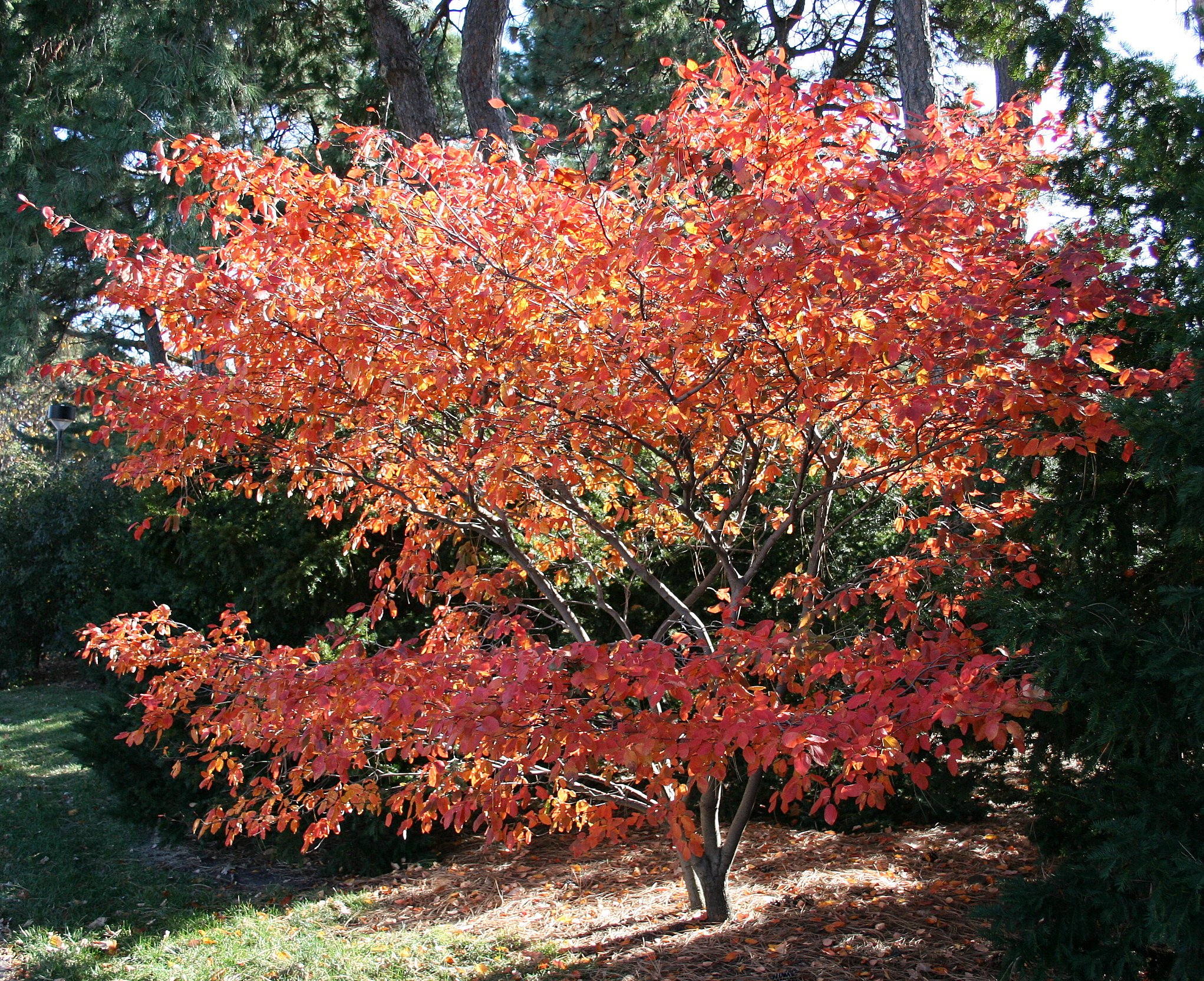
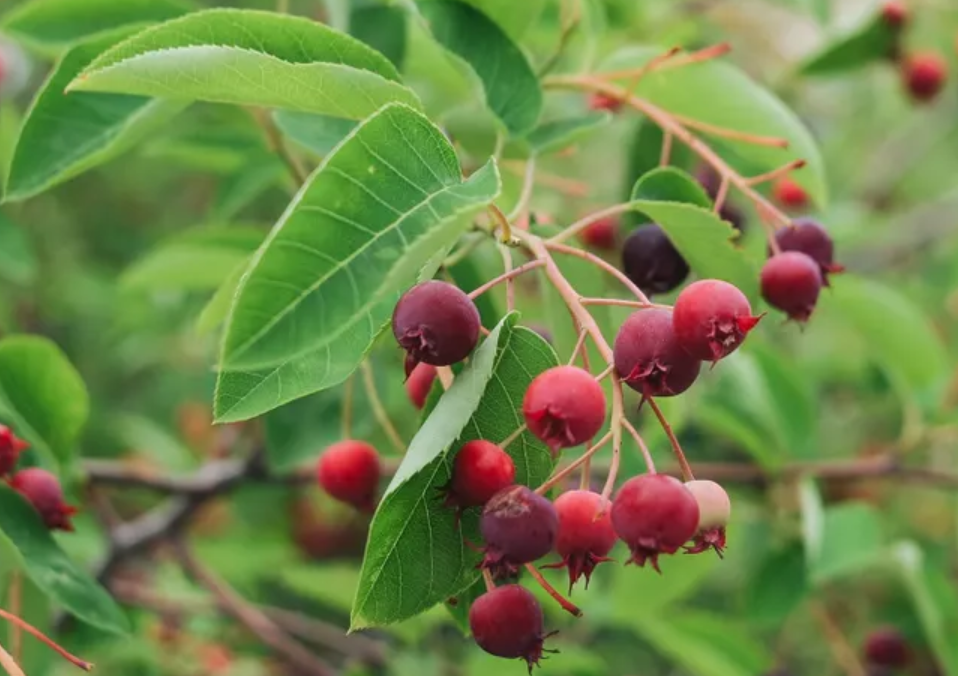
Here is Part III of my 2-part series that focuses on trees and communications. I know… I know… I have violated two rules here – (1) having a third part of a two-part series, and (II) mixing Roman and Hindu-Arabic numbering. Forgive me, and call it poetic (or bloggetic) license. I would like to introduce you to the serviceberry tree. Other common names for this tree are: Juneberry, shadbush, shadblow, and shadwood, (with the 'shad' reference alluding to the fish that runs and spawn at the same time these plants bloom). Other names you may see are sugarplum, Indian pear, May cherry, saskatoon, sarvisberry, wild pear, wild plum, and chuckley pear. Better Homes and Gardens magazine says: "This small tree thrives through all four seasons and offers so much to any garden. Abundant white blooms in spring are followed by delicious berries in summer, fiery foliage in fall, and silver bark in winter. Serviceberry trees display white blooms just before their foliage emerges in early spring, offering some of the earliest sources of nectar for pollinators. The five-petaled flowers closely resemble apple blossoms but with skinnier petals. After the show of these blooms, clusters of edible berries form. As summer begins, berry colors ripen to a deep red then purple color. The berries make a wonderful substitute for blueberries and can be eaten fresh or made into jams and jellies. Birds also enjoy them. Serviceberry foliage has an open and loose habit. This allows dappled light to shine through, which creates a space for part-shade plants to sit below the base of serviceberry trees. As nights cool down in autumn, blue-green foliage transforms into beautiful shades of orange and red." Here is a closeup of the serviceberries themselves: I first read about serviceberries and how they connect with a gift-based economy in this article from Emergence magazine. The article, An Economy of Abundance, by Robin Wall Kimmerer. The article focuses on economics, but I found interesting because of the idea of the importance of ‘gifting’, especially during this Holiday season (after all, I am publishing this on Christmas Day, 2020). So – what does this have to do with project communications? It’s actually more about negotiation in this case. The communications piece lies only in what the serviceberry tree is ‘communicating’ to us about a gift-based economy and zero-sum games. We (should have) learned in our PM training that a negotiation style based on a zero-sum game is usually the least-preferred. It has its place, but it should be avoided unless needed. We tend to go with the “Getting to Yes” philosophy of looking to ‘expand the pie’. And I wondered – could this pie be a serviceberry pie? Sure - that’s a thing. In fact, here’s a picture, and a recipe.
Turns out the fruit taste like (from the article above), “a blueberry crossed with the satisfying heft of an apple, a touch of rosewater and a miniscule crunch of almond-flavored seeds. They taste like nothing a grocery store has to offer: wild, complex with a chemistry that your body recognizes as the real food it’s been waiting for.” Wow, I certainly can’t wait to try that pie! The author of the article is a registered member of the Potawatomi people. In Potawatomi, the serviceberry is called Bozakmin, which is a superlative: the best of the berries. She says, …the most important part of that word is “min,” the root word for “berry.” It appears in our Potawatomi words for Blueberry, Strawberry, Raspberry, even Apple, Maize, and Wild Rice. The revelation in that word is a treasure for me, because it is also the root word for “gift.” In naming the plants who shower us with goodness, we recognize that these are gifts from our plant relatives, manifestations of their generosity, care, and creativity. When we speak of these not as things or products or commodities, but as gifts, the whole relationship changes. I can’t help but gaze at them, cupped like jewels in my hand, and breathe out my gratitude. So she feels that she has learned a great deal from the serviceberry tree. How? What might Serviceberry teach us here? She replies, “Serviceberry, or shadbush as I learned it, provides a model of interdependence and coevolution that is the heart of ecological economics. Serviceberry teaches us another way to understand relationship and exchange. With a serviceberry economy as our model, it prompts the opportunity for articulation of the value of gratitude and reciprocity as essential foundations for an economy.” Reciprocity—not scarcity. During our Holidays we are busy buying and receiving gifts. How does a gift change a ‘thing’? It makes us more interdependent on each other and to feel more like a community. Could we consider the Earth as a gift to us? Would it change the way we think about using resources? Ms. Kimmeler thinks so: To name the world as gift is to feel one’s membership in the web of reciprocity. It makes you happy—and it makes you accountable. Conceiving of something as a gift changes your relationship to it in a profound way, even though the physical makeup of the “thing” has not changed. A wooly knit hat that you purchase at the store will keep you warm regardless of its origin, but if it was hand knit by your favorite auntie, then you are in relationship to that “thing” in a very different way: you are responsible for it, and your gratitude has motive force in the world. You’re likely to take much better care of the gift hat than the commodity hat, because it is knit of relationships. This is the power of gift thinking. I imagine if we acknowledged that everything we consume is the gift of Mother Earth, we would take better care of what we are given. Mistreating a gift has emotional and ethical gravity as well as ecological resonance. She even talks of the “monster”” in Potawatomi storytelling. The monster is called Windigo and its trait is taking too much and sharing too little. The Windigo is not a pretty creature. It is described as “gaunt to the point of emaciation, its desiccated skin pulled tightly over its bones. With its bones pushing out over its skin, its complexion the ash gray of death, and its eyes pushed back deep into the sockets, the Windigo looked like a gaunt skeleton recently disinterred from the grave. What lips it had were tattered and bloody… Unclean and suffering from suppurations of the flesh, the Windigo gave off a strange and eerie odor of decay and decomposition, of death and corruption.”1 By the way, this is not the decomposition we learn about when building a Work Breakdown Structure! This is the biological, stinky one. You can learn more about the Windigo here. (Warning: graphic content) Below is one of the least-scary images of the Windigo that I could find.
Scary creatures. Moving words. To come back to negotiation, especially ‘zero-sum game’ negotiation, perhaps we are focused too much on competition as a driver. Is that the best way to go? Again, referencing “Getting to Yes”, perhaps not. In the author’s words: …since competition reduces the carrying capacity for all concerned, natural selection favors those who can avoid competition. Oftentimes this is achieved by shifting one’s needs away from whatever is in short supply, as though evolution were suggesting “if there’s not enough of what you want, then want something else.” This specialization to avoid scarcity has led to a dazzling array of biodiversity, each avoiding competition by being different. Diversity in ways of being is an antidote to scarcity-induced competition. I encourage you to read the article with an open mind and consider it as you give – and receive – during this holiday season.
1Legends of the Nahanni Valley, Hammerson Peterson, 2018, Mysteries of Canada |
|
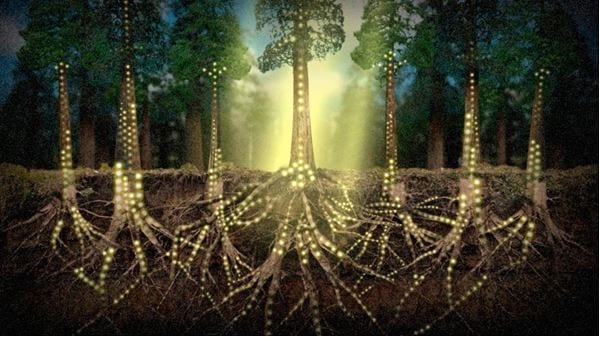
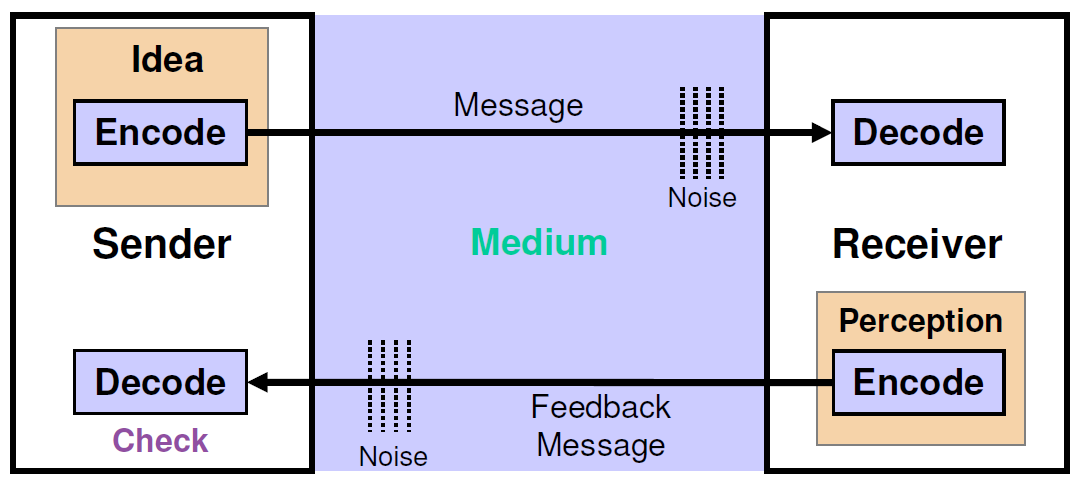
Picture from https://www.evolves.com.au/trees-can-talk/ In Part 1 of this post, I discussed the communications of trees. Yes, that’s right – trees talk to each other. The post was based on an interview with Suzanne Simard, an expert on underground networks that are now known to convey messages between hub or “mother” trees and other trees, perhaps miles away. In the interview, Simard also talks about communications. And that’s the theme of Part II. Here’s the key portion of the interview for this part: Q: Another word that can be slippery is “communication.” I would define communication as any exchange of information. That’s a very big umbrella; it can apply to, say, the co-evolution of berry coloration and bird tastes, so that over time berry color becomes more appealing to birds and correlates with nutrient properties. That’s communication—but we categorize that differently than we do the alarm calls squirrels give when a hawk approaches, or the conversation you and I are having right now. Where in that spectrum do plant communications fall? A: Right in there. And we’re prisoners of our own western science; indigenous people have long known that plants will communicate with each other. But even in western science we know it because you can smell the defense chemistry of a forest under attack. Something is being emitted that has a chemistry that all those other plants and animals perceive, and they change their behaviors accordingly. Given that definition of communication, you can see that this follows the sender-receiver model described in the PMBOK® Guide and which I use in my courses and consulting. For a really well-done explanation of the PMBOK® Guide 6th Edition’s treatment of this, click on this reference from EdWel. Turns out that the model originated from an article in the Bell Laboratories Technical Journal1, by Claude Shannon and Warren Weaver – you can read more about that 1948 published article and their book here, and see a reference below. We can all take a lesson from this model which involves advancing an idea, a thought into a message by encoding it, and getting that idea to a receiver.
• Encode: To translate thoughts or ideas into a form of language that can be understood by the receiver; eg, written English, spoken Hindi, a text, a wink, or a drawn diagram.
|
|
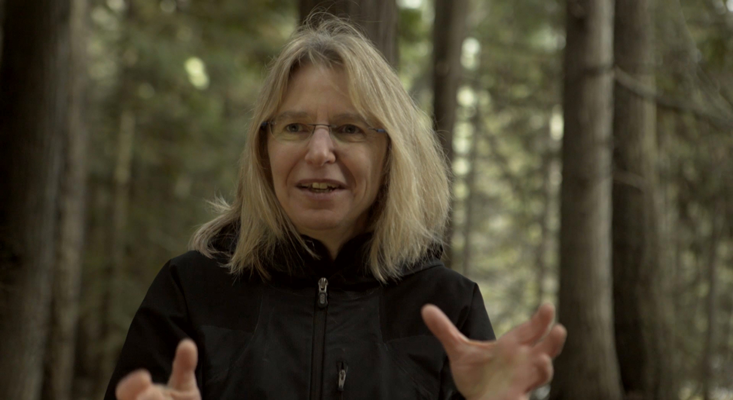
Photo Credit: Amelia Martin / Shutterstock Some of you who, are old enough, may recall a song by America called, “A Horse With No Name”. It's from 1971, so that's a few years ago... In that song, the following lyric appears: “The ocean is a desert with its life underground And a perfect disguise above Under the cities lies a heart made of ground But the humans will give no love” In reading the article “Never Underestimate the Intelligence of Trees” from Nautilis magazine, that song immediately came to mind. At least... my old mind... Hold that thought as I set this up for you. The article starts this way: Consider a forest: One notices the trunks, of course, and the canopy. If a few roots project artfully above the soil and fallen leaves, one notices those too, but with little thought for a matrix that may spread as deep and wide as the branches above. Fungi don’t register at all except for a sprinkling of mushrooms; those are regarded in isolation, rather than as the fruiting tips of a vast underground lattice intertwined with those roots. The world beneath the earth is as rich as the one above. See? If you are a fan of music from a certain era, that line should pop into your head – especially with the little push I gave it there at the beginning of the post. But this is not a post about America (the band nor the country). It’s about trees, and the magnificent ignorance we have as a species about them. It’s an ignorance which is fading, however, as we learn more about trees, forests, and the ways in which trees interact. The article features an interview of – more of a conversation with - Suzanne Simard (pictured below),
Simard, a scientist from the University of British Columbia, has shown, through extensive research projects, that fungal ‘mycorrhizae’ (a mashup of the Greek words for fungus and root) helps trees extract nutrients from the soil, also connects trees into root-based ‘networks’. It's a symbiosis - a mutually-beneficial natural relationship. That itself could be considered a form of communication (and even negotiation!). But there is much more to the story. In these networks, individual ‘hub’ trees (which she calls Mother Trees) form the center of forest communities. These forest communities are even linked to each other – which should sound a little like the Internet, because it quite resembles the Internet. Where this gets interesting to project managers – aside from the many research projects that are studying this interconnectivity – is best represented by this quote from the article: (Trees can be) understood as creatures with capacities that in animals are readily regarded as learning, memory, decision-making, and even agency. This can be difficult to wrap one’s head around. Plants are not supposed to be smart, at least not according to the rubric of traditions known as western thought. There’s also a case to be made that, while these behaviors are indeed extraordinary, they don’t map neatly onto what people usually mean by learning and memory and communication. Perhaps trying to define plants’ behavior according to our own narrow conceptions risks obscuring what is unique about their intelligence. We all know that communication is 90% of project management. We also know that learning (for example, “lessons learned”) is an important part of improving our discipline. Here we find that trees are doing this? Of course, I’m not suggesting that you hire a birch or oak as your next project manager. What I am suggesting as that we expand our perception of what “intelligence” and “communication” really means. In Part II I will continue this post by focusing on communications. By understanding the ways in which these ‘tree networks’ operate, we may be able to improve project communications as well. Between Part I and Part II, you can sit back, relax, and enjoy two videos – the first is the America song I referred to above (A Horse With No Name), and the second, is a 4-minute ‘backgrounder’ on how this tree network gets established and works. A Horse With No Name - America - 1971
How Trees Secretly Talk To Each Other |
|
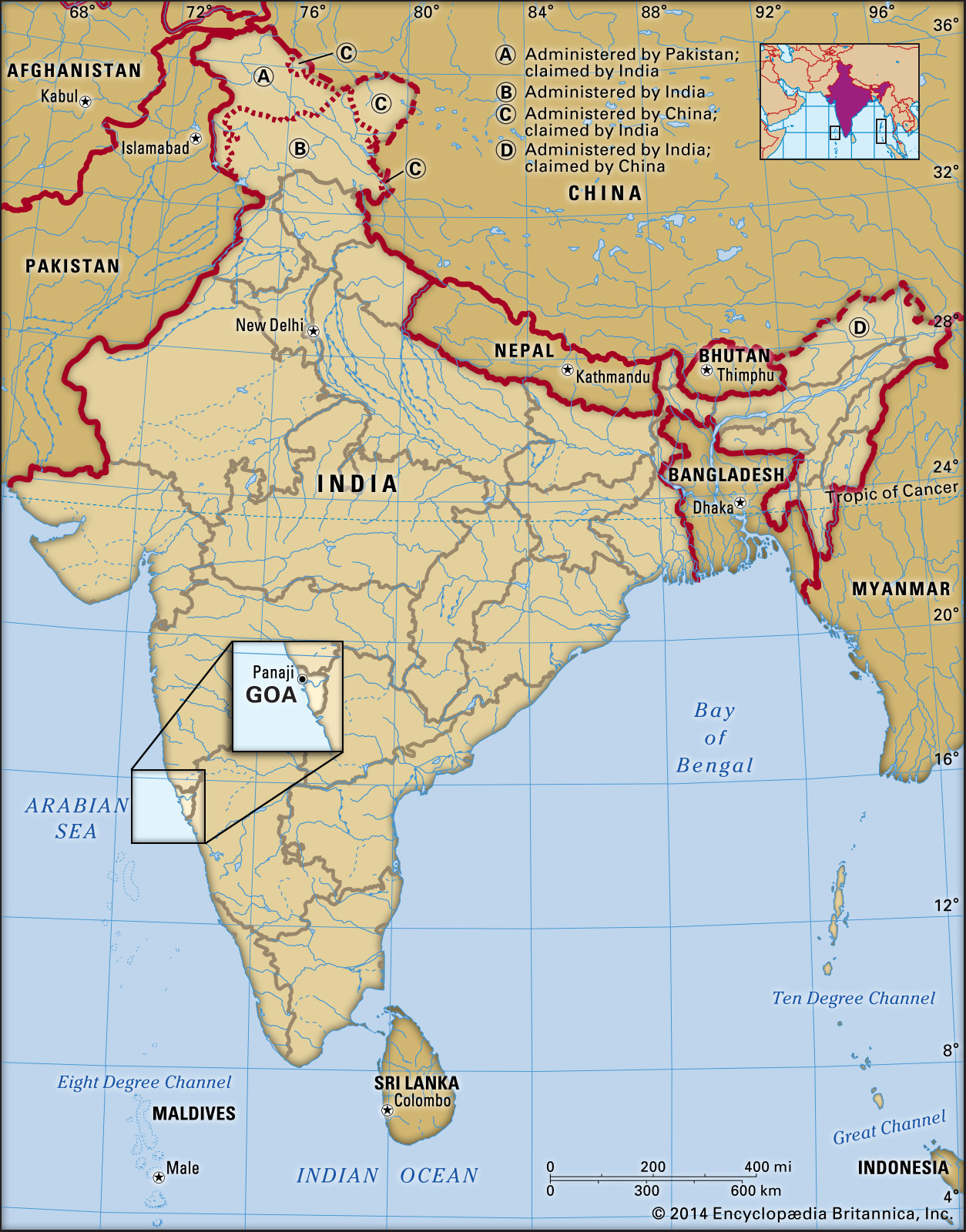
A recent story (4 hours old) from BBC caught my attention because of its intersection between project management and sustainability. The story is about not only the potential impact but the rationale for three infrastructure projects in Goa, a state located on India’s west coast. Of note, the state is a former Portuguese colony with a very interesting history, and the reason that many residents have names like Fernandes, Alvares, and Rodrigues. From Wikipedia: The Portuguese invaded Goa in 1510, defeating the Bijapur Sultanate. The Portuguese rule lasted for about 450 years, and heavily influenced Goan culture, cuisine, and architecture. See below for some geographic orientation:
The three projects, as summarized by this article in the Hindustan Times, are:
“Locals fear the works will damage the state's biodiversity and turn it into a coal hub”, says the lead of the story. Goa is indeed identified as a biodiversity ‘hot spot’. This had led to legal battles and protests. See, for example, this news clip from India Today:
For example, an organization called the Federation of Rainbow Warriors has filed a complaint, summarized here, which seeks to block the projects The story summarizes their viewpoint: "All the documents point to Goa becoming a coal hub," says activist Abhijit Prabhudesai. "We have shared these documents with the government more than five months ago, but they are still unable to produce a single document to refute our claims." The reaction to the three projects by local residents has been vocal. Below are two videos which summarize the stakeholder concerns:
Here you can also view a 50-minute (at times quite contentious!) interview by Faye D’Souza of Nilesh Cabra, Environmental and Power Minister of Goa.
And here is the interview with the stakeholders who are protesting, also by Faye D’Souza:
I’ll continue to track this and come back with updates but there is a lot to learn from this in terms of:
Keep tuned to People, Planet, Profits, and Projects for updates.
|
|
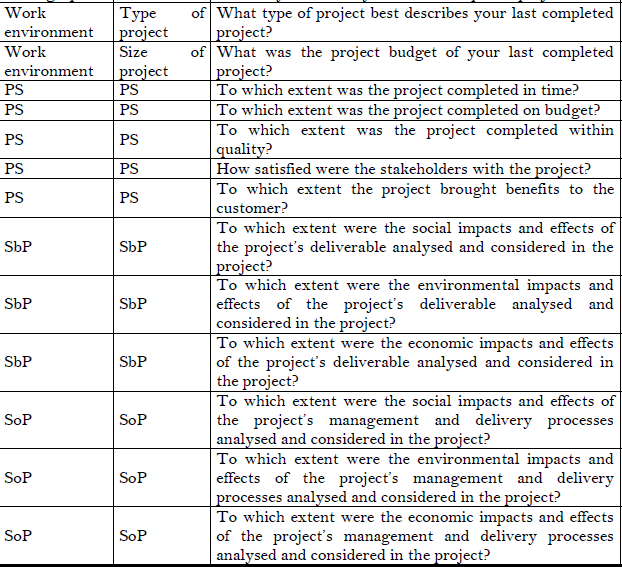
When we last left our star-crossed pair – Sustainable Project Management and Project Success (SPM and PS from here on in), we knew there was a certain tension between them but we also sensed that they may be made for each other. In this short entry we conclude the story. Sort of. Since this is based on academic research the answer, as usual, is “more research is needed”. And it is. However we do have a conclusion to share. The authors of the referenced article (Dubois and Silvius) got results from 112 participants in their survey. From the article: 112 responses were received. Based on the assumed total population of over 1 million project managers, the sample provides a confidence interval of 9.26% at a 95% confidence level. Given the 5-point Likert scales that were used in the questionnaire, this confidence interval is satisfactory. If you recall from Part 1 of this post, SbP is Sustainability by Projects and SoP is Sustainability of Projects. Those terms are defined in Part 1 (and of course, in the article itself). Here is a sample of the questions that were asked by the researchers:
The answers to this survey were very illustrative especially in the relationship of PS to SPM. Instead of going through the entire data analysis as did the authors, I will go right to the illustrative conclusion. And here it is: • SPM and PS show a strong positive correlation The main finding of the study reported in this paper focuses on the relation between SPM and PS. In line with the earlier studies on this relationship, also this study found a positive correlation that can be considered as strong. And despite the concerns that Silvius and Schipper (2016) expressed about the potential negative effects of considering sustainability on the iron triangle criteria of PS, the overall relation between SPM and PS still appeared as positive. Khalilzadeh et al. (2016) The study reported in this paper aimed to answer the question How does considering sustainability in project management relate to project success? Based on a literature analysis of the concepts of Sustainable Project Management and Project Success, the study developed a conceptual model of the relationship in which the independent variable SPM was operationalised in six questions, three questions related to SbP and three questions related to SoP. The dependent variable PS was operationalised in five items, which provided a holistic set of criteria. Based on the analysis of the responses of 112 professionals involved in projects, the study found that both variables PS and SPM showed a high level of internal consistency…This correlation subsequently showed a strong and positive correlation between SPM and PS. And although the study was not aimed at developing proof for the causality between SPM and PS, this conclusion does provides another indication that SPM supports PS. This is illustrated in the graph below as well:
So yes: Sustainable Project Management, which I assert means, “keeping the big picture in mind”, and “thinking through the end of the project to the steady-state”, and “Focusing on Benefits Realization Management and Value”, does indeed actually have a POSITIVE net effect on Project Success. So as you watch “It’s a Wonderful Life” this Holiday Season (you can’t help it in many parts of the world), starring Jimmy Stewart and Donna Reed (pictured at the top of this post), consider the wonderful life your project can have if it does indeed include Sustainable Project Management! |
|
"I would have made a good Pope. " - Richard M. Nixon |