


Floating an idea into reality: the other side of the AI Project Paradox


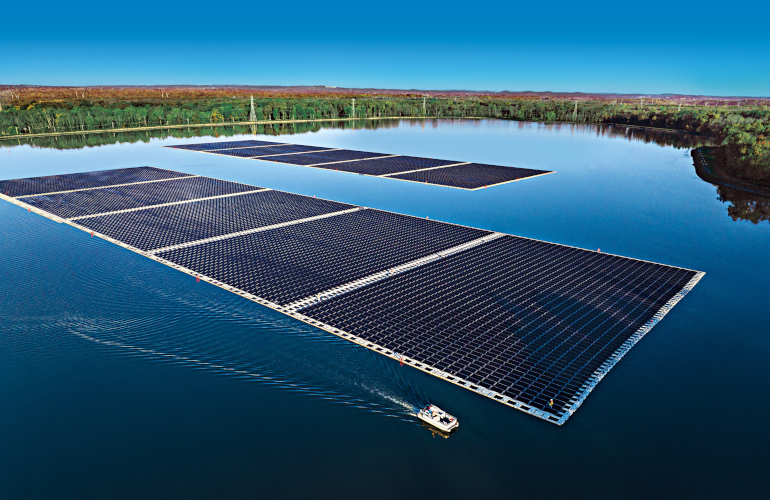 In my last post, I explored the growing concerns around artificial intelligence—energy consumption, carbon footprint, data privacy, and even the “noise” it introduces into our systems. These concerns are real, and in some cases, they’re driving moratoriums on new data center construction. But that’s only one side of the story. This post explores the other side of the paradox: AI as a positive force—not as a drain on resources, but as a multiplier of sustainable outcomes. And one of the most compelling examples is floating solar. A Pilot in Colorado Just outside Denver, in Golden, Colorado, a modest project is quietly pointing toward the future. Developed by Noria Energy, the Aurea Solar Project sits atop the Fairmount Reservoir. At roughly 50 kW, it’s small by utility-scale standards—but its significance goes far beyond its size. This is the first floating solar array in the United States to incorporate tracking technology. Instead of remaining fixed, the panels rotate on the water to follow the sun, increasing energy production by an estimated 10–20%. But what makes this project especially compelling is not just the technology—it’s the system it supports. The energy generated helps power a local water utility, directly linking renewable energy production with water infrastructure systems. At the same time, the panels reduce evaporation from the reservoir—an important benefit in the water-constrained American West. This is not just a solar project. It’s an integrated energy–water system. You’ll soon find out why the heck I keep highlighting the word SYSTEM. A real one in NJ Because (as you know if your follow this blog) I like to feature moving pictures (aka videos), have a look at this video to see a real floating solar project. Back to the Paradox: Where AI Enters the Picture At first glance, you might not see AI at work here. But like with most things today… it’s THERE. Today, the system tracks the sun mechanically. Tomorrow, AI will: -Optimize panel orientation in real time based on weather and cloud cover -Predict energy output and dynamically adjust operations -Balance what are normally competing objectives—maximizing energy generation while minimizing water loss -Anticipate maintenance needs before failures occur Across renewable energy and smart infrastructure projects, AI-driven optimization has been shown to:
Let’s take a look at these from the viewpoint of this blog: People, Planet, Profits, and Projects People The Aurea project supports a water utility serving tens of thousands of residents and promotes workforce development. Planet Floating solar reduces land use and water evaporation, while AI enhances efficiency and sustainability. Profits The system approach and clever, reasoned, thoughtful application of AI makes this system more efficient and profitable. Projects This pilot project involves multiple stakeholders and uncertainty—an ideal environment for AI-enabled decision-making, taking decision to action, thoughtfully, and based on real-time information. And now…as promised…the systems piece…. From Static Infrastructure to Intelligent Systems The Colorado project is becoming a proving ground for intelligent, adaptive infrastructure systems. This is also a powerful example of systems thinking in action—what the Systems Thinking & Systems Intelligence (STSI) community highlights as the need to see relationships, not just components. We are working within a system of systems—energy, water, environment, and community—all interconnected. STSI Insight: “The performance of a system is driven not by its parts alone, but by the quality of the relationships among those parts.” Learn more about this at stsi.pro. Reframing the AI Conversation AI stands properly accused of being an energy hog, a privacy stealer, and other nasty stuff. On the other side of the paradox, however, AI can generate clean energy, conserve water, improve resilience, and support communities. The key is where and how we apply it, how we guardrail it, how we thoughtfully work with it. Closing Thought AI, when aligned with purpose, becomes a force for integrating systems, and systems of systems—connecting people, planet, and projects in powerful new ways. |
The Environment of the Built Environment: an AI Paradox
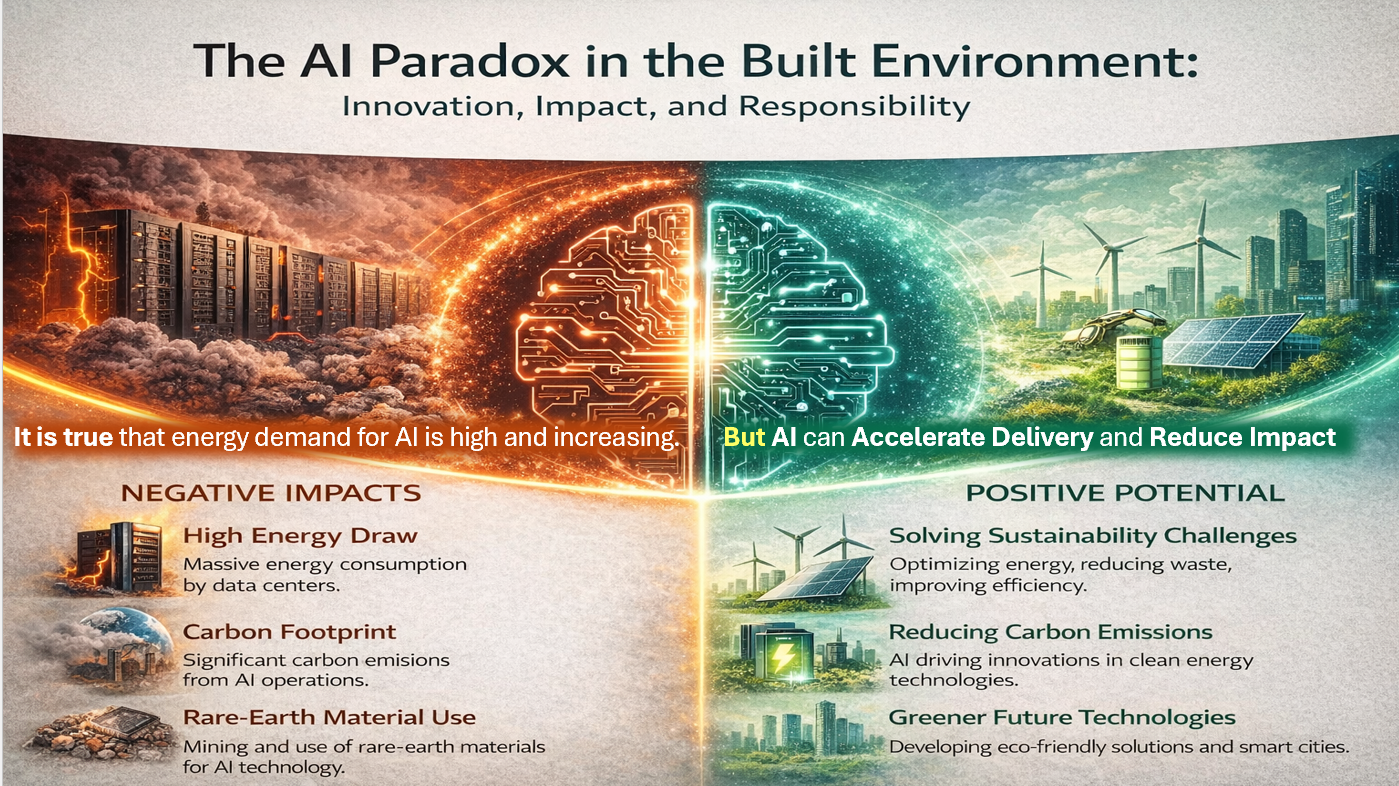 If you’ve been following this blog, or in general have a mature view of project management, you know that sustainability in projects is all about thinking past the end of the project and considering the project’s product in service – and the impacts of that ‘product’ as it operates in the steady state. Also, if you have been following, well, anything, you know that AI is in just about every news story, and if it isn’t it may even be writing that news story. One news story that caught my attention in light of the relationship between sustainability and AI is this article posted about the great state of Maine. It opens, “Maine lawmakers passed a statewide freeze on large data centers this week, the first of its kind in the country. If Gov. Janet Mills signs the bill into law, it would impose a moratorium on building data centers that use more than 20 megawatts of power in the state for a year and a half.” And it’s not just Maine.According to The Hill, “The new Maine ban is part of a larger trend of state legislatures considering bills to impose new restrictions on data centers as the public and experts express concerns about the negative economic and environmental effects of these projects.” There are many concerns about AI. Privacy, control, jobs, consumption, pollution all are front of mind. I came across this amazing interview between Claude and Bernie Sanders. Whether you are a fan of Bernie Sanders or not – whether you are a fan of AI or not, have a listen to this conversation. It’s mostly about privacy but Sanders and other politicians in the US are wanting a moratorium on data center construction, and it’s not just the US. Here’s a report that says that up to half of the world’s data centers may be delayed. But I digress. Let’s get back to that conversation between Claude and Bernie. I was astounded by the ‘frank’ attitude Claude had in ‘admitting’ what is happening with respect to some of these concerns – even though there was one point where there was a giant ‘pregnant pause’ before it answers. See if you can catch that moment. This post is meant to be thought-provoking. Many of you may be working on ‘the built environment’ – construction, water systems, even transportation and telecom, which fit in that category. Are you thinking about what impacts the project’s PRODUCT has in the long term? Are you considering ALL of the stakeholders involved – not just the people working on the project, or the sponsors, or the immediate customers, but those who will be affected (in any way) by the result of the project in its steady state.There are cases near my home where a data center construction project has become controversial not because of power consumption or classic ‘pollution’ or water (the usual suspects) but also literal physical noise based on the diesel generators involved in supporting the center.See the story from Boston’s WBUR here. If this interests you, have a look at this report which concluded that a Virginia data center was projected to contribute up to $99 million in health damages to local residents each year. Please do not get me wrong here. I am not opposed to the development and deployment of AI. As I have posted recently, there are tremendously promising(and proven) contributions that AI can make in the world of reducing carbon emissions and improving social conditions for humans. This is a both/and situation. Or, rather it can be a both/and situation – having the benefits of AI while limiting its downsides – if the proper guardrails are set up, and, importantly, if you as project managers step up as project leaders and raise these concerns early on, and engage with the appropriate stakeholders early on. What are your thoughts here?I am interested in hearing from project managers in the built environment area, especially those involved in data center projects. What do you think? |
Is plastic on your mind?
 Microplastics have been on my mind lately. I mean that quite literally. A recent study from Duke University shows that human brains now contain a teaspoon of microplastics (7 grams). Other respected studies reveal significant increases of microplastics in the bones and other parts of the body. Unlike my recent series on the Great Green Wall, where a major government (China) took on a big problem with huge scope and billions of yuan in funding, this story, based mostly on this article from the Smithsonian Magazine, is about one high school student’s approach to solving (or at least remediating) the microplastics problem, starting locally, but thinking globally. So, innovative, systems thinking doesn’t always come from billion-dollar portfolios—it can start as a single project, in a high school science fair in Virginia. Rather than providing all of the detail here, I think it’s best just to watch this short video about the prevalence of microplastics. So, how did Virginia high school student Mia Heller react to the problem, after reading the local newspaper’s coverage about microplastics in her town’s water supply? Well, she got to work on a science project that sought to find an inexpensive and easy way to remove microplastics. Here she is explaining the system to you: What are the lessons learned from such an inspiring high school project for us – practitioners of project management in the larger sense? It’s about empowering young people to express their ideas, providing support and encouragement. It’s about active science education and the support we may be able to lend as project managers. It’s about the fact that great projects often start not with a top executive proposing a grandiose solution, but rather with a question from someone at an entry-level position. In summary: 1. Innovation is not hierarchical
So:
https://isef.net/project/enev053-self-recycling-system-for-microplastic-removal |
Turning the "Sea of Death" into a Land of Life, Part 2
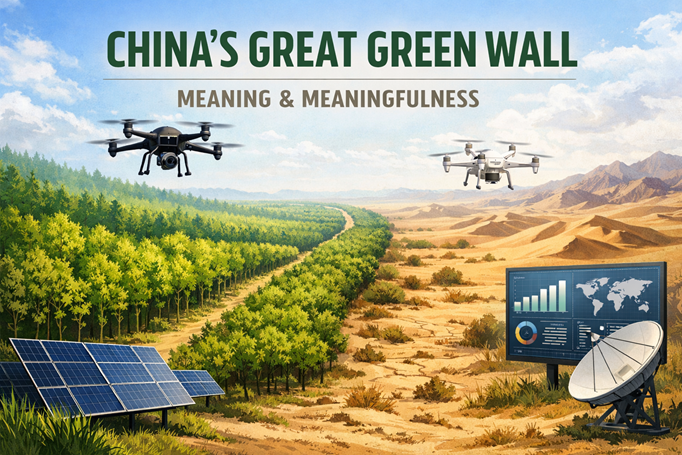 In Part 1 of this short series, we reviewed the portfolio which is China’s Great Green Wall. I promised that there’d be a Part 2 in which we discuss the meaning and meaningfulness of this amazing initiative – this portfolio. And here it is! First of all, let’s be clear about the difference (at least as I’ll define it here).
This portfolio succeeded because it was designed for long-term value realization, not short-term outputs. Instead of thinking about meeting quarterly or even annual targets or quotas, instead of thinking short-term, this portfolio was intentionally focused on a 45+ year planning horizon. It focused on value in the broadest sense of the word – monetary, well-being, societal, planetary. Value is not always only measured in dollars or yuan. This was a government project which realized that there would be leadership changes and considered that in the planning. Meaningfulness of the Great Green Wall At the start of the post, I define meaningfulness as “how we can apply this in our projects (and programs and portfolios). So this is about Lessons Learned. Some of the key Lessons Learned:
This portfolio outlived political cycles, leaders, and trends. Today, especially in North America, most organizations think quarterly, or at best a year or two out into the future. True project leaders must protect long-term intent from short-term pressure. This means speaking truth to power. This project avoided a task-oriented, “tree planting” mindset. Instead, as any good portfolio manager knows, it was an interdisciplinary effort involving:
This portfolio considered systems. They thought of the desert as a system they thought of the intervention needed to convert the desert to usable land as a system of systems. Project LEADERS must evolve into system stewards, not task managers or even project managers. In this Green Great Wall, results (benefits) took decades to validate – success was not instantaneous. We need to be very clear about the way we define success.Like my colleague Alexandra Chapman likes to say, it’s about “a factory making bricks, not a brick-making factory*”. Real project success is not a ribbon-cutting ceremony, it’s the delivery of benefits over the long term (that is the REAL definition of value). Here's a factory making bricks: ...and here is a brick-making factory: 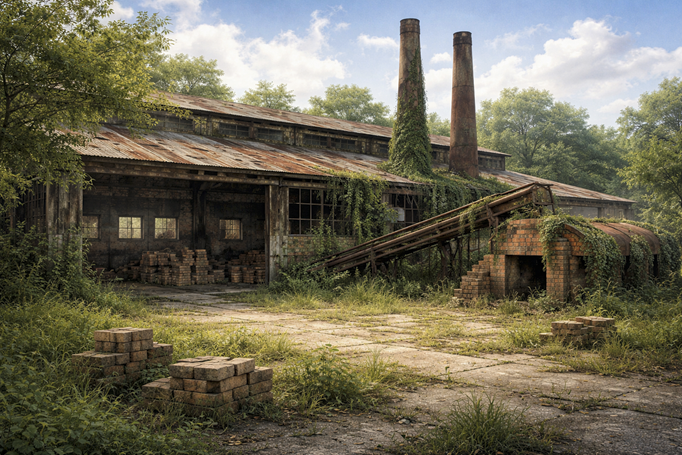 Finally, this portfolio was a blend of projects, programs, portfolios and operations. Project leaders must be flexible in managing at the task level but also must be able to ‘jump up’ several levels in real time and take the broader view. Is there a connection to PMI’s Power Skills here? Absolutely. Here’s some food for thought in that area:
OK, so really, what does a huge portfolio in China have to do with you, what changes can you make? What can you learn? What can you do? Are you managing outputs or enabling long-term value?
Think about your projects, programs, and portfolios in this context. Maybe you can bring your desert projects to life! *I could (and probably should) do another post on this, perhaps along with Alexandra Chapman. For now, just think about the difference between those two ways of describing a project outcome and which is more value oriented. |
Turning the "Sea of Death" into a Land of Life, Part 1
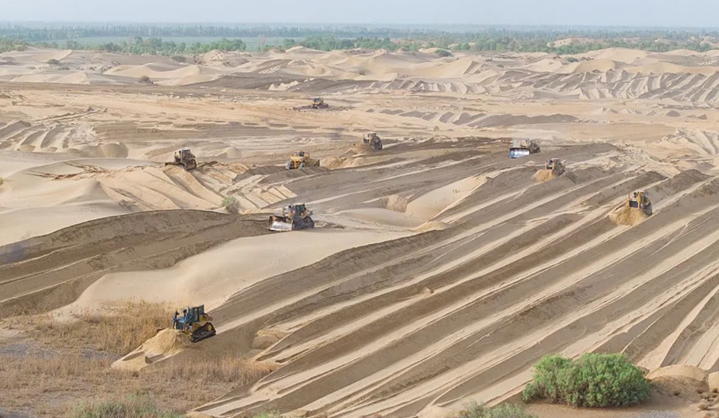 Image: Live Science Plus (see link below) In this short series, I want to cover a portfolio of programs that are aimed at the long term, as described in the last series, “Faith in the Eighth” (referring to the Eighth Edition of the PMBOK® Guide). In Part 1, I want to introduce you to the portfolio and in Part 2, I want to derive meaning and meaningfulness (that is, lessons learned) from the portfolio. In China, there is a large desert (see map below) which is called the Taklamakan Desert (which is also sometimes called the Taklimakan or Takla Makan Desert – or even by its haunting nickname, “The Sea of Death”.). The portfolio, which, in turn, is part of a larger portfolio, aims to plant millions of trees and shrubs and to geo-engineer the land, building a “Great Green Wall” around this – and other – deserts. as drawn to this portfolio because of the recently reported results – and the fact that the projects in the portfolio have been going on for more than 45 years. 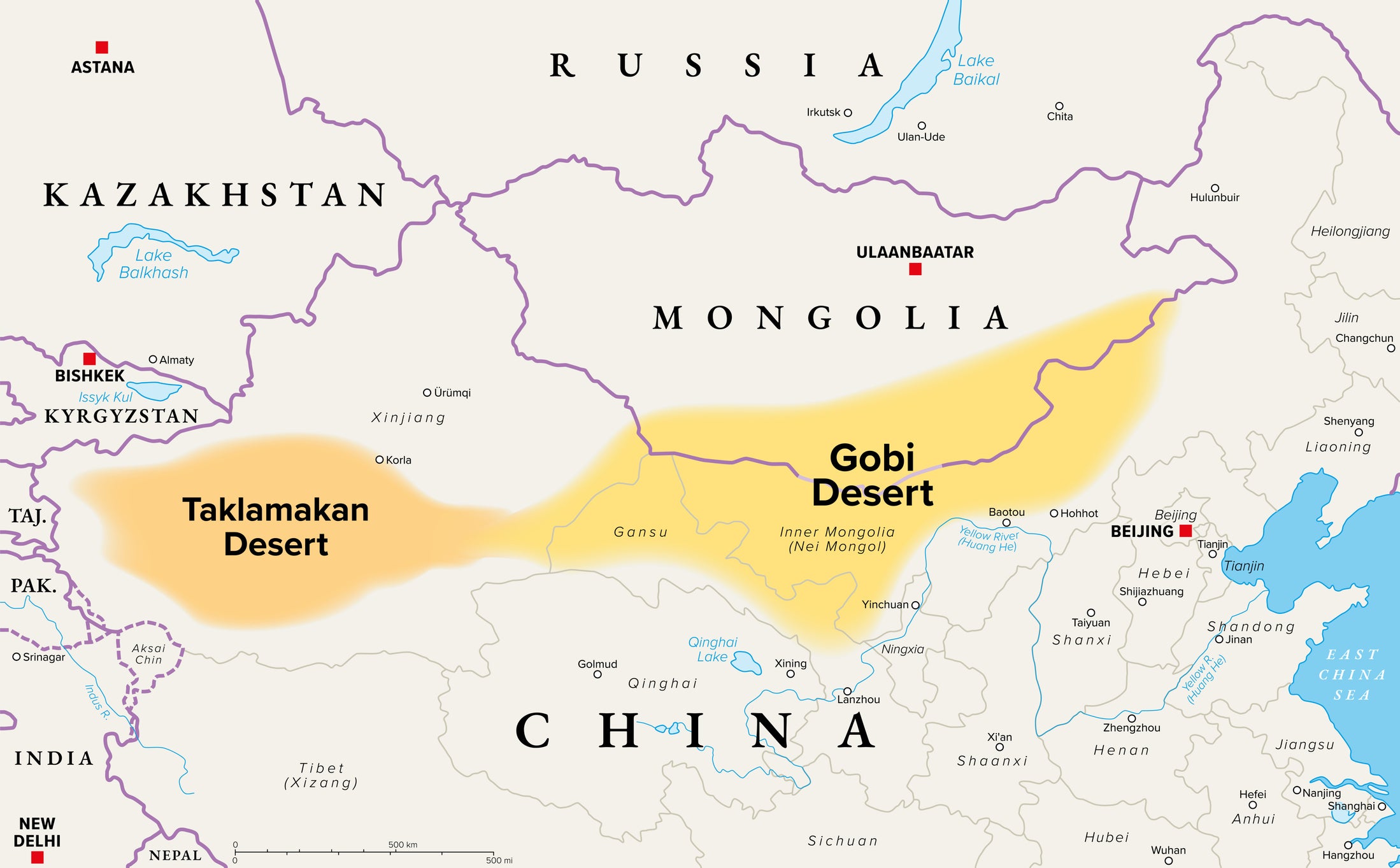 Map source: Getty Images The official name of the overarching portfolio that includes the Taklamakan Desert afforestation work is: Three-North Shelterbelt Forest Program. It is also commonly referred to as:
So for one immediate lesson learned we can see the concept of projects, which are part of programs, which in turn are part of portfolios which are part of still other portfolios – is a real thing. Beginning with the end in mind (to be covered mainly in Part 2), scientific studies now conclude that there are positive results (value!!) delivered by this portfolio. "We found, for the first time, that human-led intervention can effectively enhance carbon sequestration in even the most extreme arid landscapes, demonstrating the potential to transform a desert into a carbon sink and halt desertification," study co-author Yuk Yung, a professor of planetary science at Caltech and a senior research scientist in NASA's Jet Propulsion Laboratory, told Live Science in an email. Yung’s research can be found here: https://web.gps.caltech.edu/~yly/yly_mac/ReprintsYLY/N457_noor-2026-taklamakan-afforestation-project.pdf NOTE and credit: Much of the information for this post came from this article from Live Science Plus: https://www.livescience.com/planet-earth/plants/china-has-planted-so-many-trees-around-the-taklamakan-desert-that-its-turned-this-biological-void-into-a-carbon-sink Some details about the project: The Taklamakan Desert (the portion of the portfolio covered here) is slightly larger than Montana – or roughly the size of Germany, covering about 130,000 square miles (337,000 square kilometers). High mountains, which block moist air from reaching the desert for most of the year, encircle the area, creating extremely arid conditions that are too harsh for most plants – this, combined with massive wind and dust storms – gives it the nickname “Sea of Death”. Most of the desert sand is ‘shifting sand’ – dunes – which has been growing since the 1950s. In 1978, China began this Three-North Shelterbelt Program, a combination of geo-engineering, botanical science and massive infrastructure, including trench digging and solar panel installations. In late 2024, the Sea of Death was finally completely encircled with vegetation – and recently, the findings have begun to emerge – thus this blog post series, focused, as is the last series, on the delivery of value. Rewinding for a moment to its start – The Taklamakan Desert initiative is part of the Northwest China component of this portfolio, focused specifically on the Xinjiang region, to do the following:
I hope this gives you sufficient context. I will be coming back in Part 2 to show the relevance of this portfolio to People, Planet, Profits and Projects. |


